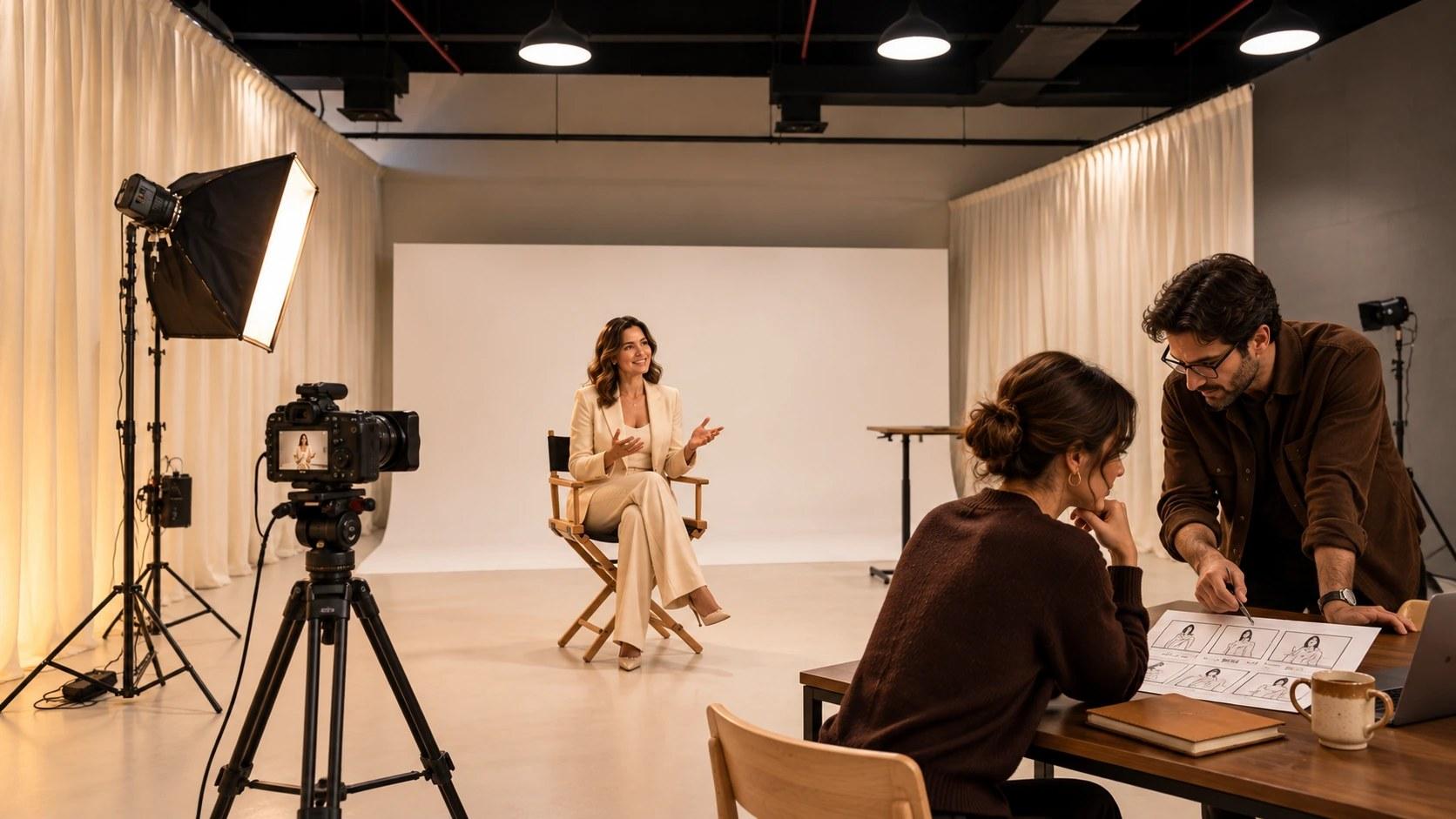
Your next month’s social content begins with the messages your audience needs, followed by a filming plan that accounts for the time available in the studio. For the thirty-day planning period, determine the finished asset count from the agreed publishing cadence and the work required for each film. Once those decisions are settled, the producer can assess which material belongs in the same session.
For a Dubai brand preparing social media content batch production, the useful question concerns how much purposeful material the crew can record within the commissioned scope. Someone’s Studio develops creative work around a brand’s communication requirements, with short-form production described in the Studio’s Social Content Suite. Plan the monthly shoot around that campaign conversation, with editing scheduled after filming.
Choose the Month’s Communication Job
Start with a customer decision that deserves explanation during the coming month, such as how a service works or which product suits a particular use. For a proposed service campaign, the initial film might explain the customer’s problem. Later films would address questions that arise during evaluation. Explain their relationship in the plan, alongside the specific evidence needed for each answer.
YouTube’s upload-schedule guidance recommends assessing a sustainable publishing frequency and the production time required by different content types. For feasible productions, batch filming appears among its recommendations, with topical subjects acknowledged as a limit on advance planning. Treat that guidance as a planning reference for the platform. Your campaign’s cadence still needs to fit the actual audience and the team’s ability to prepare useful material.
If the brand has thirty daily publishing slots, assign each slot a communication purpose and identify the assets already available for reuse. Approved photography may suit some entries; for an explanation that requires movement, commission new footage. The resulting production request should distinguish new recordings from existing material, with the client confirming reuse permissions for supplied assets.

Write an Asset Plan the Producer Can Assess
To identify shared filming requirements, the producer needs a proposed output list with enough detail to assess scenes that use the same presenter. Record the audience question beside the intended answer. In a separate field, describe the visual evidence that will support the spoken explanation. Assign an identifier to the finished film so its footage remains traceable during editing.
For the proposed service campaign, an introductory answer and a process demonstration might share the same specialist within a scheduled session. The answer requires a composed interview setup. For the demonstration, position the camera to show the actual operation. Both entries belong in the monthly plan, with separate shot requirements attached to the demonstration.
Use the creative-brief article when preparing the campaign’s central message and supporting evidence, then attach the monthly asset plan to that brief. In the initial discussion, the producer assesses which entries fit the proposed session. If the shot requirements exceed the available time, reduce the commissioned list or agree additional production.
Group the Shoot Around Shared Setups
Your release calendar may alternate between an interview and a demonstration, but filming can follow the setup that each scene requires. Record the approved interview material while its camera position remains ready. Once the crew moves to the demonstration, complete the related detail shots within that setup. The editor will arrange the finished films according to the publishing plan.
When a presenter appears in several planned contexts, the director needs to assess which wardrobe changes communicate something useful and reserve preparation time for them. If a different jacket merely changes the appearance, consider whether that change deserves production time. For a later film depicting a different role, the clothing change supports that portrayal. Document that reason in the treatment.
Allow the producer to estimate setup time alongside the planned performances when agreeing the schedule, with time reserved for client review. When a specialist needs another attempt at a technical explanation, the director needs time to work on the delivery. The schedule should accommodate that work within the agreed session length, with priorities assigned if the day runs behind plan.

Prepare Complete Answers and Usable Demonstrations
Your interview question list needs to connect each answer to a specific audience concern, with approved facts available to the speaker during preparation. Share the subject areas ahead of the shoot. Instead of memorizing a long paragraph, the specialist can rehearse an explanation in familiar language. As the speaker rehearses, the director listens for the point where the answer becomes complete.
For films intended to appear separately, record the subject’s name or the relevant service within the answer whenever the meaning requires that context. References to an earlier conversation create editing dependencies. If the speaker says a process has changed, the recorded explanation needs to identify the change. Retain qualifications that affect the claim when selecting the final excerpt.
Prepare the actual materials needed for a planned demonstration and arrange for the responsible specialist to confirm the sequence during rehearsal. If repeating the operation consumes or alters the item, the rehearsal will expose that requirement. Replacement samples belong in the preparation plan when another take requires a fresh starting condition. Film enough detail for the viewer to follow the action, with the intended edit discussed during the camera rehearsal.
Record Material for the Edits You Commissioned
While the session proceeds, the director needs to identify the recordings intended for separate films and the supporting shots the editor will use within them. If a close view illustrates the same operation, the editor may use it within several explanations. Match that shot to the spoken claim during edit review. For the editor to select a complete movement, record a useful beginning and end to the action.
Portrait and wider versions deserve their own shot assessment when both belong in the monthly commission, with the relevant placement requirements available during preparation. For detailed composition advice, consult the multi-format production article. The asset plan should identify the scenes that require a separate take. Confirm the required language versions while the speaker remains available.
Client review during filming should address the recorded answer’s accuracy and the visible demonstration, with the approved take noted against its asset identifier. If a product detail changes during the day, identify the affected recordings while the crew can still replace them. The editor needs that information alongside the footage, particularly when several similar answers use different wording.
Budget Time for Finishing the Monthly Library
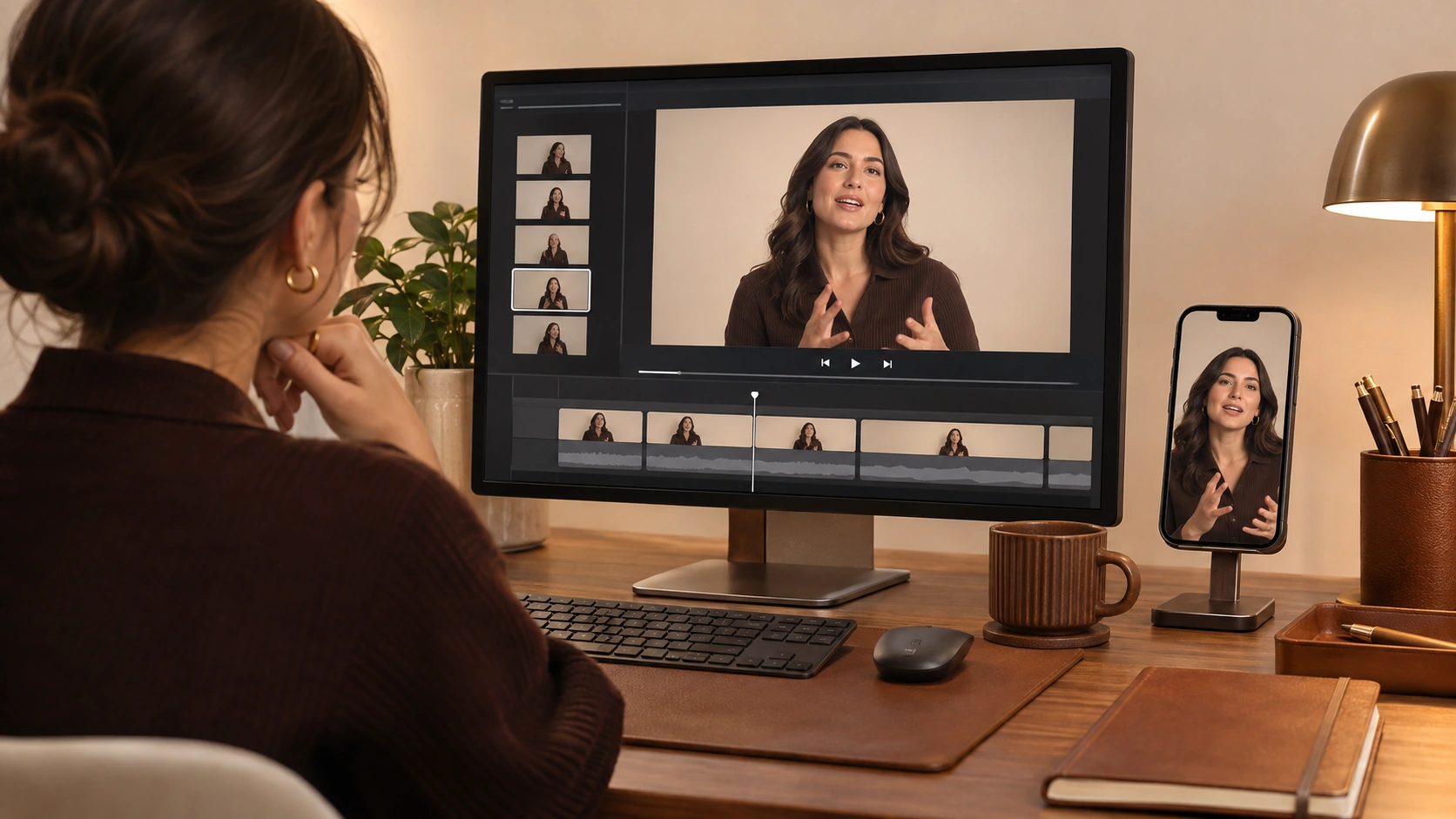
After the shoot, the editor assembles the commissioned films for client review and identifies any missing material needed to complete the agreed narratives. Agree the delivery sequence during planning. If the first release has an earlier deadline, identify that film as the initial editing priority. The remaining files can follow the schedule recorded in the production agreement.
Caption work needs an approved transcript and sufficient review time within that schedule, especially when a specialist uses terminology unfamiliar to the caption editor. Per W3C’s caption guidance, captions convey dialogue and meaningful audio information for viewers who are deaf or hard of hearing. Review the wording against the actual recording. The completed file still needs a playback check with its captions visible.
For a monthly library, name the finished files according to their asset identifiers and distinguish approved versions from review copies in the handover. Record the destination beside the delivered filename. If a film has an Arabic version, its language label belongs in the file record. Keep approval comments tied to the exact version being reviewed so a later export retains the accepted corrections.
Review Freshness Ahead of Release
Scheduled content needs a factual review close to publication when the month’s material includes an offer or a service detail subject to change. Keep dates in replaceable graphics where that suits the approved treatment. If the underlying spoken claim changes, return the affected film for review. Retain the approved recording only while its claims remain accurate for the planned publication.
Leave capacity in the editorial calendar for a timely response when customer questions change during the month, with the publishing team responsible for deciding which prepared assets remain relevant. Review the prepared footage against the new question. New information may justify a later recording, particularly when the original footage addresses a different customer concern.
To plan your next monthly shoot, share the campaign brief through the Studio’s contact page with the proposed asset list. Include the first required delivery date. Someone’s Studio can assess the filming requirements and discuss the creative direction for the session. Agree the final output list after that assessment, with the editing timetable recorded alongside the shoot date.