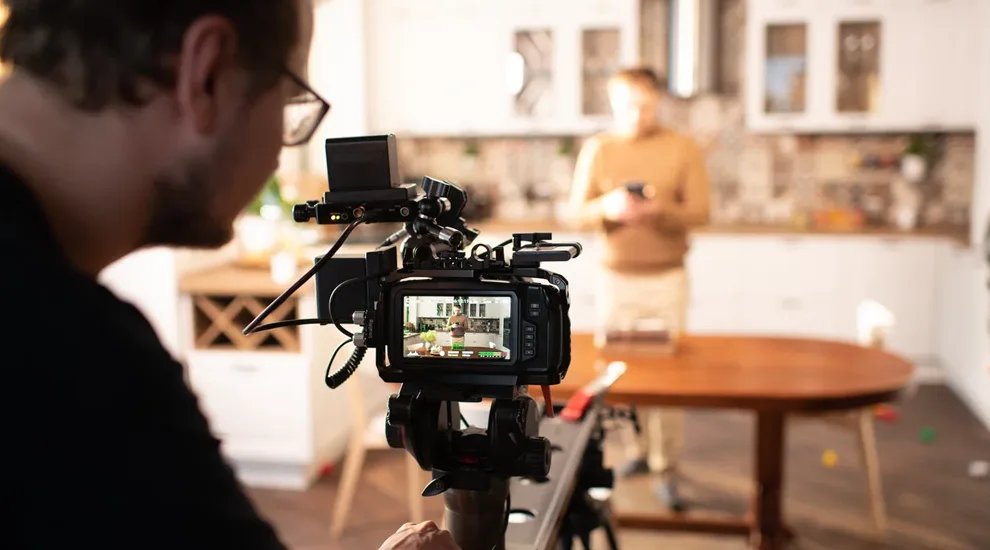
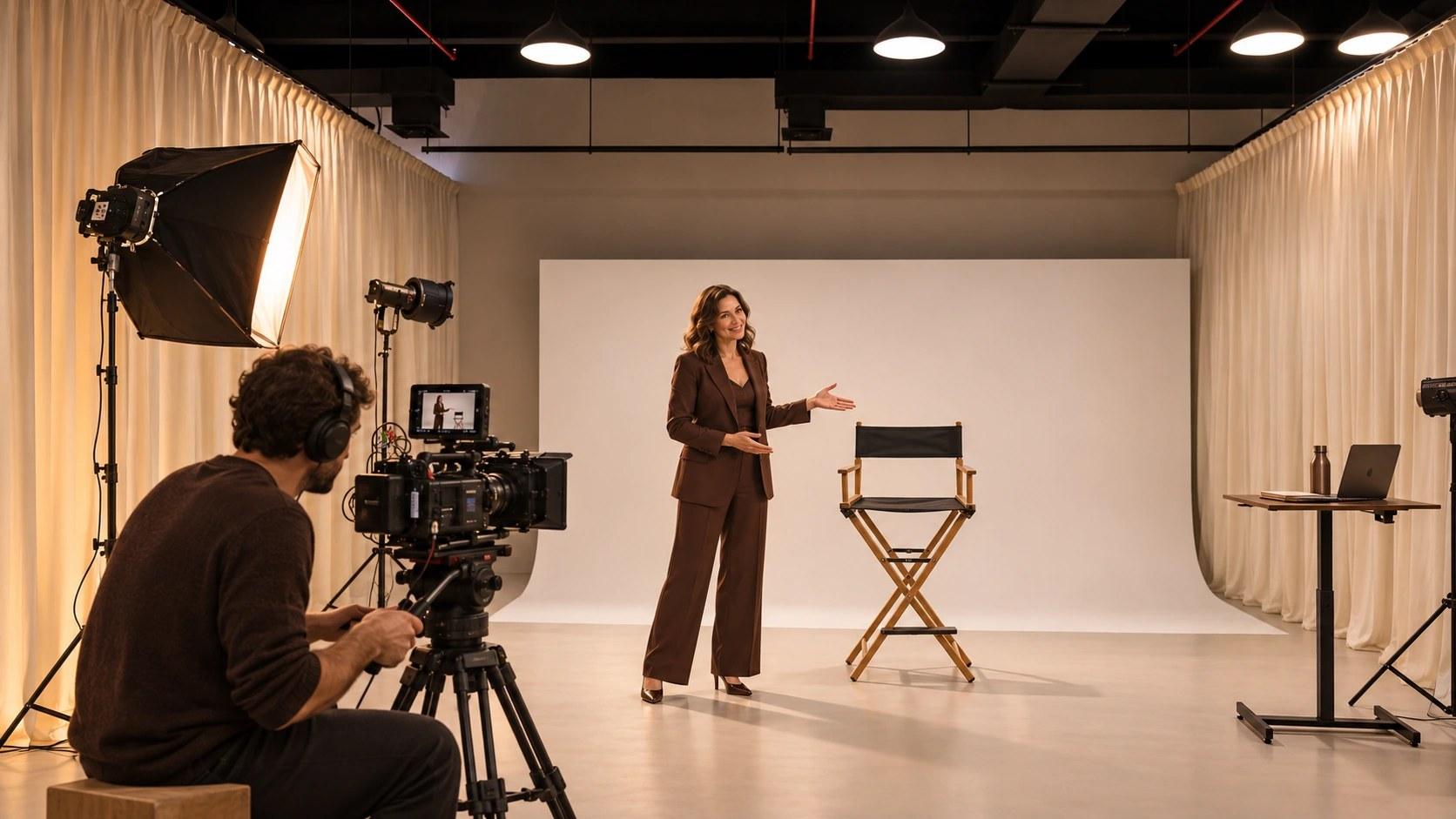
Your paid video campaign needs an advertisement that explains the offer to someone encountering the brand in a specific placement, with a reason to take the requested action. For Meta and TikTok, that may mean a short portrait film. YouTube commissions deserve a separate discussion concerning the selected ad format. Use the production brief to connect those viewing conditions to the message your brand has permission to make.
For a business commissioning video ad production in Dubai, creative approval begins with the commercial proposition and continues through the finished advertisement. Someone’s Studio describes related campaign films and shorter edits within the Studio’s campaign-production service. Use that brand-led production conversation to decide what the audience should understand, then commission the versions required by the actual media plan.
Decide What the Advertisement Promises
Start the treatment with the customer decision your advertisement supports, such as booking a consultation after seeing how the service addresses a familiar problem. The offer needs wording familiar to the customer. If a claim requires a particular condition, keep that condition attached to the proposed scene. The creative director needs sufficient evidence to judge how the camera can communicate the promise.
For a proposed furniture advertisement, the commercial message might concern a chair’s adjustable height, with the actual mechanism demonstrated by a presenter. Record the complete adjustment at a natural pace. The control deserves a close view, followed by a wider composition showing the resulting position. To advertise that feature, supply the operation footage and accurate information concerning the model advertised.
Brand character belongs in the treatment alongside the offer, particularly when the campaign addresses customers considering an expensive purchase with a long evaluation period. Discuss the presenter’s manner with the creative lead. Deliberate pacing may suit a technical explanation. When the edit moves faster, retain the evidence that makes the claim understandable.
Prepare Meta Reels Creative with a Deliberate Tone
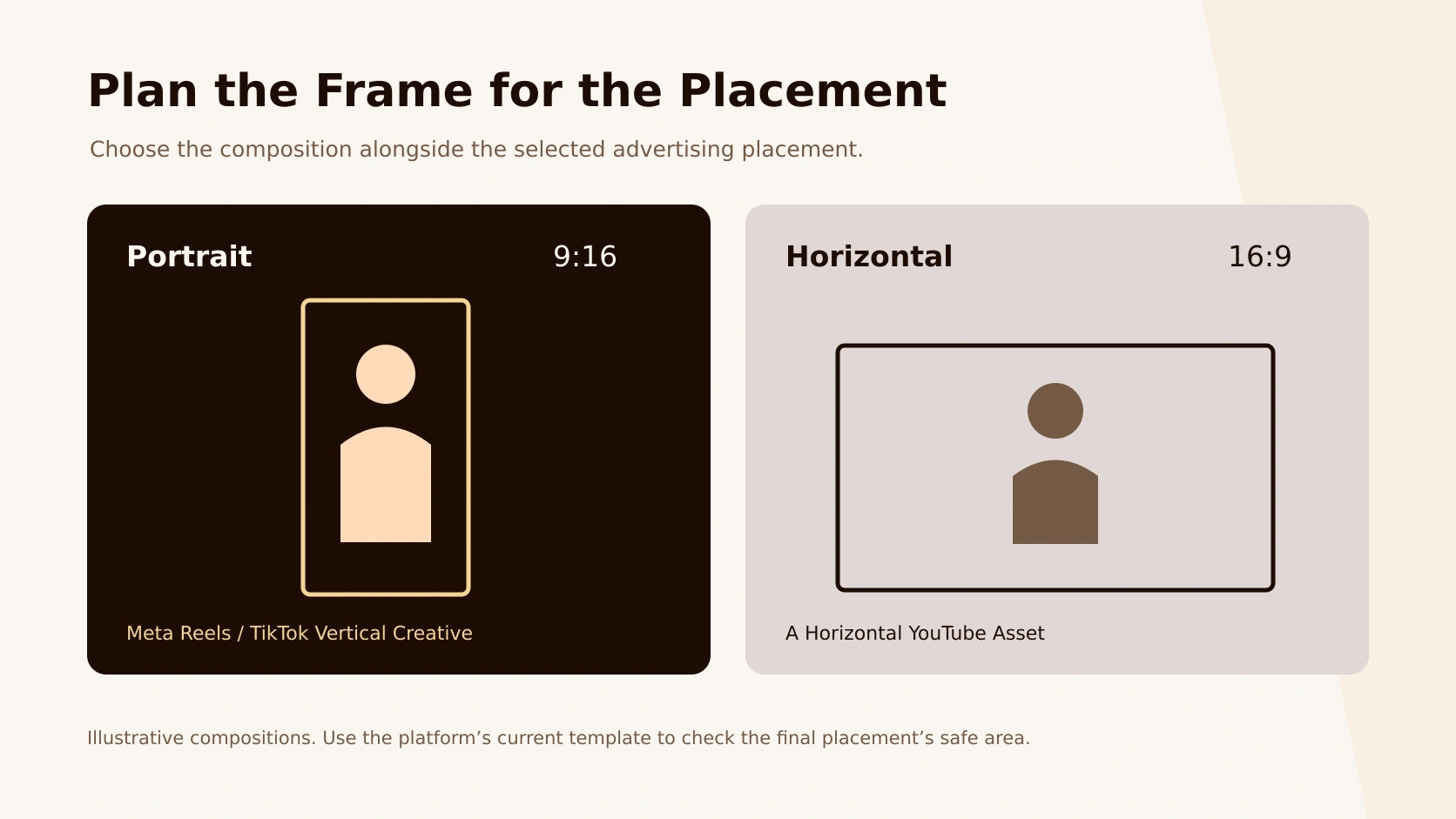
Meta’s November 2024 article for Adobe recommends vertical 9:16 Reels video with audio, alongside placement-aware layouts that keep important information clear of the interface. Ask the media team to confirm the current requirements for the placements included in your commission, with the final specification available to the editor.
For a premium service advertisement, a person speaking directly to the viewer may suit the audience when the delivery feels informed and unforced. The director can retain the brand’s established visual language through lighting and wardrobe. Read the proposed line aloud during treatment review; an advertisement promising expert advice deserves a speaker who sounds comfortable explaining the subject.
If the media plan includes a feed version beside the Reels edit, approve the finished composition for that placement with its actual on-screen wording. Keep the offer consistent between versions. The post-production scope should include the graphic work required by a revised crop.
Specify the TikTok Advertisement You Are Producing
TikTok’s June 2026 in-feed guidance distinguishes Spark advertisements from separately supplied video ads, which makes the intended publishing arrangement relevant during creative preparation. Spark captions come from the organic video. For that route, agree on the wording of the source post with the responsible account owner while the film is awaiting approval. The advertising identity deserves the same review as the footage.
TikTok recommends 9:16 for its vertical Non-Spark format, and its safe-area guidance varies with the caption length and selected format. Separate Arabic-region templates appear in the documentation. For a Dubai campaign addressing Arabic-speaking viewers, have the designer review the correct template with the approved language version. TikTok describes potential differences between previews and live displays on specific devices.
Your presenter’s delivery should fit the campaign’s subject when the treatment borrows a conversational approach familiar to short-form video. Rehearse the explanation around the audience’s actual question. Accurate wording remains essential in an informal performance, with any customer testimonial drawn from an approved real account.
Choose the YouTube Ad Format During Scripting
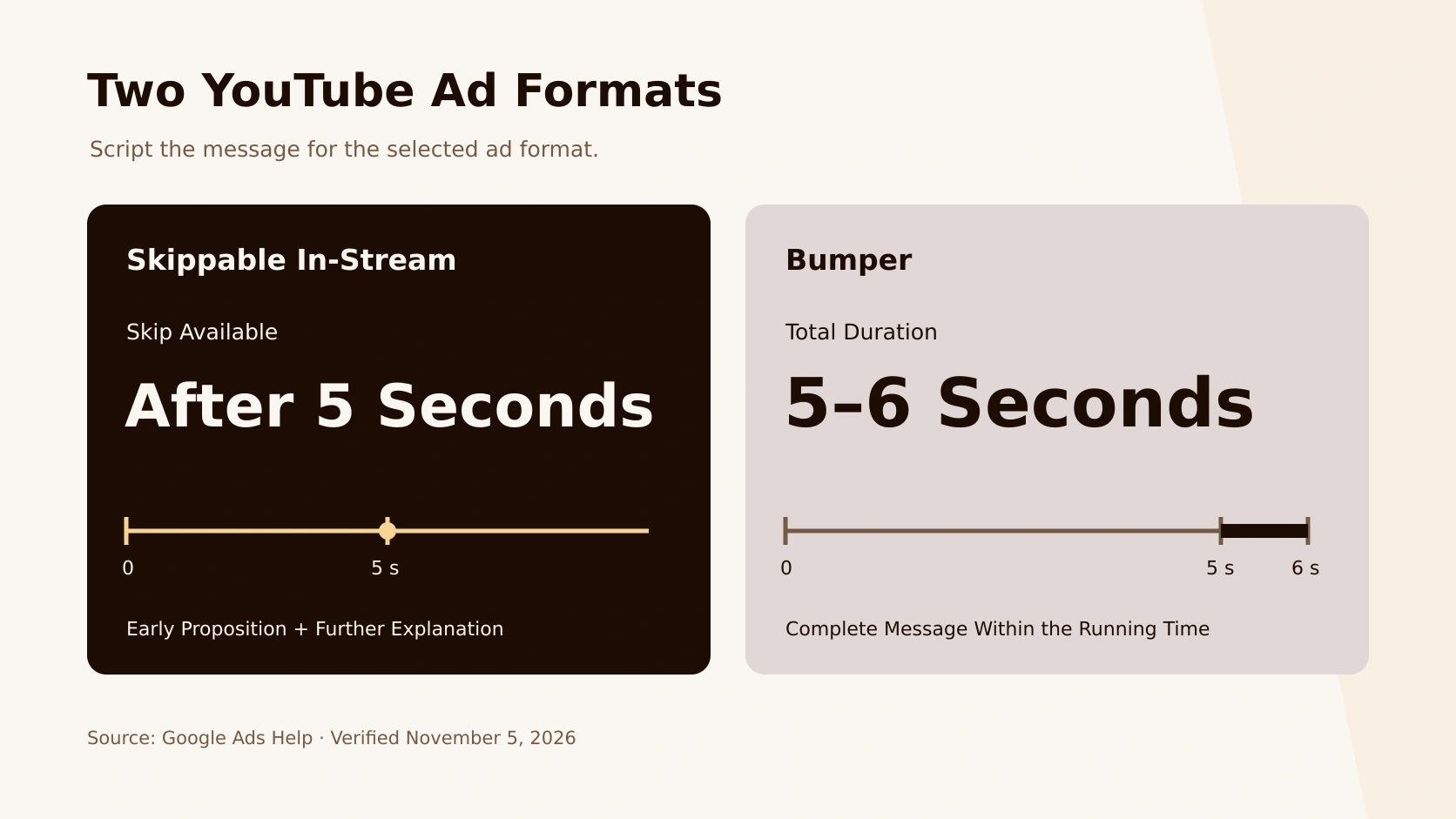
Google’s video-format guidance allows viewers to skip an in-stream advertisement after 5 seconds, so the script needs a complete early proposition. For a six-second bumper, select the message that fits the duration and record a self-contained performance. The longer film can accommodate supporting details that need further explanation.
For the proposed chair campaign, the longer advertisement could demonstrate the adjustment and explain its relevance to customer use. The bumper might show the movement with the model name. Limit the shorter script to the point its running time can communicate. Truthful footage remains essential in both proposed versions, and the client has approved the final treatment.
Google’s video specifications recommend Full HD assets and provide placement-aware safe-area references for different frame shapes. Overlays can vary with the campaign type and screen. Ask the editor to inspect the actual advertisement against the applicable reference, then have the media team review the finished asset in its intended campaign context.
Commission the Footage the Paid Edits Require
The filming scope should identify the scenes that need distinct performances for the commissioned ad versions, particularly when a short edit changes the spoken explanation. Reserve time for those performances during production planning. The editor may find a useful detail shot in existing footage. For a version whose message differs from the longer film, record a complete replacement statement.
If a demonstration must fit portrait and horizontal compositions, use the multi-format production article to prepare the separate shot requirements. The client should then review what viewers understand the product to do. Review the actual action alongside the claim. If a cut changes the apparent time required to complete the operation, assess how that change affects the advertised claim.
In the client review on set, identify the approved demonstration take and record any condition that affects its use in the advertisement. The editor needs that context beside the footage. For a product shown with an optional accessory, the final copy should explain what the advertised purchase includes. Keep the visual treatment consistent with that commercial detail.
Approve Music for the Intended Paid Distribution
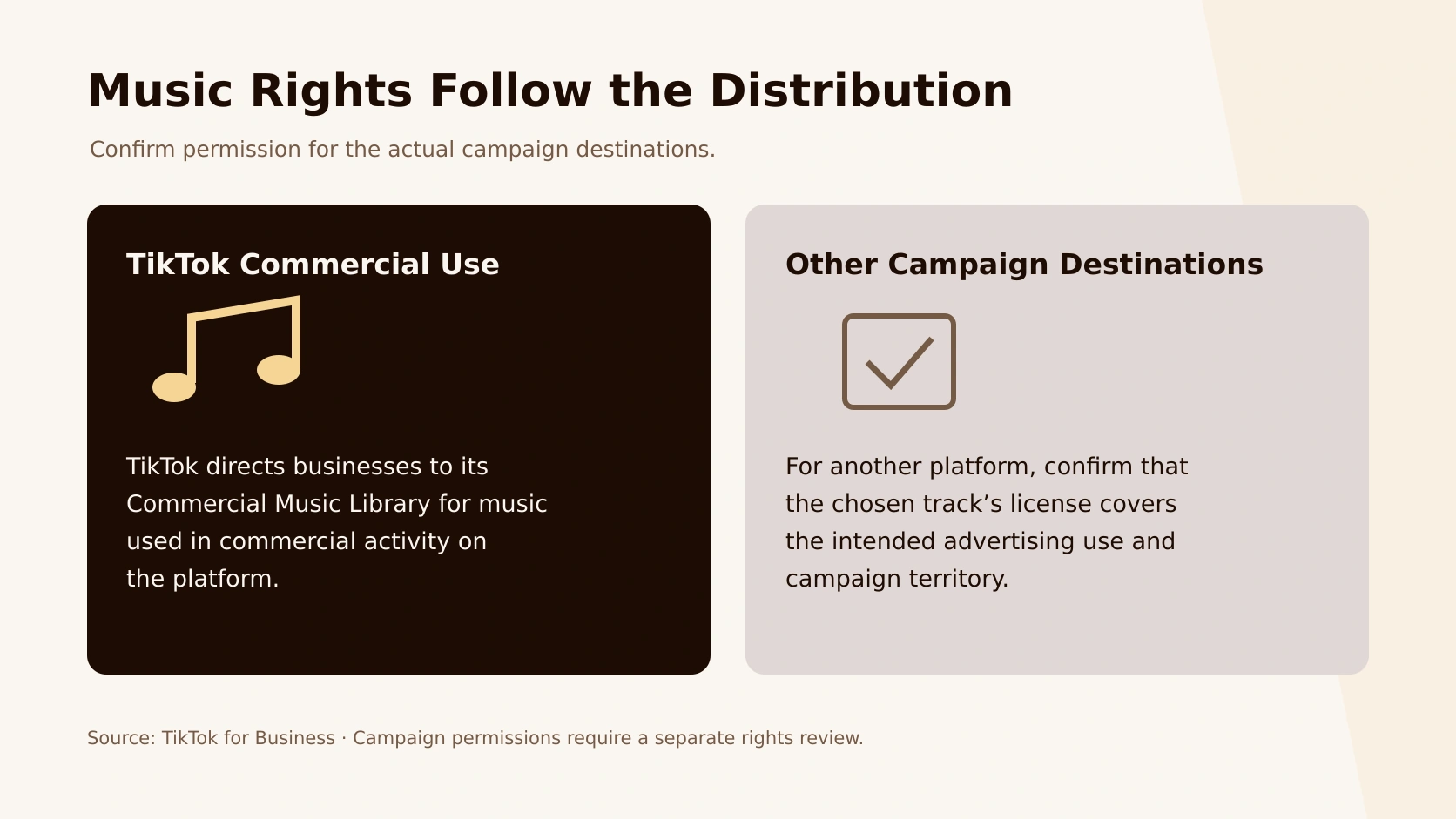
Music approval needs to address the specific advertising use and planned distribution, especially when related edits will appear on several services during the campaign. For commercial TikTok activity, TikTok’s commercial-music guidance directs businesses to its Commercial Music Library; obtaining proper licenses for other recordings requires consultation with the legal team. Obtain confirmation for the chosen track’s permitted use on the other destinations in your media plan.
The producer should retain the applicable permission record for supplied music and confirm the paid-use agreement for a commissioned presenter. Ask the responsible rights reviewer to check the campaign’s territory and usage period. If the approved period ends during the planned campaign, resolve the extension with the rights holder ahead of release. Schedule that review while replacement material remains feasible.
Review the Advertisement the Audience Will Receive
Final approval belongs to the delivered version in its intended placement, with the visible offer checked against the destination page the media team plans to use. Watch the exported file at normal playback speed. Captions need to match the spoken claim. For a time-limited offer, the person responsible for the campaign should confirm that the wording remains accurate on its planned release date.
Label the approved export with its placement and version identifier so the media team can distinguish it from an earlier review copy. The approval record belongs beside that exact file. When a campaign result prompts a creative revision, ask the analyst which advertisement actually ran. The next production decision needs evidence tied to the correct film and campaign objective.
Send your paid video brief via the Studio’s contact page, along with the proposed media plan and the commercial message you want the advertisement to convey. The inquiry should state the required delivery date. Someone’s Studio can discuss the creative direction against those requirements, with the agreed production scope covering the finished versions your campaign needs.