The expensive mistake in a luxury product commercial often appears during a movement: a satin surface suddenly looks glossy, or a pale ceramic body looks yellow beside its metal lid. Perhaps the opening frame passed review. Once the object rotates, its appearance changes enough to suggest another finish. For a brand team commissioning a luxury product commercial in Dubai, the useful approval question concerns the product throughout the shot: does the filmed object still look like the version customers will receive?
Material approval deserves a place between the creative proposal and the main shoot, when the crew still has time to adjust the test. Someone’s Studio’s brand-centered creation approach connects production decisions to the intended brand message. In a product film, those decisions include how a surface reads during movement and which details justify a close view. The recommendations here describe a commissioning method, with a fictional ceramic object used as a production example.
Choose the Exact Product Appearance
Start the approval conversation with the actual advertised variant, since a prototype’s finish may differ from the retail sample selected for the campaign. Ask the product owner to identify the reference sample and explain any deliberate variation between units. For handmade ceramics, small differences may belong to the product itself. The creative team needs to know which variation is acceptable and which sample belongs in the film.
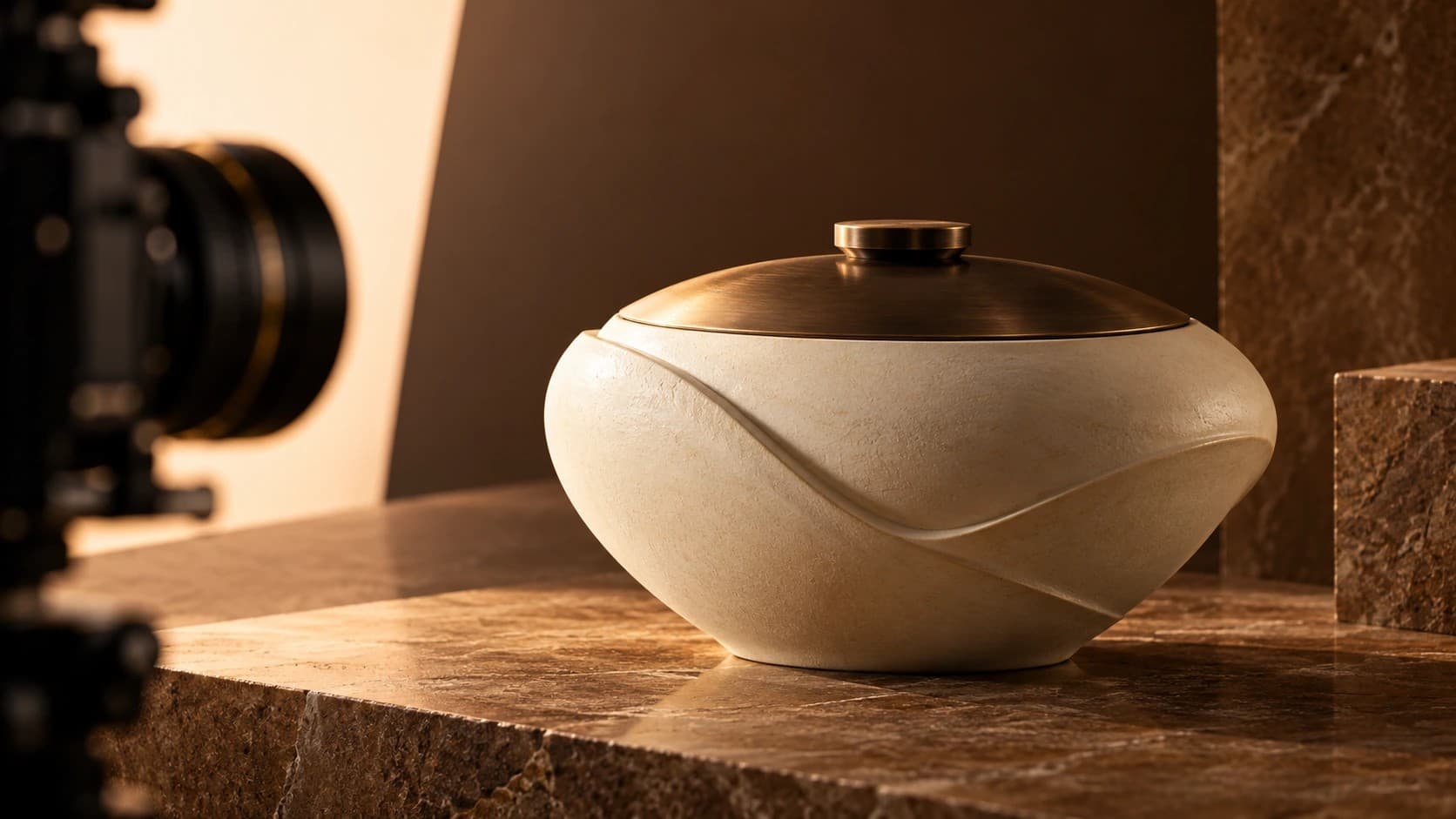
For the ceramic example, suppose the commercial features an ivory vessel with a brushed bronze lid, sold with a satin surface. The shot must preserve the vessel’s pale color and the lid’s brushed appearance. If an extremely bright patch dominates the body, viewers may read its surface as glossy. For a campaign promising a satin finish, the lighting test needs to make the distinction legible during the planned rotation.
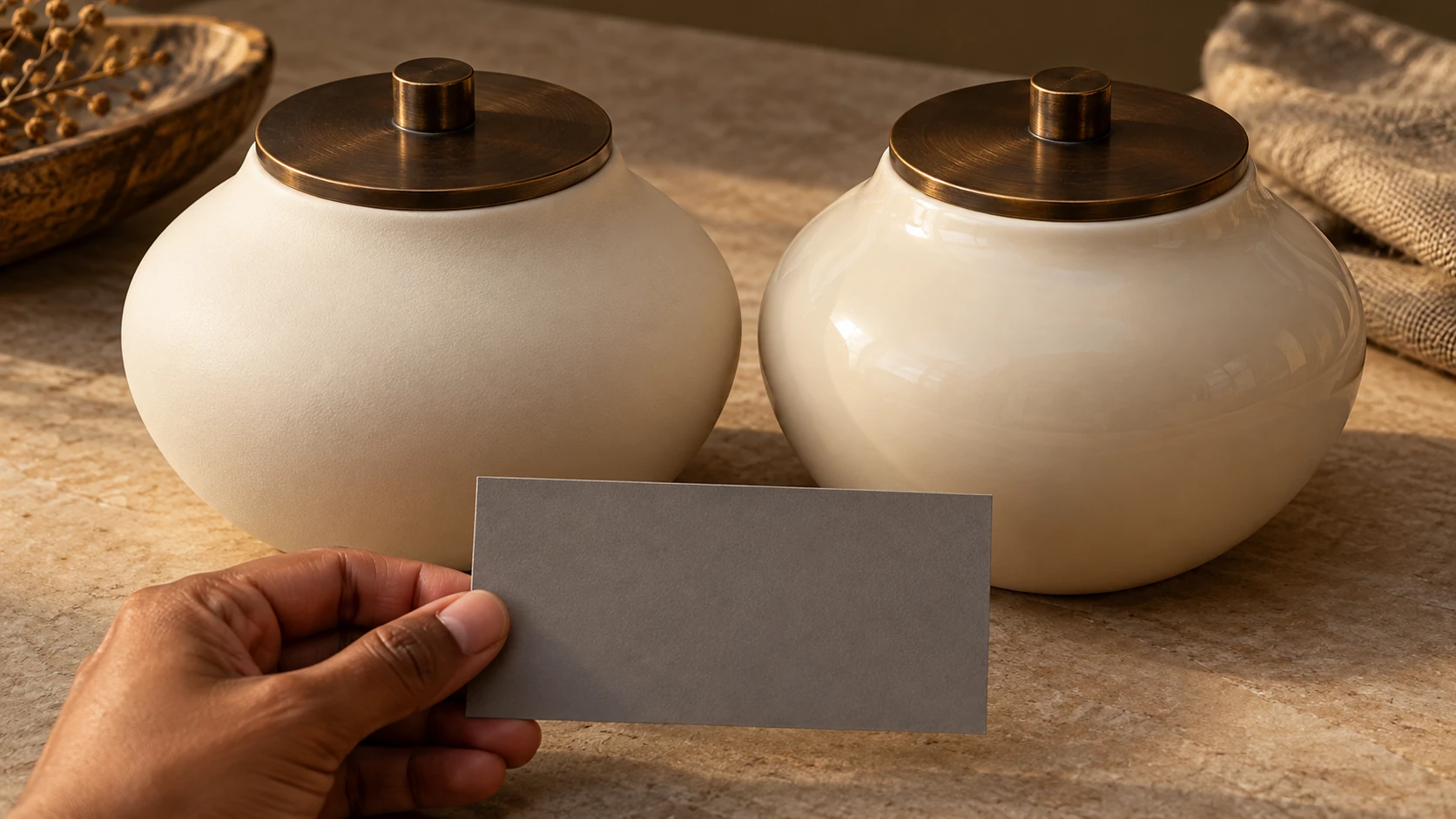
Separate appearance decisions from sample logistics so the review stays useful for the people making the commercial. Studio’s physical-product preparation guide addresses preparation ahead of the shoot. Here, the product owner’s task is to approve what the camera shows. Keep the reference sample available for later comparisons, particularly when another unit replaces it during production.
Film the Test Through the Full Movement
Film the movement proposed for the commercial at the intended product angle, with a short test designed around the material question. Even a slow partial rotation may expose a change in the surface’s apparent finish. Review the resulting clip at normal playback speed, then inspect the portion where the appearance changes. Use a still image as a record of its particular moment within the test.
When the ceramic body faces the light, its texture needs to remain visible enough for the advertised finish to read. As the object turns, check whether the bright area travels across a feature the viewer needs to see. The cinematographer can adjust the light’s size or position, then repeat the same movement for comparison. Keep the product orientation consistent between tests, with one production choice changed in the comparison.
Request the shot’s difficult action during the test, such as the lid opening planned for the finished commercial. Hands may obscure the rim exactly when the film needs to explain how the lid fits. Try another grip or camera height, then inspect the rim through the action. Reserve the revised movement in the shot plan so the main shoot follows the approved action.

Approve the Detail the Viewer Must Read
Choose a close view to answer a product question the wider composition leaves unresolved, such as the lid’s fit against the ceramic rim. The shot description needs to name the question. Then judge the proposed camera distance against the finished delivery size, where a fine surface detail may occupy very few pixels. Review the full-resolution image and the mobile version as separate viewing conditions.
For a lid-fit shot, the sequence needs enough visible movement to show the lid approaching its seat and settling into position. If the edit cuts away at the contact point, the viewer may miss the detail the commercial was meant to explain. Watch the edit as a short action, with attention to whether the viewer receives the intended information.
Keep claims attached to evidence supplied by the brand when a close view implies a technical benefit or manufacturing method. Visible brush texture supports a description of appearance. For a durability claim, obtain substantiation for the proposed wording. Product specialists should review any proposed wording alongside the selected footage, especially where the sequence encourages a particular interpretation.
Keep the Approved Sample Connected to the Edit
Record the approved test’s file name and the exact sample identity so the editor receives a usable visual reference after production. Include the reason for approval in a short note: the ceramic remains ivory during the turn, for example, or the bronze texture stays visible as the lid opens.
When a replacement sample appears during filming, compare its finish with the reference in the same production conditions. If the replacement has a different glaze, repeat the material test and identify any appearance changes needing approval. Describe the acceptable result to the post-production team using the product’s appearance as the reference. The retouching brief needs an agreed boundary between removing temporary dust and changing a permanent material characteristic.
Sound deserves a corresponding decision if the commercial includes the lid making contact with the vessel, particularly when a library effect suggests a different material. Listen to the contact sound alongside the visible action. If an added sound is purely expressive, review whether it changes the product impression the brand intends to create.
Set the Color Handoff Ahead of Approval
The editor needs the footage’s correct color interpretation to compare a graded shot with the approved test, particularly when camera information has changed during file conversion. Adobe’s color-management documentation explains how certain camera files may lack useful color metadata. Ask the post-production team to confirm the input interpretation and the agreed delivery color space when the edit begins.
Adobe describes a sequence in which input color is converted to a working space for adjustments, then to an output space for display or export. The reviewed image belongs to a specific processing path. Save the approved test with its processing path documented, and compare the finished shot using the agreed review setup. If the setup changes late in the edit, repeat the appearance check.
For the ceramic example, the final grade needs to preserve the difference between the ivory body and the warmer metal lid throughout the commercial. Ask the colorist to compare the widest view with the closest detail shot. The same product should feel consistent across the sequence, even when the composition changes. Allow for differences between viewers’ displays when setting the approval criteria.
Review the Delivered File Against the Product
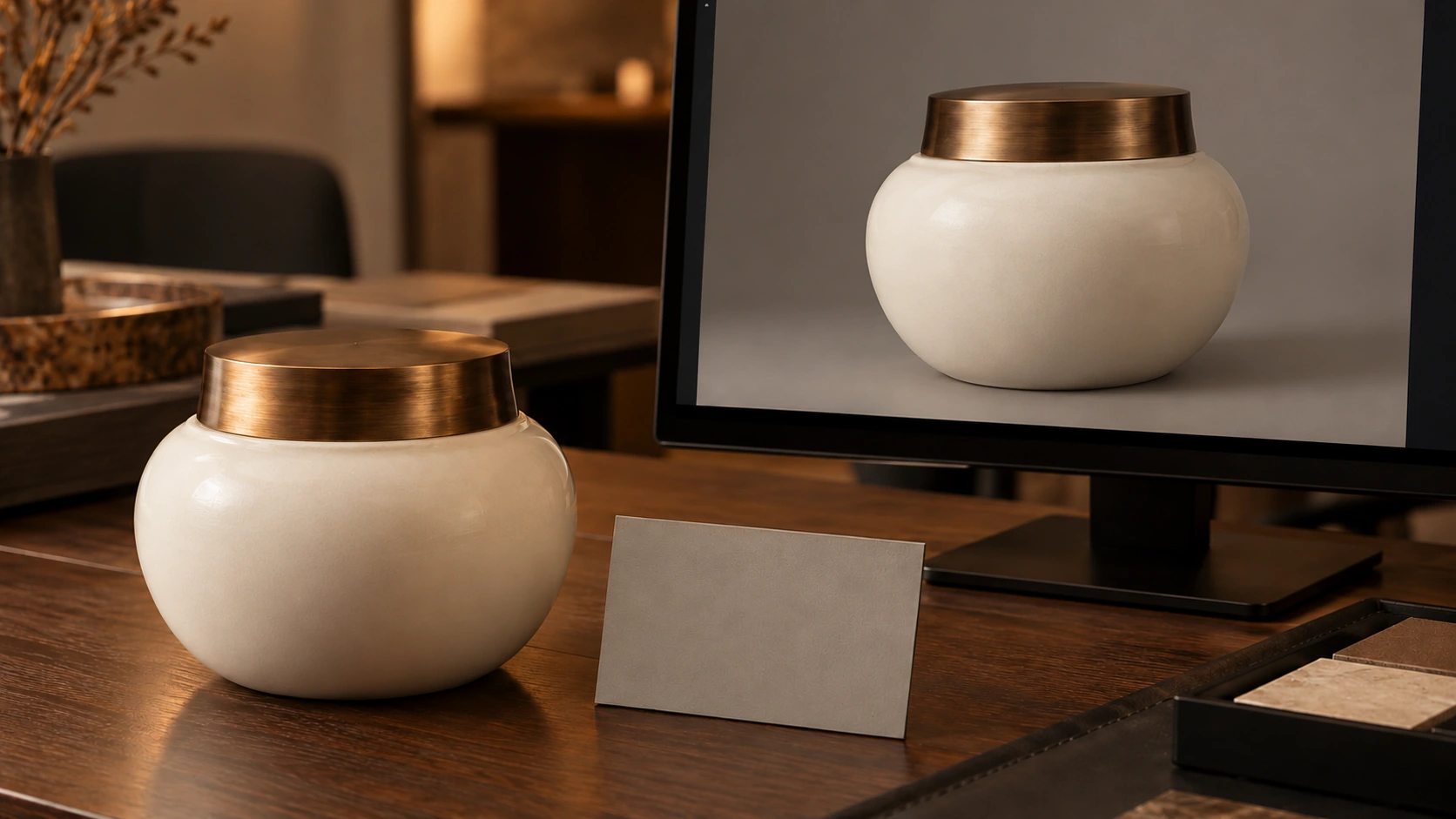
Final approval belongs to the exported file intended for release, since the review copy and the delivery copy may use different settings. YouTube’s upload guidance recommends BT.709 for SDR video. For an SDR YouTube deliverable, use the recommendation when preparing the specification; the production team should confirm the requirements for other destinations. Attach the agreed delivery specification to the approved file.
Play the complete commercial in its intended format and inspect the product at the size viewers will encounter. Check the lid’s movement through the cut, then compare the ceramic finish with the approved reference. If a shorter version removes the explanatory action, review the shorter version as its own communication. The main film’s approval covers only the material actually reviewed.
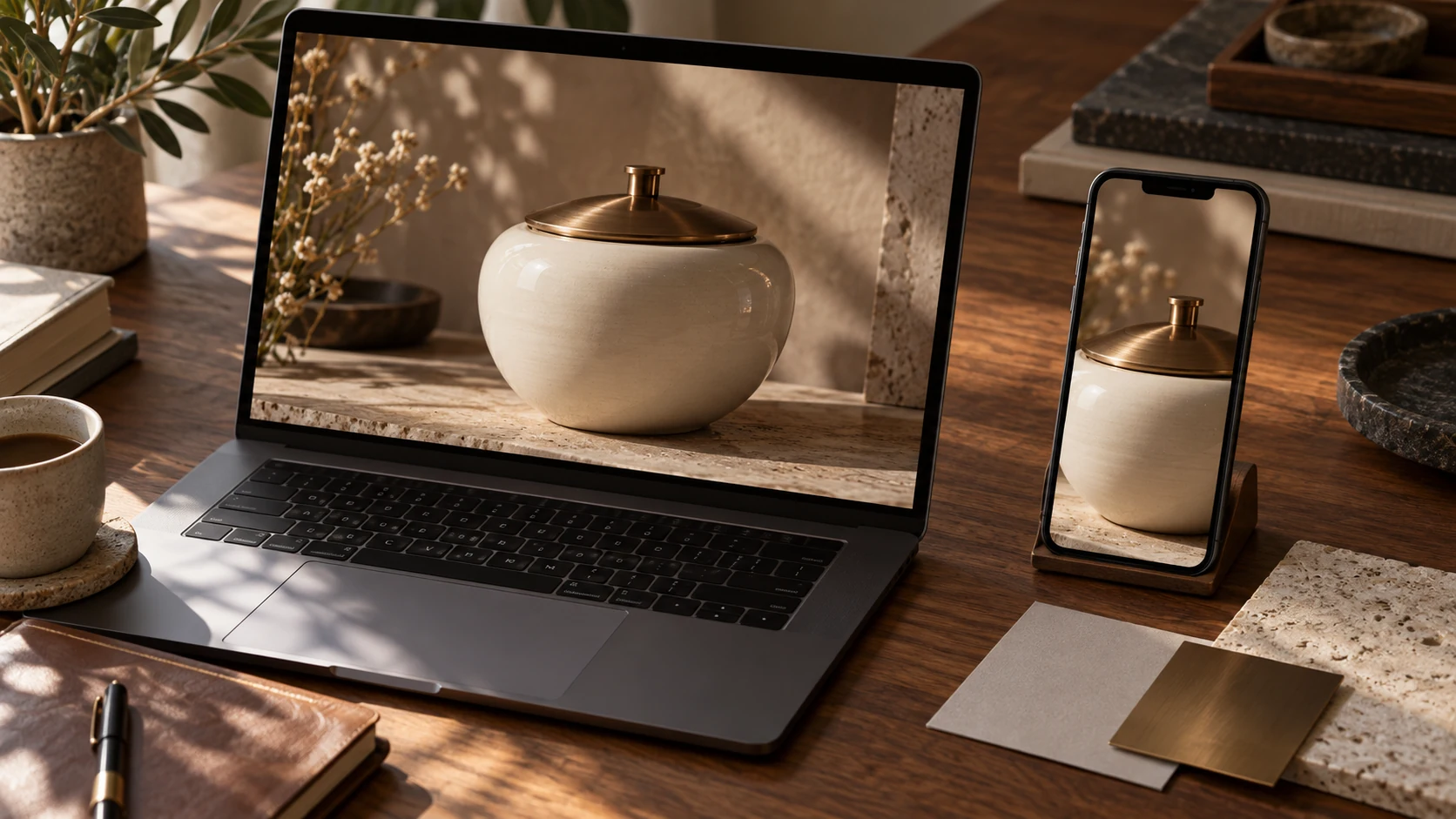
Someone’s Studio’s Product Film Suite presents an environment for object-led brand communication, and the project inquiry should explain which product qualities the film needs to communicate. Share the exact variant and the proposed campaign use through the Studio contact page. The team can then discuss the test requirements within the production scope and specify which review stages belong in the agreed commission.