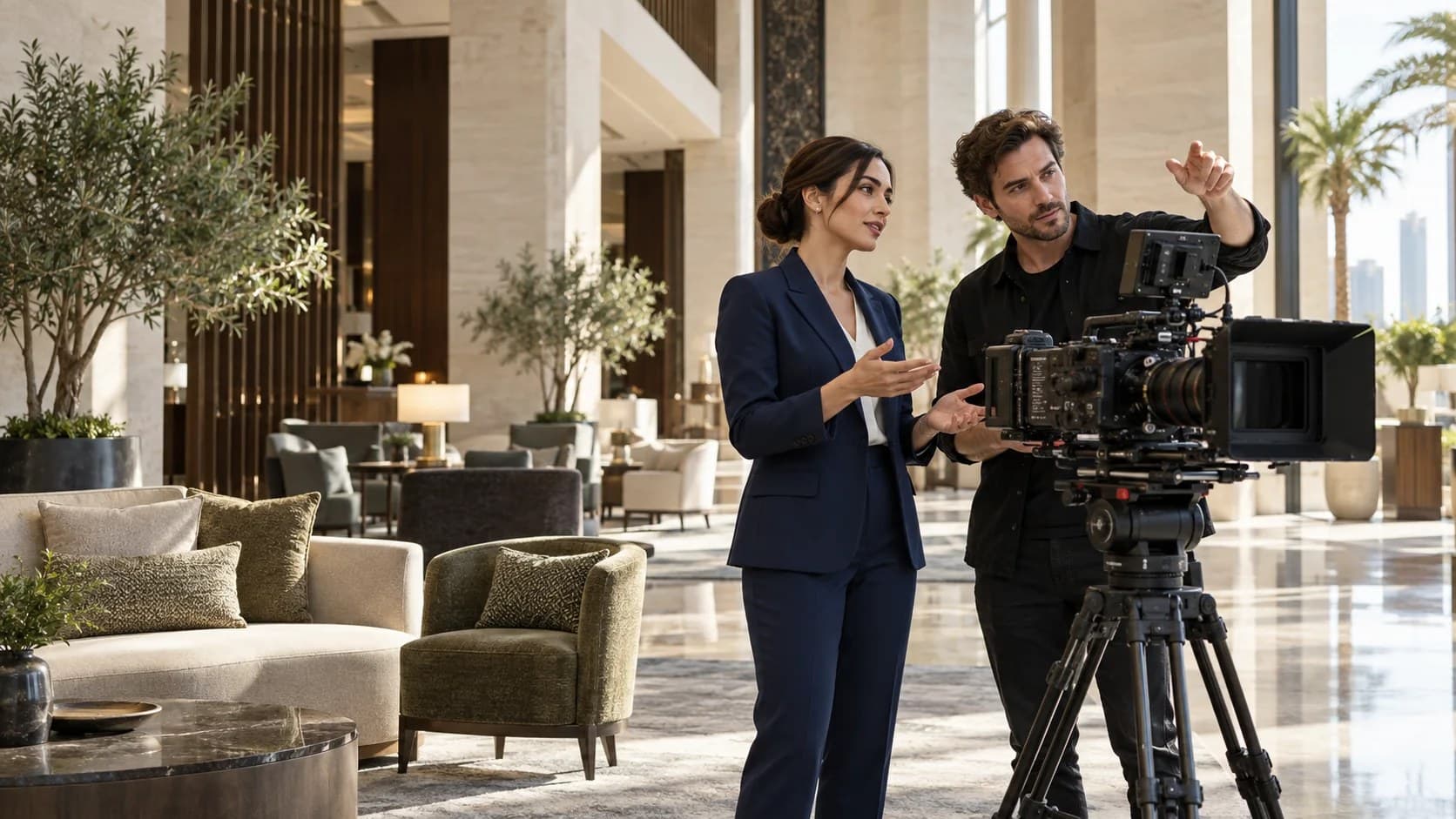
Hotel video production in Dubai begins with a decision that affects almost every shot: which stay is the film asking someone to book? Perhaps the campaign promotes a weekend suite package. The intended audience might include corporate travel buyers assessing accommodation for visiting colleagues. Viewers need enough detail to recognize the offer and understand the property. Breakfast scenes belong in the story when the advertised package includes the meal.
Hotel teams then face a production constraint familiar to anyone who has arranged filming inside an operating property: guests continue arriving while the crew works. Access to an empty suite may end when housekeeping prepares it for check-in. The restaurant may become available between meal periods. Creative decisions need to accommodate those conditions while retaining the hotel’s character, so the filming plan should describe the guest offer alongside the spaces required for the story.
Choose the Stay the Film Will Describe
The hotel’s commercial team can identify the accommodation category and booking proposition during the initial discussion, then compare the proposed scenes with the actual offer. Actual accommodation footage should depict the promoted category. If the campaign includes a premium upgrade, its description needs to remain visible wherever the upgrade appears. Viewers should be able to connect the on-screen accommodation to the relevant booking option.
Breakfast illustrates how an appealing scene can introduce a different promise from the one intended by the hotel. In a fictional campaign for a bed-and-breakfast package, a chef-prepared specialty might look excellent on camera but belong to a separately charged menu. The production team could instead photograph the included breakfast selection, or the hotel could approve an explicit paid-extra description. Hotel approval belongs in the concept discussion, while the script remains open to revision.
Audience differences deserve concrete treatment in the creative brief for video production, particularly when one property sells accommodation to guests traveling for different purposes. Corporate travel buyers may need to see a suitable workspace and understand the availability of meeting facilities. Leisure guests may be comparing suite layouts or dining options. The hotel’s team should select the details relevant to the proposed stay; unrelated facilities can appear in a separate film commissioned for another purpose.
Fit Filming Around Hotel Operations
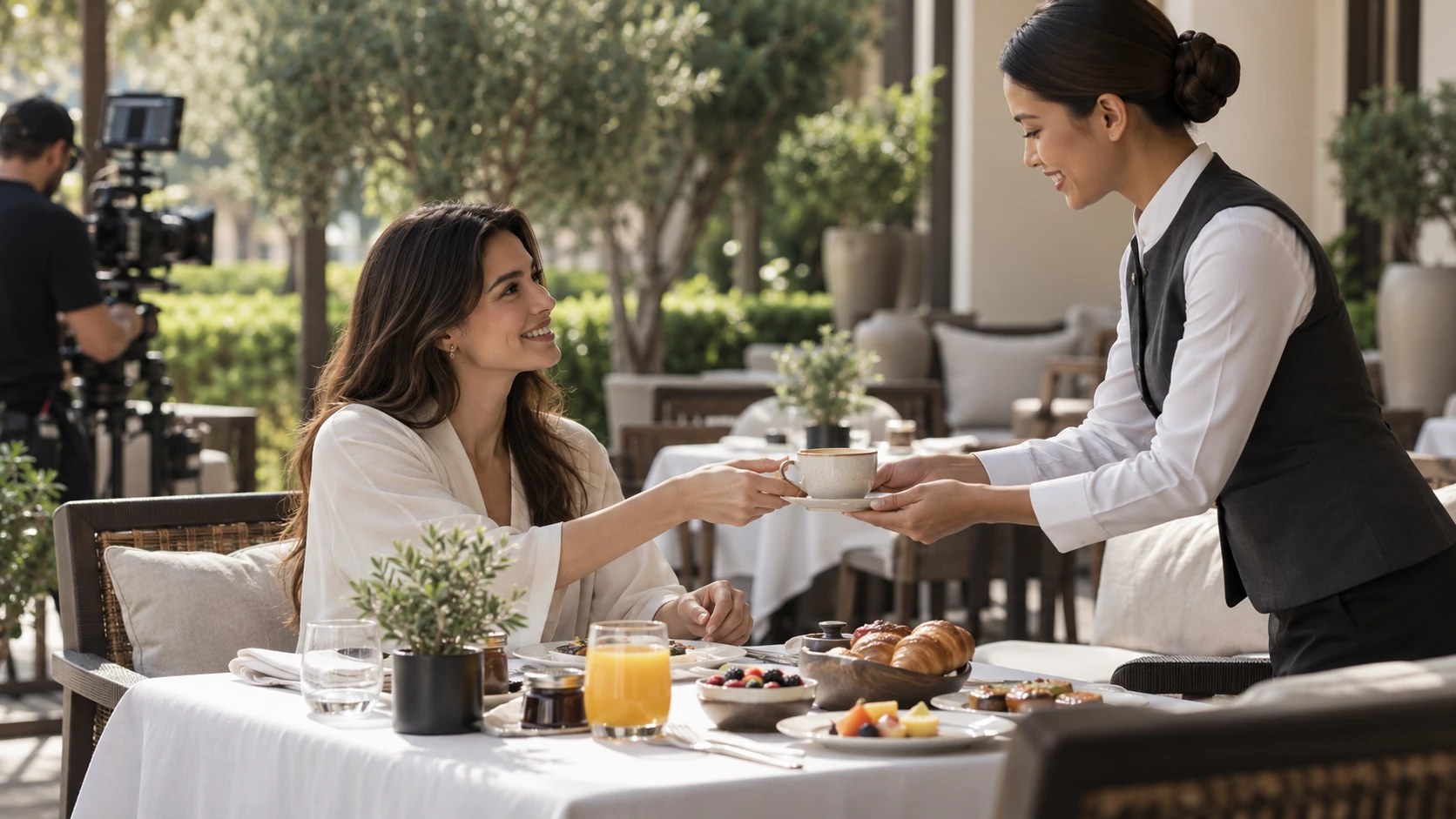
Site visits need a hotel contact who knows the property’s operating rhythm and can confirm when the crew may use the proposed spaces. Restaurant access should include preparation time, followed by enough time to restore tables for guests. Guests may fill a previously empty dining area during a camera setup. The producer needs an agreed working window, plus a realistic plan for moving equipment away from service routes.
Hotel housekeeping staff and the producer should agree when the selected accommodation becomes available for filming and who authorizes furniture movement. Camera preparation may involve window treatment or temporary lighting. The hotel’s staff can identify which changes suit the property and which items should remain in place. Crew members need time to restore the suite within the agreed access period, as an arriving guest expects the usual accommodation.
Dubai Film and TV Commission’s guidance identifies location-owner approval as a condition in its filming-permit process and assigns location-date restrictions to owners. The production company should confirm with the Commission the applicable permit route for the proposed commercial shoot. Hotel access approval belongs in the preparation alongside the permit inquiry. The final filming plan should use confirmed permissions and agreed dates; published processing estimates remain separate from a production-specific approval.
Film Service Through Believable Actions
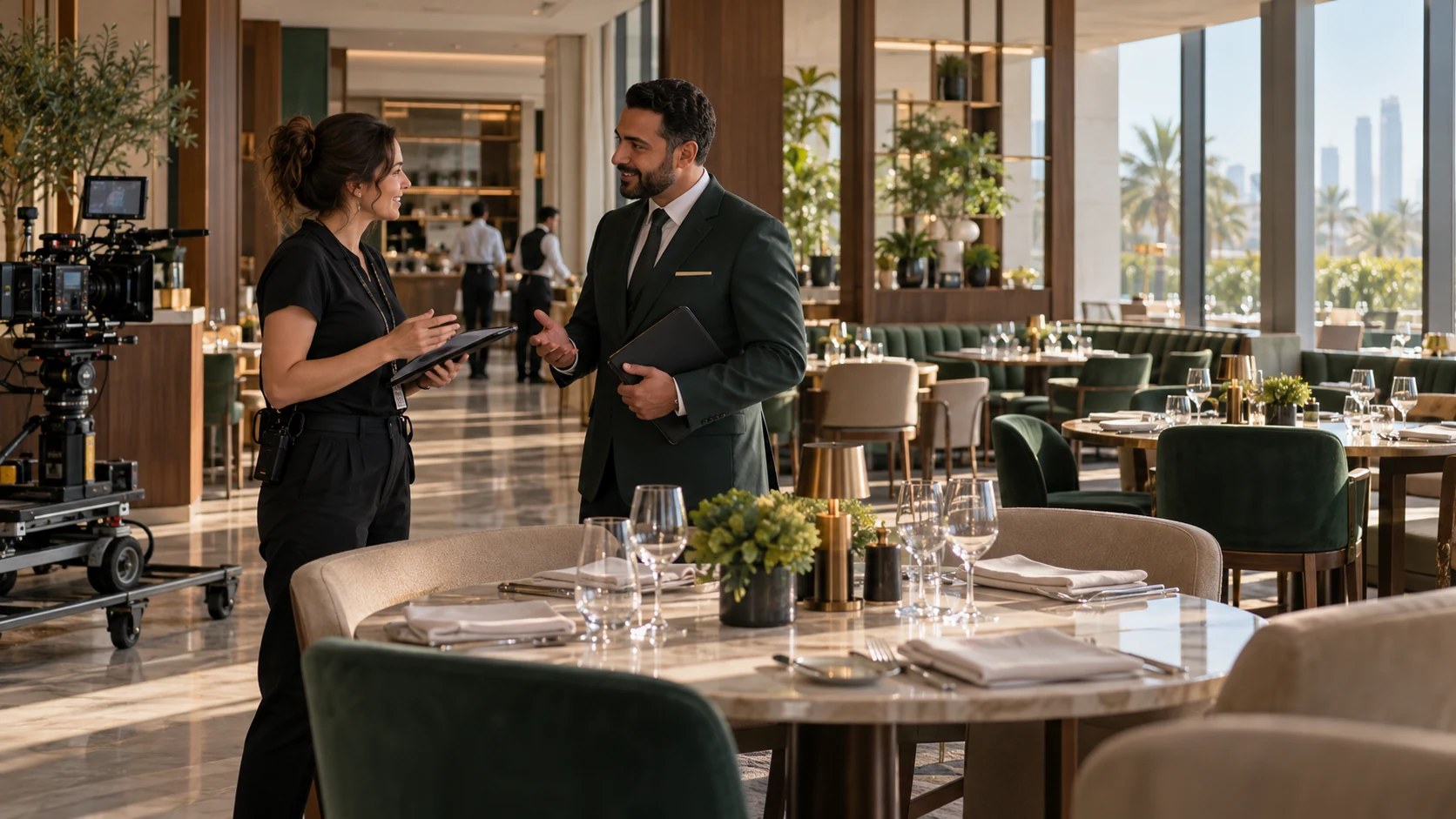
Hospitality becomes visible when a staff member completes a recognizable action in the setting where guests normally receive the service. Someone pouring coffee and placing the cup within reach supplies more information than a succession of empty tables. The viewer can see the service gesture and its surrounding atmosphere. Related advice in the Studio’s discussion of luxury film concepts addresses human rituals in hospitality; the hotel-specific decision concerns which genuine service actions to include in this campaign.
Staff participating in the shoot need enough preparation to understand their scene and the agreed use of their appearance. The director can rehearse the action with the performer, then choose a camera position that keeps the interaction readable. Repeated takes should retain the same cup position and hand movement when the editor needs continuous action. Service supervisors can check whether the rehearsed behavior aligns with the hotel’s standard practice.
Public hotel areas require a separate arrangement for people present during filming, so the producer should agree on the filming boundary with the hotel. Scheduled participants and suitable appearance permissions reduce uncertainty around footage use. The hotel’s team can identify occupied areas that require privacy, with the production company arranging an alternative camera position or an alternative access period. Actual guests should retain their normal route through the property.
Keep the Property Recognizable on Camera
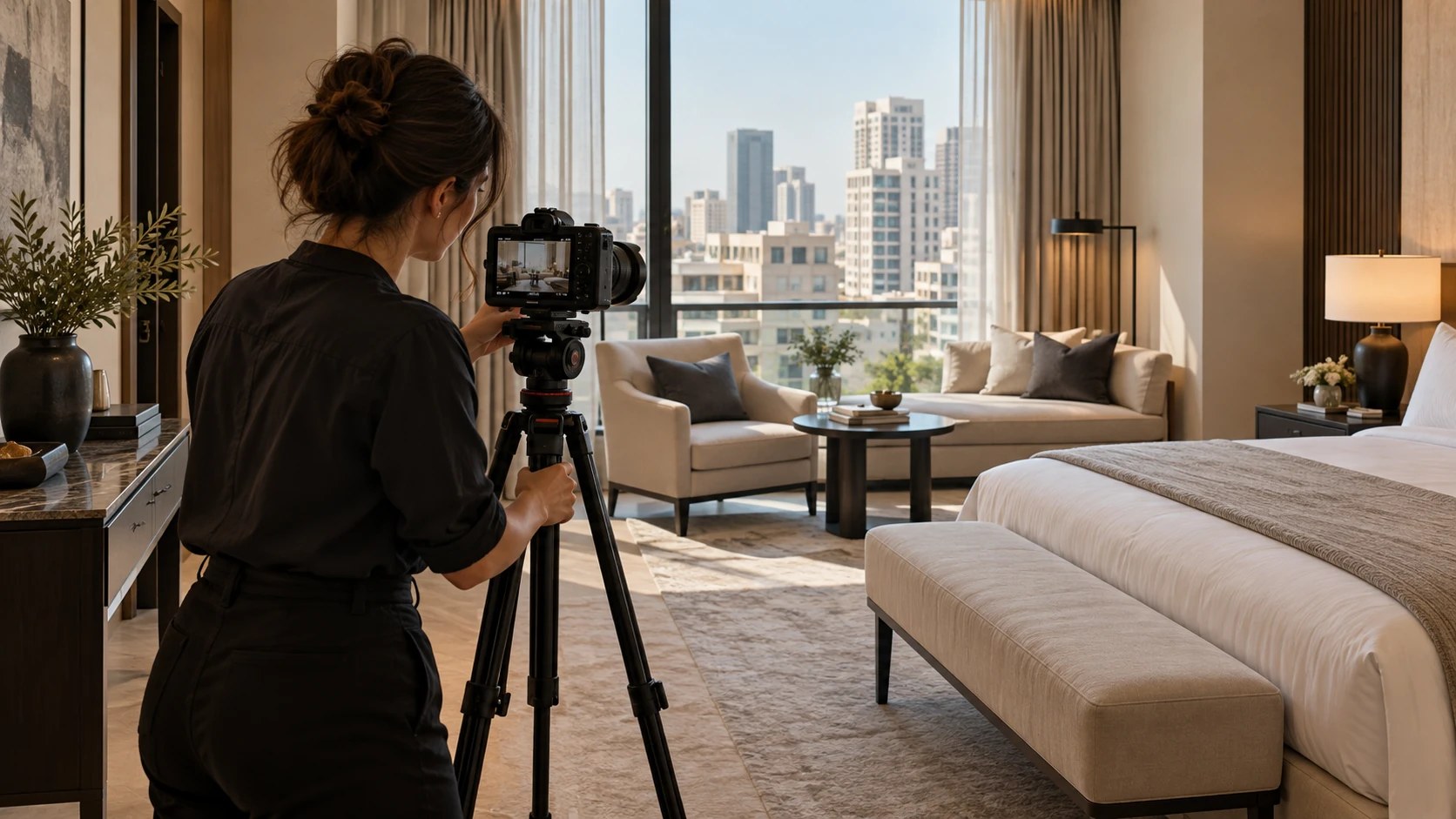
The camera should communicate the accommodation’s proportions accurately enough for viewers to understand its layout and relationship to the exterior view. Camera tests allow the cinematographer to compare candidate positions with what a person sees from the entrance. Extremely wide views may exaggerate the distance between furniture. Another camera position or lens can produce a more faithful impression while preserving the intended composition.
Window scenes need particular attention when the advertised accommodation category includes a specific view, since neighboring suites may face different directions. The hotel’s reviewer should compare the filmed view with the category being promoted. Temporary furniture borrowed from another suite can create similar confusion. Production notes should identify any proposed changes so the hotel can approve a depiction consistent with what it sells.
The cinematographer’s lighting decisions can retain the property’s actual material colors while allowing people to look natural within the scene. White linen should remain recognizable, and skin should retain plausible color beside warm interior lamps. The production team can review a short test recorded at the intended filming hour. If the window becomes too bright at the proposed hour, another camera position may retain exterior detail and the advertised view.
Plan Versions Around the Actual Scene
The film’s planned destinations affect composition during filming, particularly when a broad architectural view will later appear in a narrow vertical version. Tight vertical crops may remove the staff member completing the action or the accommodation feature discussed in the narration. The director should assess the relevant frames during the shoot. When the action requires a different camera position, a separate take is often the more useful production choice.
Captions need their own review whenever speech or meaningful audio contributes information, especially for viewers who are deaf or have hearing loss. W3C’s caption guidance explains how synchronized captions communicate dialogue and relevant sound information. The hotel’s reviewer should check names and spoken service descriptions against the approved script. Text placement deserves attention during a narrow crop, where captions may overlap the very feature the film describes.
The final review should include the actual video files and the surrounding offer text wherever a campaign pairs them. Even an accurate suite sequence can become misleading when attached to a different accommodation category’s booking page. The hotel’s commercial approver needs to confirm the relationship between the film and its destination. Edited versions should retain the relevant qualification wherever a paid extra appears.
Prepare a Hospitality Production Inquiry
Someone’s Studio provides brand-led video production in Dubai, with creative development informed by the intended audience and public message. For a hospitality inquiry, useful starting materials include the proposed stay and current property photographs. The hotel can then identify access limitations and the intended release date. Scope discussions can establish which scenes require location filming and which supporting material suits a studio production.
Hotel teams can contact Someone’s Studio with their campaign brief and proposed property access dates to discuss the creative requirements. The conversation should establish the actual offer the film will describe, followed by the people responsible for approving its portrayal. Confirmed access lets the producer plan filming and final delivery at the hotel.