Guests arrive with stories shaped by their daily work, and a company's recurring interview program needs an editorial reason for inviting them back into the same conversation. The first episode needs a question worth answering. Over a season, the host needs enough related questions to keep the program useful as different guests contribute their own knowledge. For a brand commissioning corporate podcast production in Dubai, that recurring editorial purpose belongs in the production brief alongside the intended audience.
Someone's Studio approaches creative production through the brand's communication needs, with its podcast production service providing a starting point for discussing the proposed series. Your initial commission deserves a realistic season plan and a pilot that tests the conversation. Decide what listeners will learn during an episode, then assess the pilot against that purpose as part of the decision to commission further recordings.
Choose a Subject That Supports a Series
The editorial premise needs enough depth for successive episodes, especially when your company intends to interview specialists who share a professional field. For example, a proposed hospitality series might examine how operators decide which guest services to introduce. One episode could examine a service trial; another could discuss the decision to revise an established offer. Guests would need firsthand knowledge approved for public discussion. The example describes an editorial proposal, with its relevance dependent on the commissioning brand's actual audience.
Instead of inviting guests solely for their seniority, the producer can identify the particular decision each person is qualified to explain. Ask for a short account during preparation and assess the available detail. If several proposed interviews repeat the same explanation, revise the guest brief or return to the season's unanswered questions. Resolve the duplication during development, when the proposed recording still has time for a different guest or question.
Write a Pilot Brief the Host Can Use
Your pilot brief needs to describe the listener's existing knowledge so the host can judge how much explanation a guest's answer requires. Industry shorthand sounds natural between colleagues; listeners entering the field may need the term explained in the exchange. In the pilot conversation, ask the guest to describe what happened in ordinary language, then follow the decision that produced the outcome.
For a recurring program, agree which parts repeat between episodes and which parts respond to the particular guest's account. The opening can name the question and establish the speaker's relevant background. During the interview, follow-up questions should address what the guest actually says. End the episode when its central question has received a substantive answer, and identify any unresolved issues in the conversation.
The host's preparation benefits from hearing the guest explain the subject aloud in a brief preliminary discussion, particularly when the proposed account includes technical details. Keep the conversational questions separate from wording that requires exact approval. Someone's Studio's CEO interview article discusses speaker preparation in greater detail. For the podcast, the host's repeated responsibility is to connect a guest's answer with the listener's reason for returning.

Create a Recognizable Visual Identity for the Series
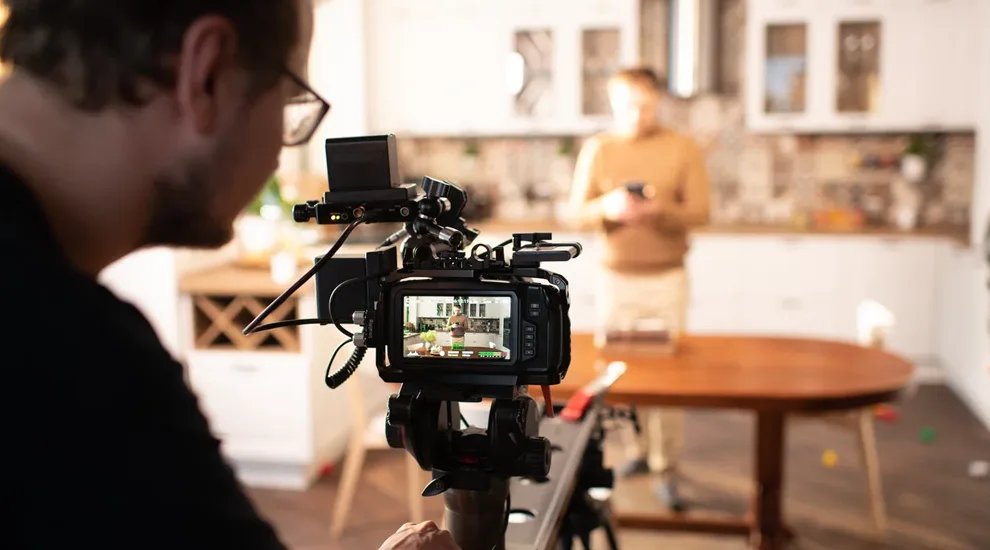
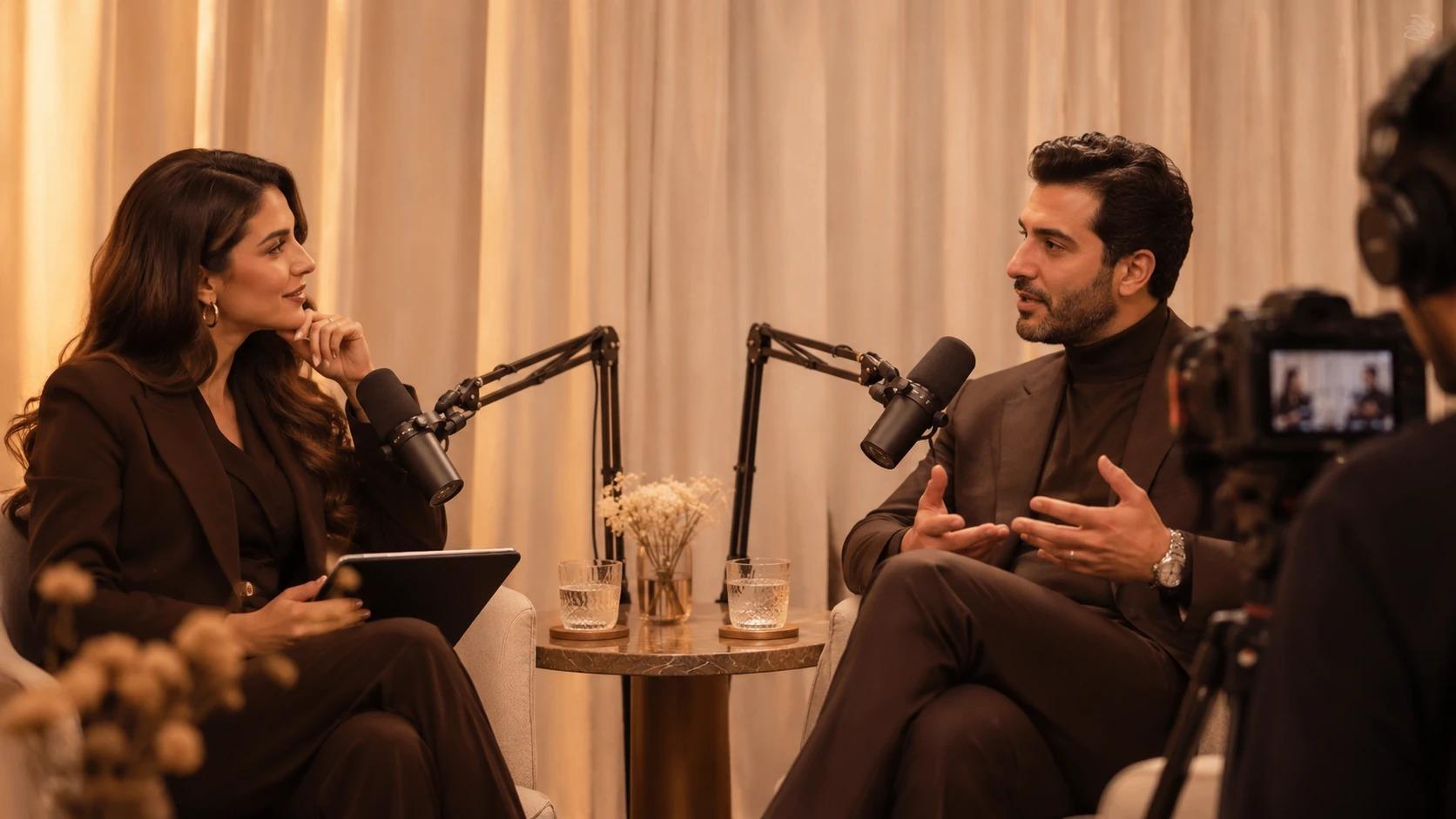
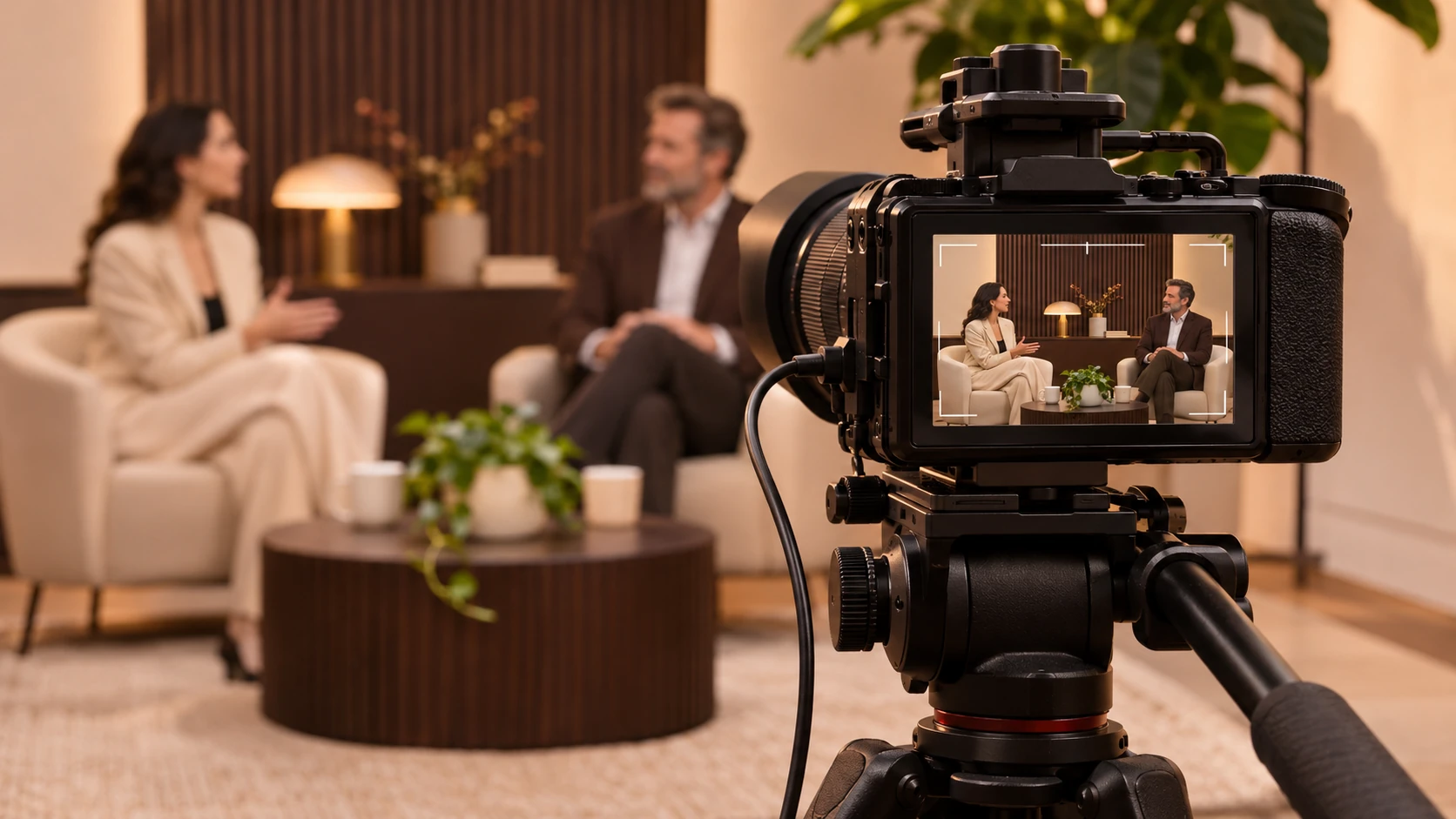
Guests with different heights will occupy the set throughout a season, so approve the pilot's camera compositions with their likely seating positions in mind. If the guest uses broad gestures, a close view approved for the host may require a wider composition. Review the host and guest together in a setup test, then examine the individual shots. Photographs documenting approved camera positions help the crew reproduce the intended composition on another day of recording.
Within the frame, retain the brand's approved colors through restrained set details that leave faces easy to read throughout a conversation. The guest's clothing needs a separate camera check against the selected background. For a video series intended to produce vertical excerpts, confirm the crop during rehearsal. Reserve space for the speaker identification while the participant uses their normal posture, then check that the text remains legible at the intended viewing size.
Plan Recording Days around Real Conversations
Allow time in the session for a guest's preparation and a sound test, then reserve a period for answers that require clarification after the main interview. Batch recording several episodes is workable when the host remains attentive through the final conversation. Discuss the proposed workload during the pilot and review the last recording with the same expectations as the first. For a longer booking, agree when the host will take breaks and which guest arrives next.
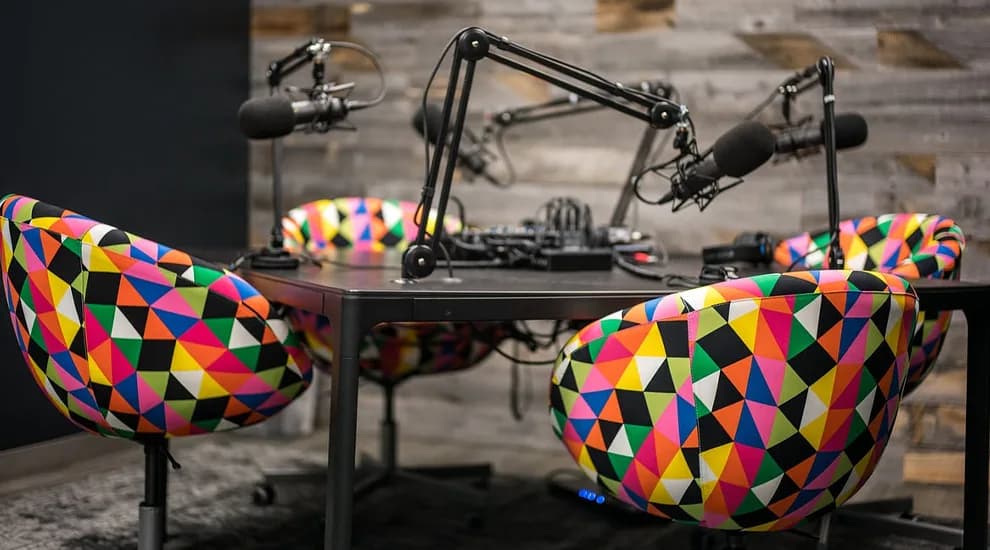
If your Dubai series includes a guest joining from another country, test the proposed connection with that person using the equipment planned for the actual interview. The technical producer can specify a local recording method and confirm how the files will be delivered to the editor. Test the return audio for the host and guest in rehearsal. Describe any remaining technical limitations to the commissioning team while the recording plan remains open for revision.
Review Sound through the Finished Episode
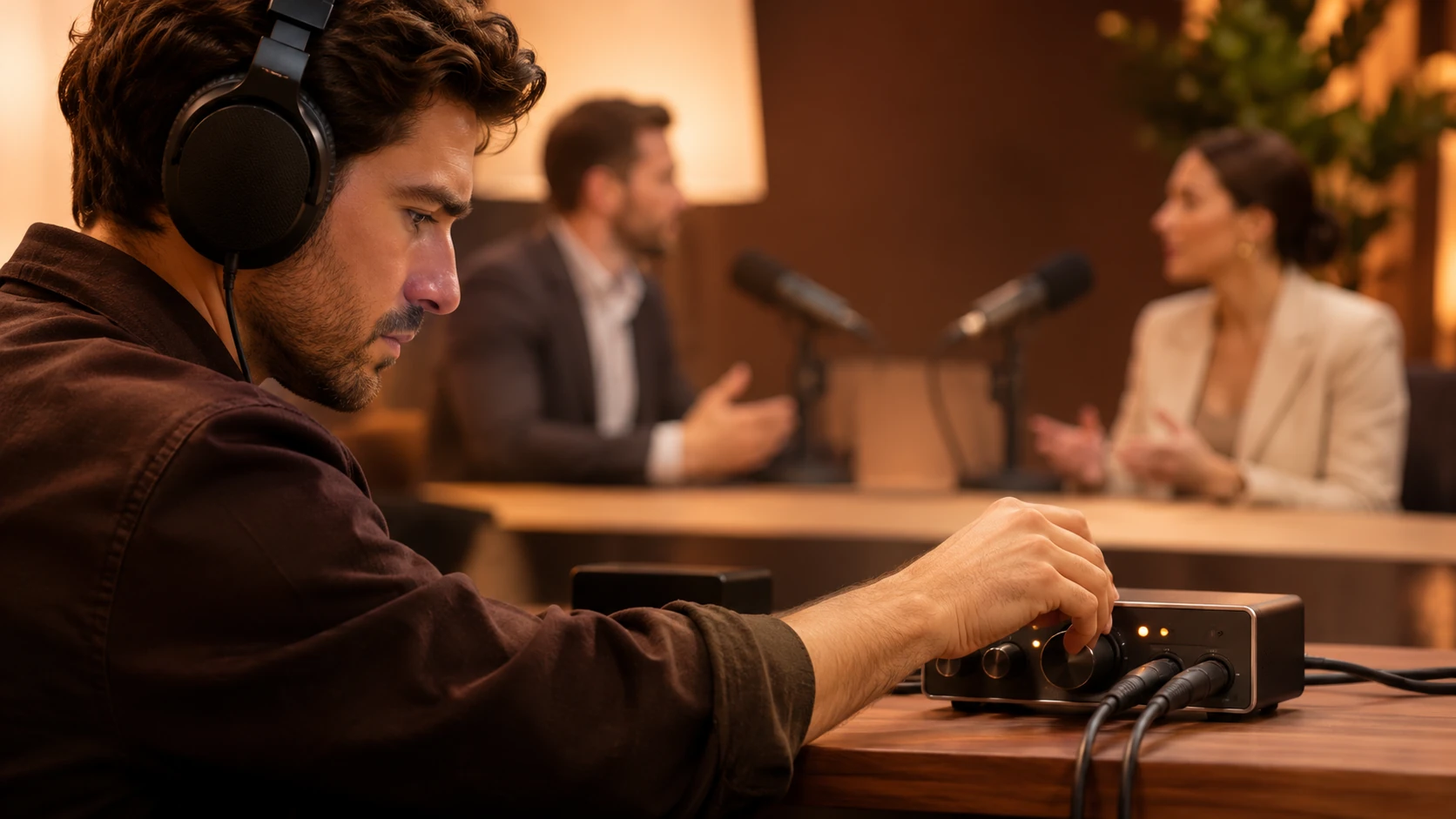
Listeners need consistent speech levels as the conversation moves between participants, so the commissioning team needs to assess the final mix as part of its editorial review. Apple's audio recommendations specify overall loudness around minus 16 dB LKFS, with a tolerance of plus or minus 1 dB. Its recommended true peak ceiling is minus 1 dB FS. The engineer needs to check the agreed delivery file against the destination's current specifications.
For the client's listening pass, use headphones and the device commonly used by the intended audience, with comments identifying the exact passage requiring correction. Listen for a soft reply after an animated exchange, then assess how it reads within the conversation. Excessive processing that obscures a speaker's natural delivery deserves another mix. Keep the approved audio version associated with the corresponding video export so the final package contains matching edits.
Keep Editorial Approval Specific
Guest approval becomes difficult when participants learn the intended reuse only after seeing an excerpt, so discuss the planned episode and promotional clips during preparation. The production agreement needs to identify the permitted use and the people responsible for final approval. Set a review date that leaves time for factual corrections. Any additional use proposed later belongs in a separate discussion with the appropriate rights holder.
For factual review, the guest or nominated specialist needs to identify the statement at issue and supply the correct information for the editor. Opinions need to remain attributed to their speaker. If a guest qualifies a claim during the interview, retain the relevant qualification in an excerpt that uses the claim. The publishing team needs the approved episode to support any promotional description written for its release.
Prepare the Episode and Its Companion Files
To prepare the release, list the full interview separately from the shorter material intended to introduce it, with a delivery entry for the files required at each destination. YouTube's podcast documentation describes a podcast as a playlist whose episodes are videos. It directs creators to apply podcast features to playlists containing full episodes. Promotional clips belong in their own publishing plan, with descriptions that identify the complete conversation.
Transcript preparation deserves time after the final edit, especially when a series contains specialist language or names that automated transcription may miss. Apple's transcript guidance asks creators to include host and guest names in show descriptions to support accurate spelling. It supports creator-supplied transcripts through participating hosting arrangements. Confirm language support for the chosen destination and provide an accessible transcript link where the platform recommends that alternative.
Assess the Pilot and Commission the Next Recordings
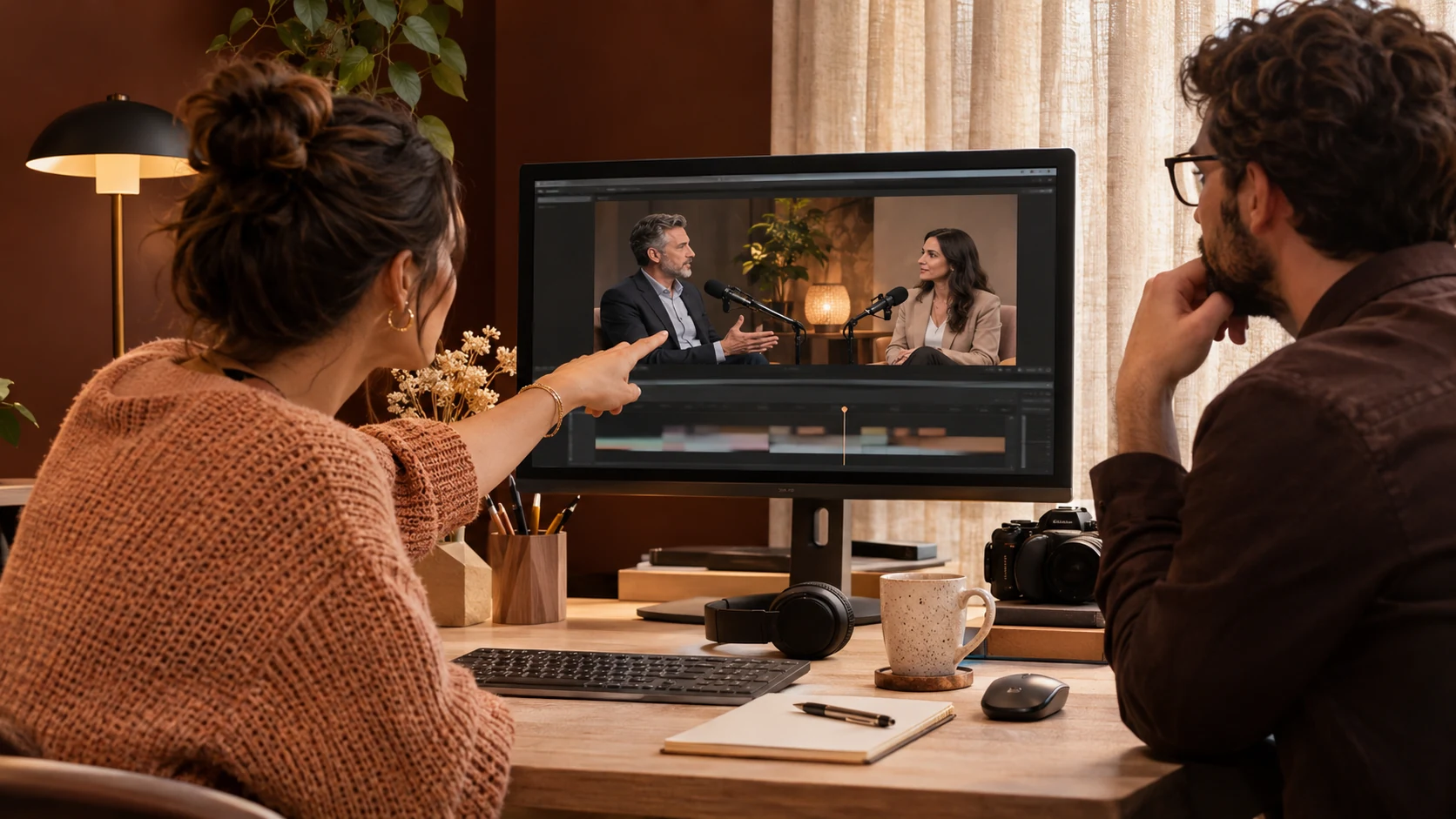
The commissioning team can use the finished pilot to assess how much editing the actual conversation required and price the next episode on that basis. Compare the proposed duration with the edited episode and identify passages that justify their length. Review the host's follow-up questions against the listener's likely uncertainties. The production quote can then describe the approved recording scope alongside the required editing work.
Someone's Studio's brand-led creative work connects the proposed media with the client's communication purpose, which makes the series premise a useful starting point for your production inquiry. Contact Someone's Studio with the proposed audience and a pilot subject ready for discussion. Include the intended release date in the brief, then agree the proposed recording services and the review dates required for the first release.