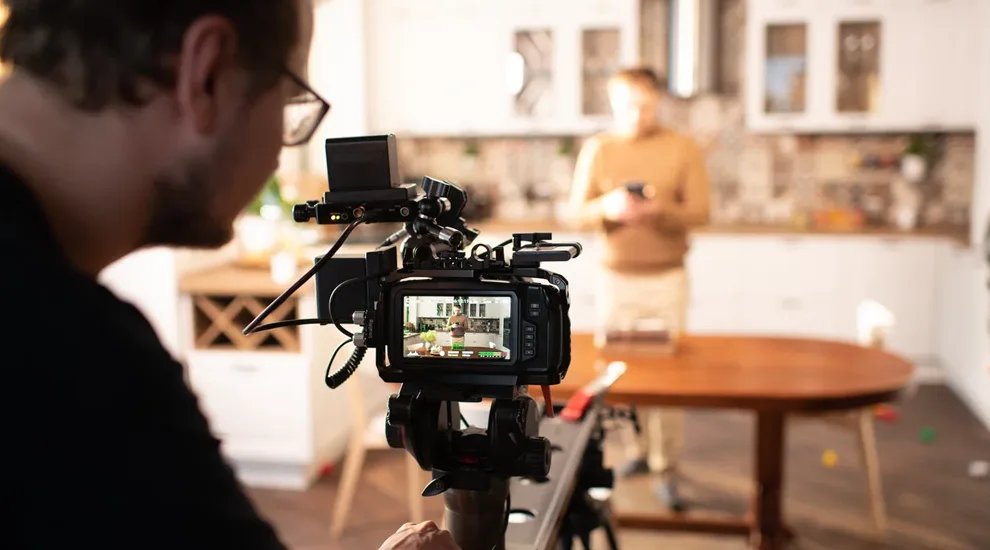
Your CEO interview video production in Dubai needs a conversation where the executive can enter with informed opinions and enough preparation to discuss the decisions behind them. In the finished film, let viewers hear the speaker's actual judgment. If a company is changing how it works, the audience needs to hear what prompted the decision and what the change means for them.
Someone's Studio approaches executive communication through the brand's message and the audience it needs to reach, with production planned around the proposed use. For leadership interviews and corporate announcements, clients can discuss their requirements through its executive production service. Start the discussion with a useful question that the CEO is qualified to answer.
Start with the Audience's Unanswered Question
Employees hearing an operational update need enough detail to connect the CEO's explanation with their own work, so the interview brief should identify their immediate uncertainty. The question might concern how a proposed change affects customer service. Ask the executive to explain the decision using an actual customer issue approved for discussion.
Prospective clients evaluating a company's expertise have a different reason to watch, which calls for questions related to decisions they face when choosing a supplier. Ask what the company learned during a relevant project and which evidence influenced its response. Once the client approves the project account for public use, the CEO can discuss its details in familiar language.
Prepare the CEO for Topics and Evidence
In a preparation conversation, the interviewer needs to hear how the executive normally explains the subject and which details they consider essential to an accurate account. Listen for the concrete incident behind a broad statement. If the CEO says a product changed after customer feedback, ask which feedback led to a different design decision.
The speaker's preparation notes should contain the discussion themes and the facts requiring exact wording, with source material available for any numerical claim. For conversational sections, rehearse the explanation aloud using a colleague's question. Approved announcement language belongs in a separate passage when its wording must remain fixed. Record the passage as an identified statement, with the interview continuing around the executive's own answers.
Topics involving confidential company plans need an agreed boundary for the recorded discussion, especially when the executive is discussing work still in development. Identify which facts are approved for public use. If a question reaches a restricted subject, pause and agree on a permitted direction. The client can nominate a knowledgeable reviewer to resolve factual uncertainty during the session.
Write Questions for Specific Answers
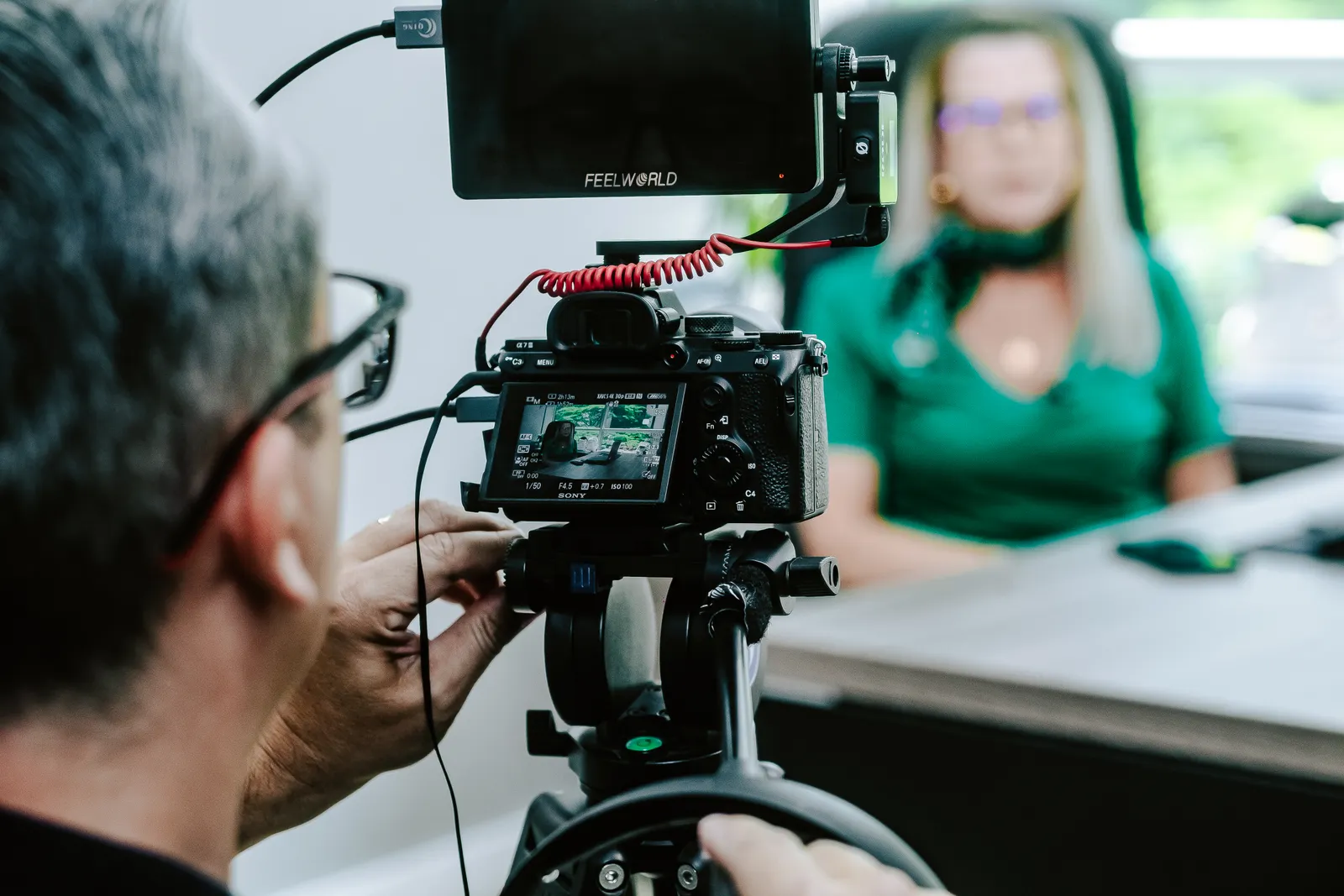
Interview questions work better when they ask the CEO to explain a decision in ordinary language and leave the judgment itself with the speaker. “What led the team to revise the product?” invites an account with a cause. Follow the reply with a request for the evidence used in the decision. The question sequence then develops around what the executive actually says.
In its interview guidance, the Oral History Association recommends open-ended questions and attentive follow-up, with speakers encouraged to use their own language when explaining their accounts. The guidance concerns oral history interviews. For a corporate film, the interviewer listens for details needing further explanation. If an answer introduces a previously unmentioned customer concern, ask how the team identified it.
Interviewers need questions phrased around the decision itself so the executive remains free to assess how the company reached its conclusion. “How did the team assess the revised product?” asks for a process the speaker can describe. Useful evidence includes the test method and the findings relevant to the decision. For the final film, verify any factual claim against the client's approved evidence.
Arrange the Set around the Conversation
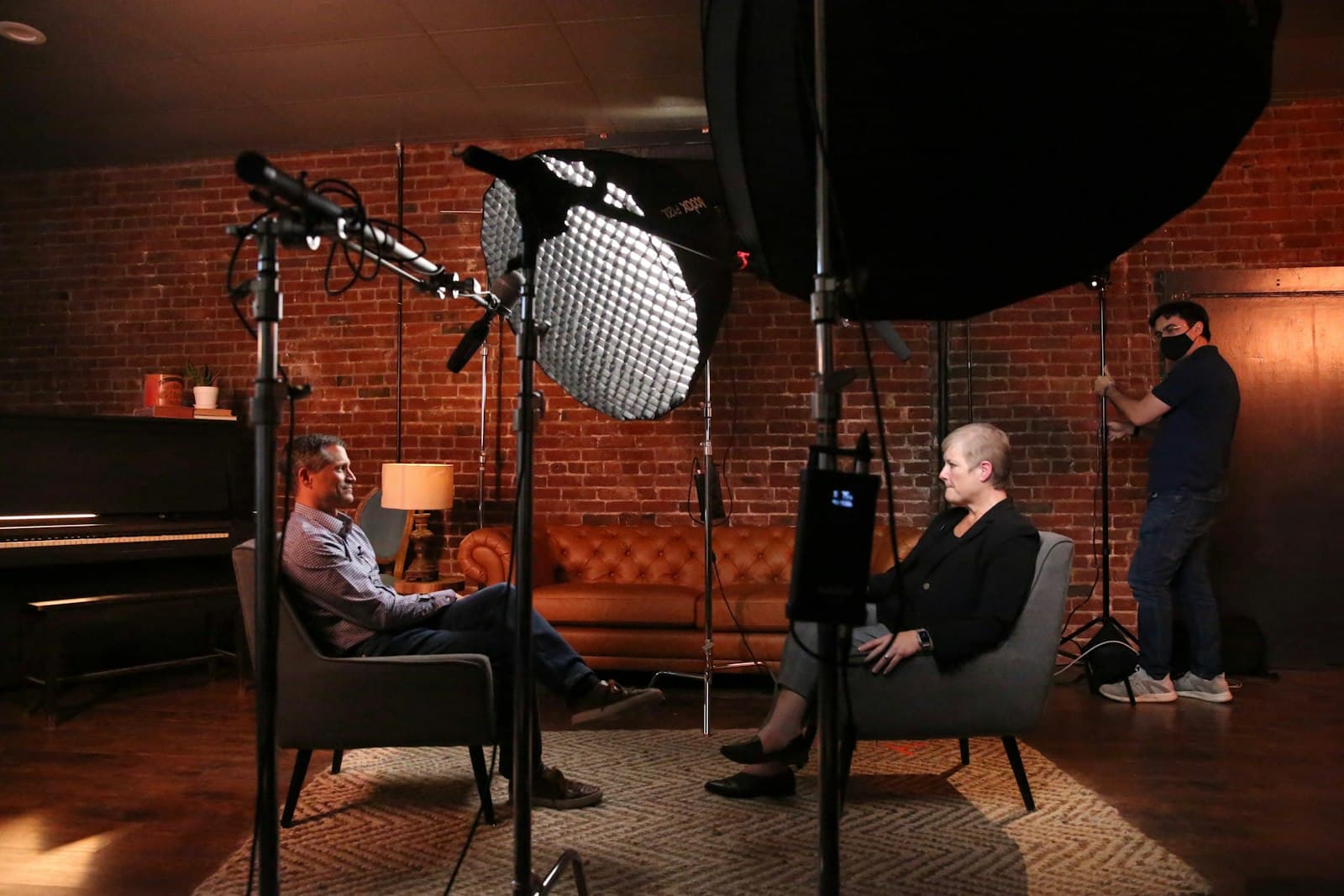
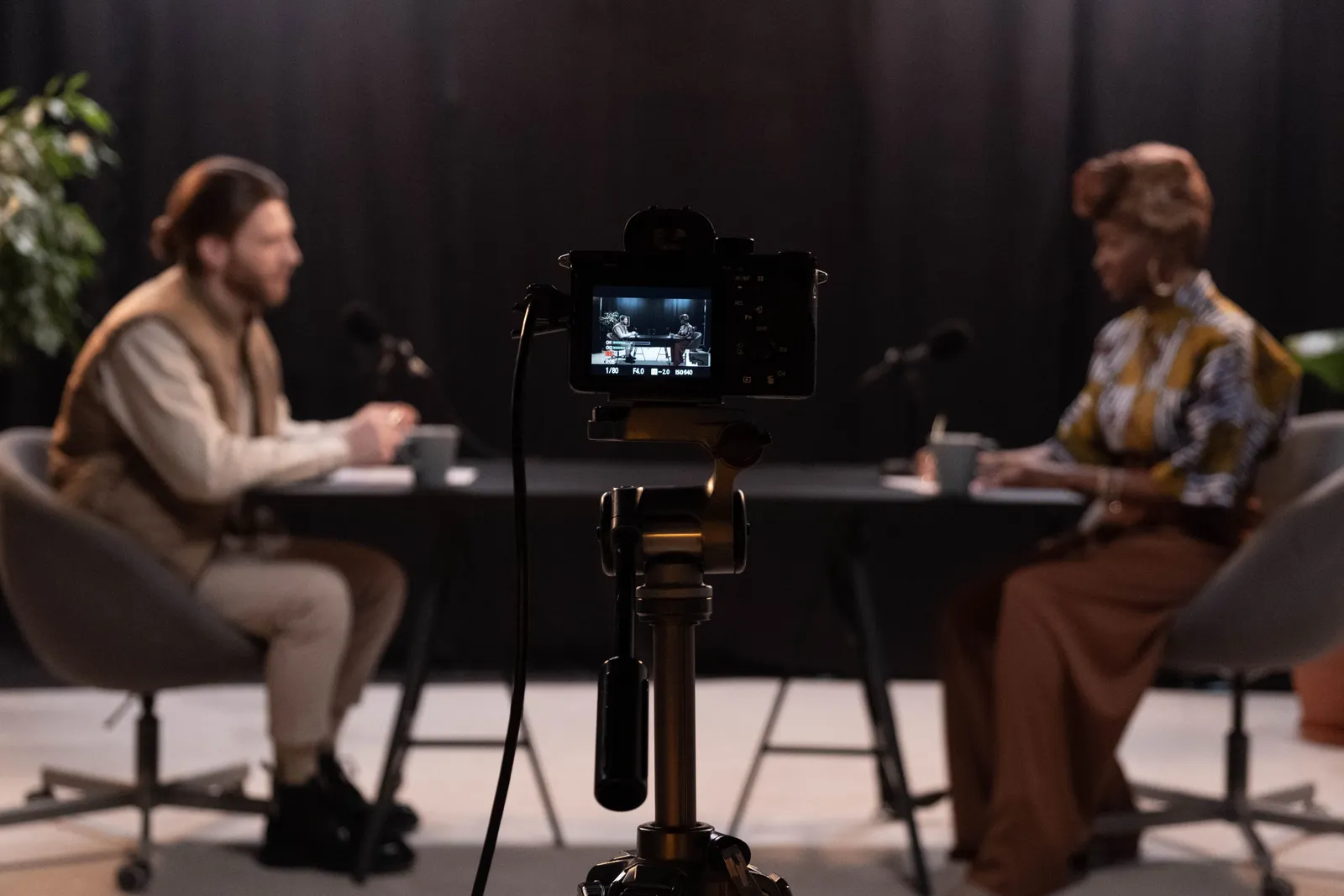
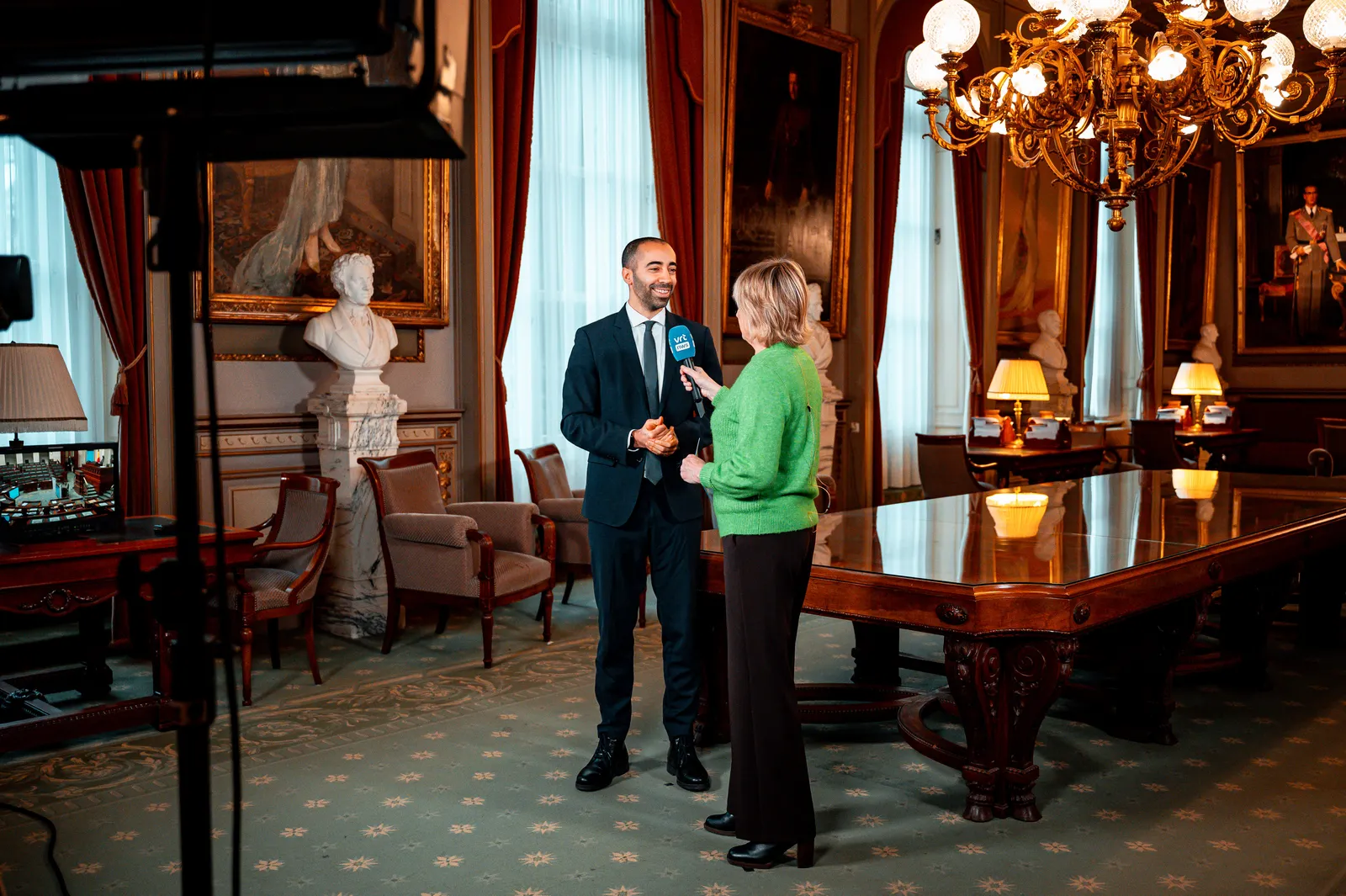
The interviewer and director need to agree where the CEO will look, then rehearse the exchange with the speaker in the planned position. For an off-camera interview, the executive talks to an interviewer positioned near the camera. Direct-to-camera statements address the viewer through the lens. Choose an arrangement suited to the commissioned film and explain it to the speaker during preparation.
Visual references help the client discuss the proposed composition by identifying the specific relationship between the speaker and the surrounding scene. If workplace activity explains the subject, arrange access to film the relevant work at an appropriate time. For a seated studio conversation, review a test frame with the speaker in position. Visible company information in the background needs approval for inclusion in the film.
Check the Sound with Normal Movement
Shure's lavalier microphone guidance explains how placement affects speech recording and how clothing contact can create noise, which makes a movement test useful during setup. For the test, the speaker answers a sample question using their usual gestures while the sound recordist listens through headphones. If fabric touches the microphone, adjust its placement and repeat the same movement during another test.
Allow Time for Additional Questions
The interviewer's schedule needs to accommodate the CEO's answers as they develop, especially when a short initial reply contains a detail worth pursuing. Agree on which subject needs the most discussion and reserve a period for additional questions. In the conversation, a pause after an answer allows the speaker to finish their thought. Wait for the speaker to finish, then ask the next question.
If the finished film will use answers alone, the executive needs to name the subject within the response so viewers can follow the explanation. Replies beginning with an unexplained “it” may depend on the interviewer's question for their meaning. Request a fresh answer naming the product or decision. The CEO can keep the explanation in familiar language while supplying the missing context.
Keep the Answer's Meaning during Editing
Editors need access to the full answer when selecting a shorter passage, especially if a qualification changes the circumstances in which the CEO's claim applies. Keep the qualification beside the statement it limits. If an executive discusses results from a pilot, retain the pilot's limited scope in the edited passage. Additional footage belongs over the answer only when it depicts a relevant subject.
The additional footage needs its own plan when the executive discusses a design feature whose appearance helps explain the decision described in the answer. For a product-design discussion, propose images showing the specific feature in use. Confirm the available version with the client. If the conversation concerns an earlier prototype, identify it in the edit so viewers can place the images within the account.
Client review becomes more useful when comments identify the exact passage and explain the factual correction required, with a timecode corresponding to the review copy. Ask reviewers to distinguish a factual error from a preferred expression. For a factual correction, return to the original recording and check the available material. When the record needs a new explanation, arrange a pickup with the speaker.
Prepare Final Versions for Their Viewers
Short excerpts need enough context to answer a viewer's question on their own, particularly when the audience encounters a clip separately from the full interview. Identify the subject near the beginning and retain the selected claim's supporting explanation. If a clip discusses a past decision, keep the relevant period in its wording. Confirm the speaker's displayed role against the publication date.
YouTube's automatic caption guidance asks creators to review generated captions and correct transcription errors, since speech recognition may produce inaccurate wording from the recorded audio. Compare the captions with the approved film after the edit is complete. Company names and specialist terms deserve individual checks. If the release includes Arabic subtitles, ask a qualified reviewer to assess their meaning against the spoken answer.
Plan Your CEO Interview with Someone's Studio
Someone's Studio's Leadership Interview Suite is presented for executive dialogue, within a Dubai studio whose work connects brand identity with creative production. Discuss the proposed conversation and the support your speaker needs during preparation. The production proposal should specify the commissioned work and the final versions agreed for delivery.
For your next leadership film, contact Someone's Studio with the audience's main question and the date when the finished interview is needed. Explain which parts need creative development alongside filming. Someone's Studio's creative-brief article offers further guidance on communicating the assignment to a production team.