
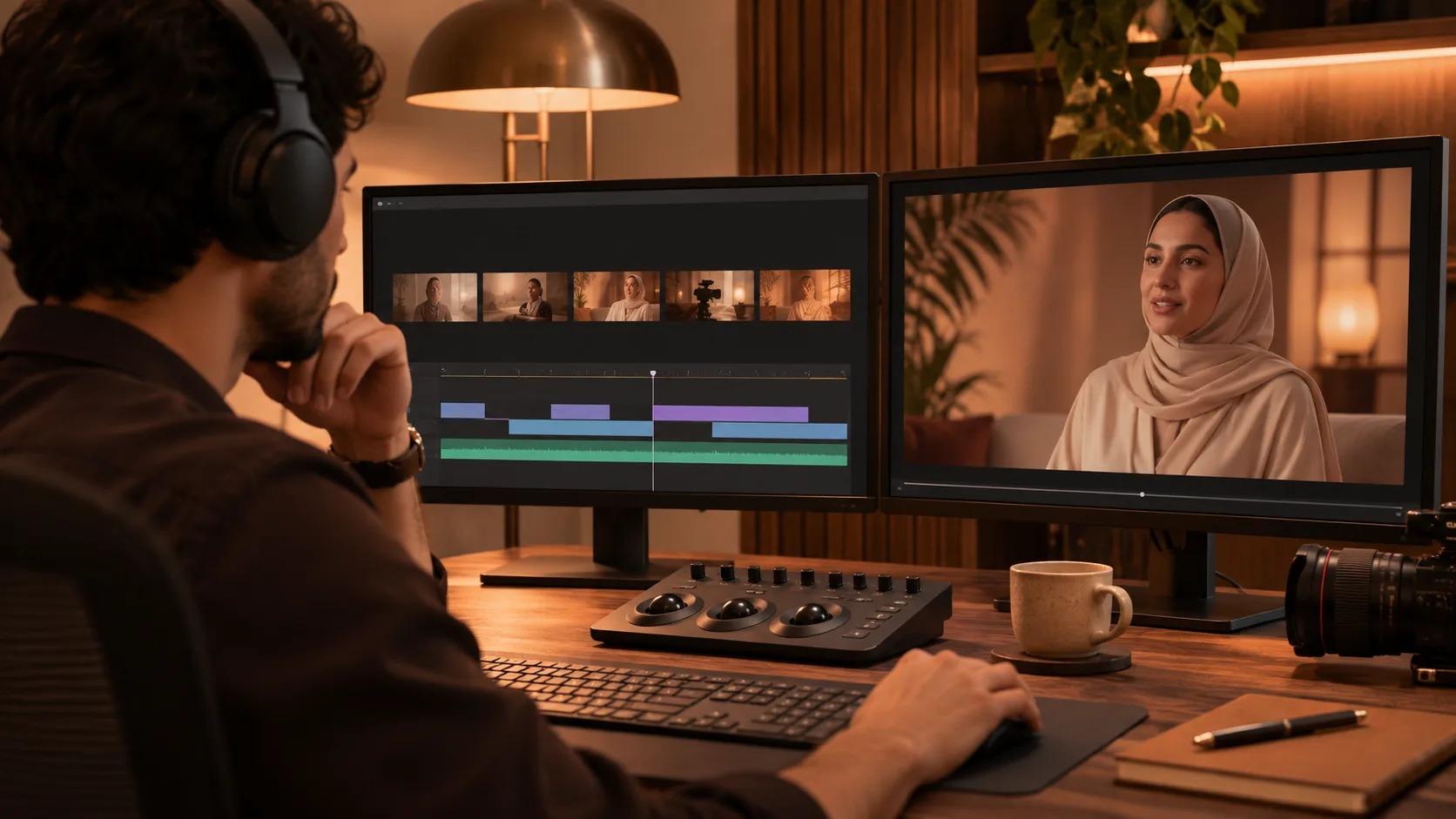
The camera cards arrive with several versions of the same answer, and the editor must decide which version deserves the audience's time. Someone may have delivered a convincing explanation during a later take. Another camera angle may provide the reaction needed to connect two passages. The finished film starts taking shape through those choices, guided by the approved brief and the intended viewer.
For a Dubai business commissioning video editing and post-production, the useful question concerns what the team needs to approve after filming. Review a first cut for its message and sequence. Reserve detailed finishing approval for a version whose content has settled. Someone's Studio's video production services connect creative planning with production, and the post-production conversation should retain the original commercial purpose throughout the edit.
Media Preparation Creates a Reliable Starting Point
Editors need an organized handover containing the original recordings and the latest approved production brief, with file names preserved during transfer. Separate audio should remain traceable to the relevant camera take. Any script amendments made on set belong in the handover notes. The producer should identify approved brand artwork and confirm where the editor can obtain it.
Request an inventory against the expected shoot coverage so missing material receives a decision early in the editing schedule. If a product demonstration has an incomplete section, the team can assess whether another recorded angle provides enough information. Incomplete factual coverage may require replacement footage or a revised script. The decision should reflect what the available recordings actually show.
Large camera files may justify a proxy workflow, where lower-resolution copies support the edit while the original files remain available for finishing. Adobe's proxy documentation explains this relationship between editing copies and source media. Confirm the export configuration during delivery: Premiere normally uses full-resolution media for export, with an explicit setting available for proxy exports. The review copy's appearance should be judged according to its stated purpose.

The First Cut Tests the Story
The editor selects passages for a first cut according to the agreed message and the intended audience's familiarity with the subject. Corporate interviews may need an opening explanation to establish context for a later technical detail. Product films may need a close view of an operation at the moment the voice-over describes it. The order should support comprehension.
Ask reviewers to watch the complete cut once before writing individual comments, then identify the passage that needs a different editorial decision. Abrupt transitions may indicate missing context. Slow sections may contain repeated information. The editor can address either problem more effectively when the reviewer names the audience's difficulty and the required outcome.
Temporary music can establish a proposed pace during this stage, provided the review notes identify its provisional status. Temporary titles can indicate where approved names will appear. Reviewers should distinguish placeholder content from proposed final content so their feedback addresses the current decision. The producer can confirm which elements will receive approval at a subsequent review.

Feedback Needs a Decision Owner
Several reviewers may have legitimate interests in a film, yet the editor needs a reconciled response from the person authorized to approve changes. Collect comments against a named review version. Include a time reference and the requested correction in the same comment. Resolve any conflicts within the client team before returning the revision list.
Useful feedback describes an observable problem, such as a speaker's job title that requires correction or a demonstration that needs a longer view. Requests for greater energy need further explanation: the reviewer might want shorter pauses or a different selection of music. Specify the desired adjustment in terms the editor can apply. The revision record should retain the agreed decision alongside the current version.
Confirm the approved review rounds in the scope and agree how additional requests will be assessed if the brief changes. New interview passages may affect the film's duration and the existing sequence. Revised commercial claims may require fresh approval from the client's responsible reviewer. The producer should explain the resulting work and obtain agreement on a revised delivery date.
Picture Approval Opens the Finishing Phase
Once the client approves the content sequence, the team can establish a picture-approved version for detailed finishing and final audio work. Picture approval means the planned sequence has an agreed basis for completion. If content changes later, the editor should identify which finishing tasks need another pass. The production agreement should describe how that additional work is handled.
Color correction addresses visible differences between shots when shooting conditions produce changes in exposure or white balance. The subsequent creative treatment can support the approved visual direction. Evaluate skin tones and product colors against the intended result. If accurate product appearance is commercially important, discuss suitable references during the review using the supplied reference materials.
Screen differences can complicate color judgments when reviewers watch the same file on unrelated devices with different display settings. Nominate an agreed approval setup and assess concerns against that setup where possible. The team should distinguish a file issue from a display-specific observation. Final approval is for the exported version and the editing timeline.
Audio Deserves a Separate Review
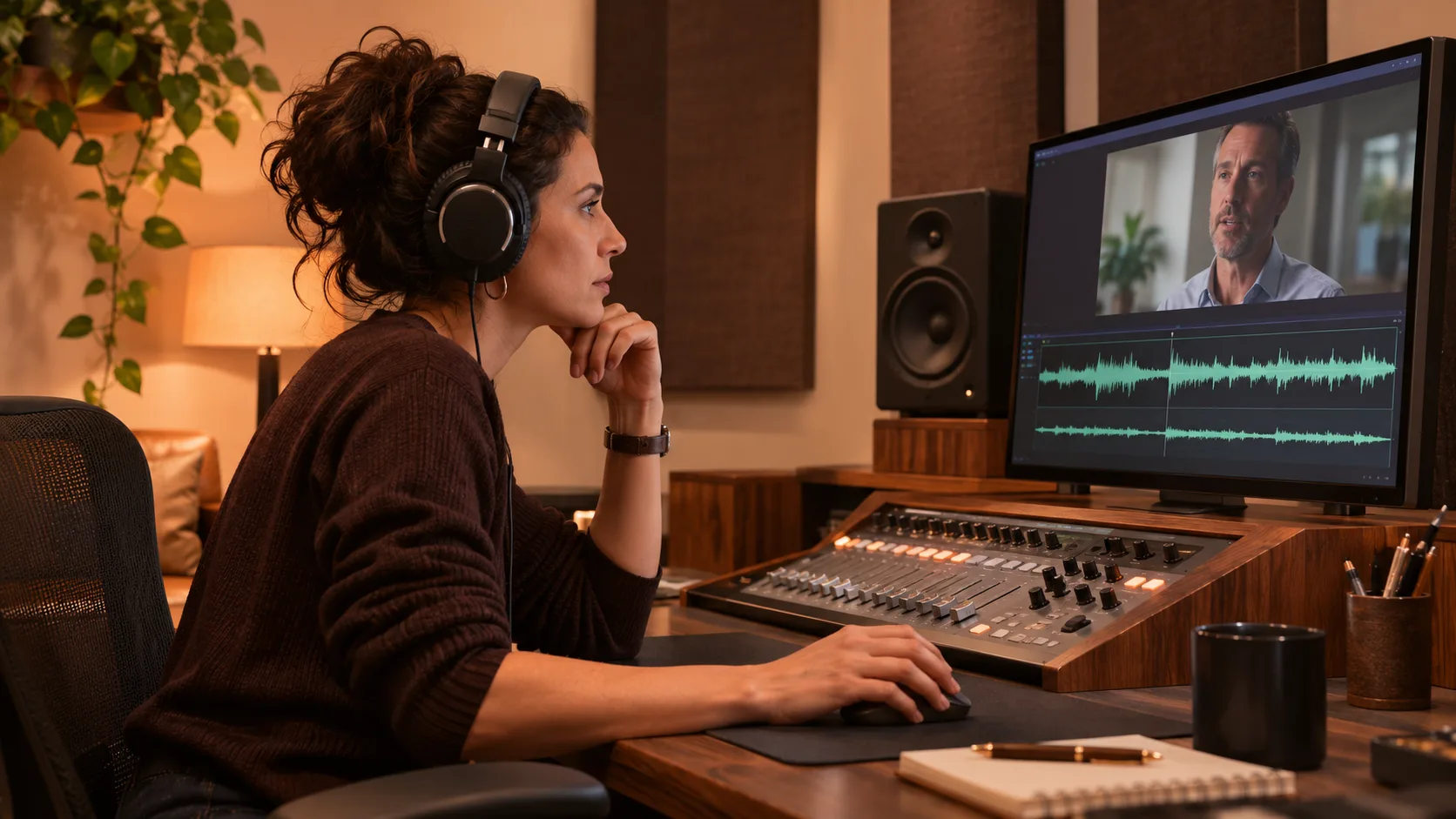
Dialogue needs a listening review at a comfortable level, particularly where an interview edit joins passages recorded during different takes. Check whether speech remains understandable beneath the music. Listen for abrupt changes at the edit points. The audio specialist can assess suitable repairs using the available recording and explain any remaining limitations.
Music selection should receive approval for both its creative fit and its permitted use within the intended distribution plan. Ask who is responsible for obtaining the license and retaining its documentation. Confirm whether the proposed usage covers the planned campaign. Commercial rights questions belong with the responsible rights holder or qualified adviser whenever the terms require interpretation.
Voice-over revisions can affect synchronization with the picture, so an approved script should accompany the recording supplied for the final mix. Names and specialist terminology deserve a pronunciation check. Translated versions should receive a competent language review against the approved meaning. Keep the language approver's decision in the project record for the delivered version.
Titles and Captions Need Human Checks
On-screen wording should receive a separate proofreading pass using the client's approved copy, with particular care around names and factual claims. Check the spelling in a person's title against the supplied reference. Examine captions against the actual speech. Transcription drafts should pass editorial review prior to inclusion in the delivery package.
Arabic and English versions may require different arrangements to maintain legibility within the intended frame, especially where wording occupies different amounts of space. Ask a competent reviewer to approve the Arabic presentation and language. Test the finished composition at the intended viewing size. The text should remain readable alongside the picture and the platform's interface.
Delivery Files Need Their Own Inspection
The delivery specification should name the destination and the required format so the editor can prepare exports for actual use. Adobe's export documentation describes settings for frame size and frame rate. Export formats determine which additional controls appear. Agree the required settings with the receiving team. Website assets and portrait social versions may need separate compositions and separate checks.
The final crop can alter what the audience sees, so the editor should inspect important actions within the revised composition. Review on-screen wording within that same crop. Check the opening and final frames for unintended content. The final exported file should play through to completion during quality control.
Request a delivery note identifying the approved version and its intended destination, with any remaining client responsibilities stated alongside the file. Agree whether project files are included in the contracted handover. Confirm the retention period for source recordings and the method for requesting later revisions. The producer should document the agreed storage arrangement within the project scope.

Plan the Edit Around the Intended Audience
Someone's Studio presents post-production as part of its creative production work, which makes the initial brief a useful place to discuss review responsibilities and intended distribution. Supply the existing footage for an assessment when commissioning an edit from material already filmed. Ask the team to confirm the available coverage and the proposed editorial scope prior to approving the work.
Contact Someone's Studio with the film's intended audience and its planned destination so the team can discuss the edit against a concrete requirement. Include the preferred delivery date in the inquiry. The resulting scope should identify the review arrangement and the files required for handover.