
Product launch video campaign planning in Dubai starts with the product's first public promise and the evidence a prospective buyer needs to assess it. Once the launch film appears, viewers will compare its message with the product they can order. The production plan needs to connect that promise to an approved demonstration, with a release date the business can support. Attractive footage earns its place when it helps the intended buyer understand the offer.
For a brand preparing its next launch, the useful question is which information belongs in the announcement and which deserves a separate explanation. Someone's Studio's campaign production service addresses the relationship between a central film and its supporting media. Launch planning adds a particular responsibility: deciding when the public can see the product and what the accompanying message can accurately say at that moment.
Set the Launch Promise against Product Readiness
The product manager and creative director need to agree which product version will appear on camera when prototypes remain in circulation. Differences in the final finish deserve attention during the script discussion. If the available sample uses earlier packaging, schedule its replacement ahead of the relevant close-up. Film the approved version whenever the audience will reasonably interpret the image as the item available for purchase.
Sales availability affects the film's ending, particularly when the business accepts reservations ahead of a confirmed delivery date. Describe the actual transaction viewers can make. Write the closing invitation around the available transaction, whether it concerns an information request or a current purchase. Verify that wording with the person responsible for the offer, then carry the approved phrase into the campaign's shorter edits.
Claims that require testing need a named source inside the production brief so the director can propose a demonstration consistent with the evidence. Visual exaggeration deserves the same review as spoken copy. Faster playback can imply a speed the product achieves only through editing. Where time affects the claim, agree how the film will disclose the treatment or record the operation at its actual pace.
Assign a Specific Job to the Announcement Film
The announcement film needs enough product information for someone encountering the brand for the first time to understand what is becoming available. Begin its creative discussion with the buyer's likely question. For an unfamiliar product, the first useful explanation may concern its purpose. For an established product category, demonstrate the specific design decision behind the new version.
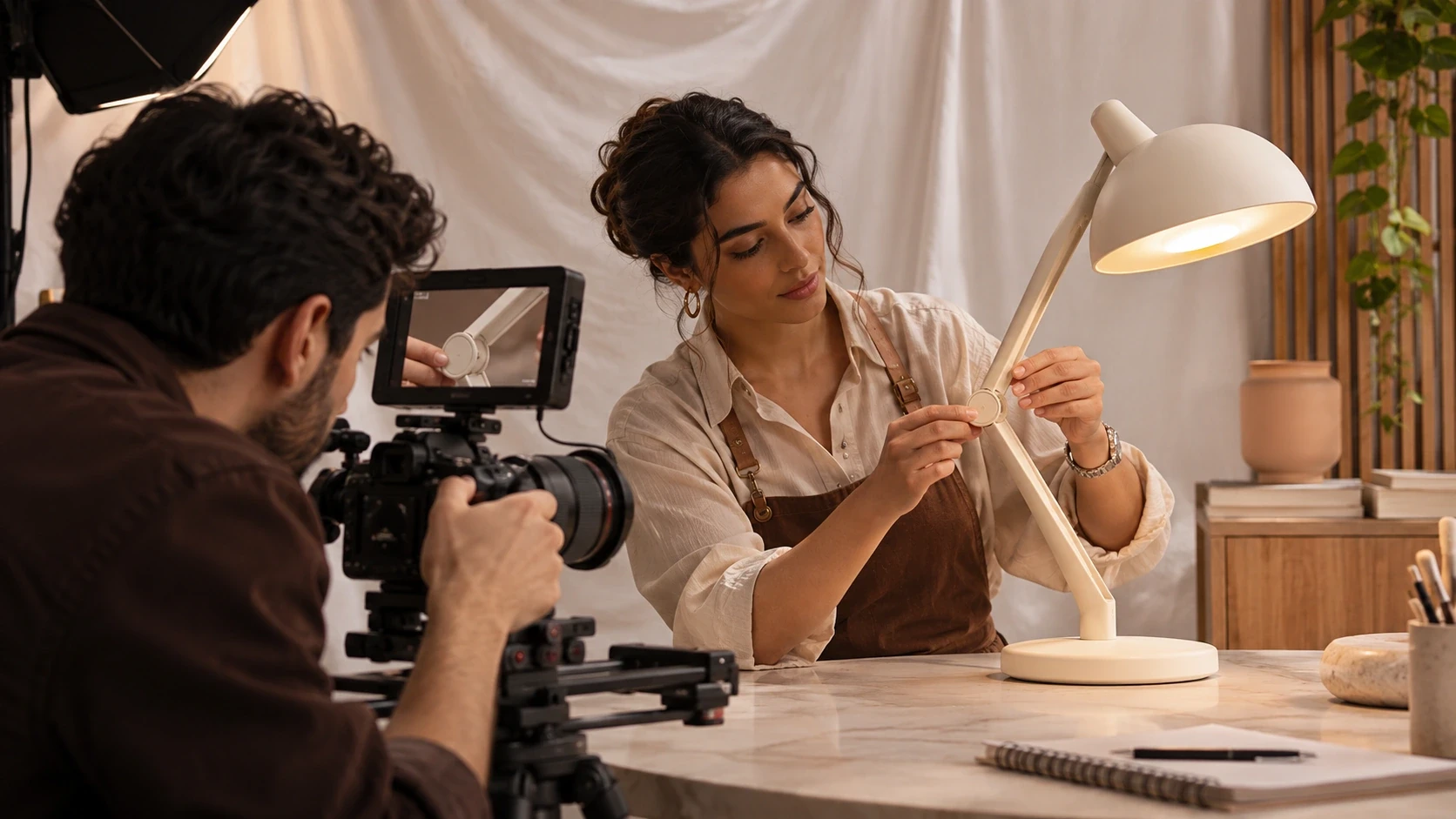
The desk-lamp example here is illustrative: a launch film introduces an adjustable lamp through its use beside a person reading at a desk. Close shots explain how the user positions the head. Its concluding image identifies the product and directs viewers to the approved destination. The film's proposed message concerns adjustment during use; a claim concerning reduced eye strain would require separate supporting evidence and appropriate review.
Teaser material deserves production time when its early message has a useful purpose for the audience, especially when the brand has limited distribution resources. Product detail can support an early message if the audience understands its relevance. If an unexplained silhouette communicates little to the intended viewer, allocate that production time to a useful demonstration. The creative proposal should justify the requested film through its communication task.

Plan the Sequence and the Independent Viewing Context
Campaign planners may want audiences to encounter a short introduction followed by a detailed explanation, but actual distribution needs to support that order. Google's video sequencing guidance describes campaigns that arrange ads for viewers on YouTube. Progression can follow an impression or a recorded view as specified in the selected rules. The media specialist needs to confirm the relevant campaign configuration when the creative idea relies on a sequence.
Organic posts and website visits create their own viewing contexts, so a later campaign film needs enough information to explain its subject upon first viewing. Include the product's identity when a demonstration is likely to circulate separately from the announcement. Review its opening as a first encounter. Any reference to earlier material should have an accessible destination for viewers who want the missing explanation.
The supporting films deserve distinct scripts when they answer different buyer questions, even when the team records their footage during the same production session. Assembly instructions require their own explanatory footage. For everyday use, a different script can address the relevant action. Repetition becomes useful only when it supplies necessary context for a different viewing situation; an identical announcement with a shorter ending offers the audience the same information.

Build the Shoot around Required Evidence
The producer needs to translate the agreed scripts into footage requirements while the team still has time to obtain the correct product sample. Group shots by their physical setup, then check coverage against the requested edits. Camera arrangements suitable for a wide demonstration may conceal the detail needed for a close explanation. Reserve a separate take when the viewer needs to inspect that detail.
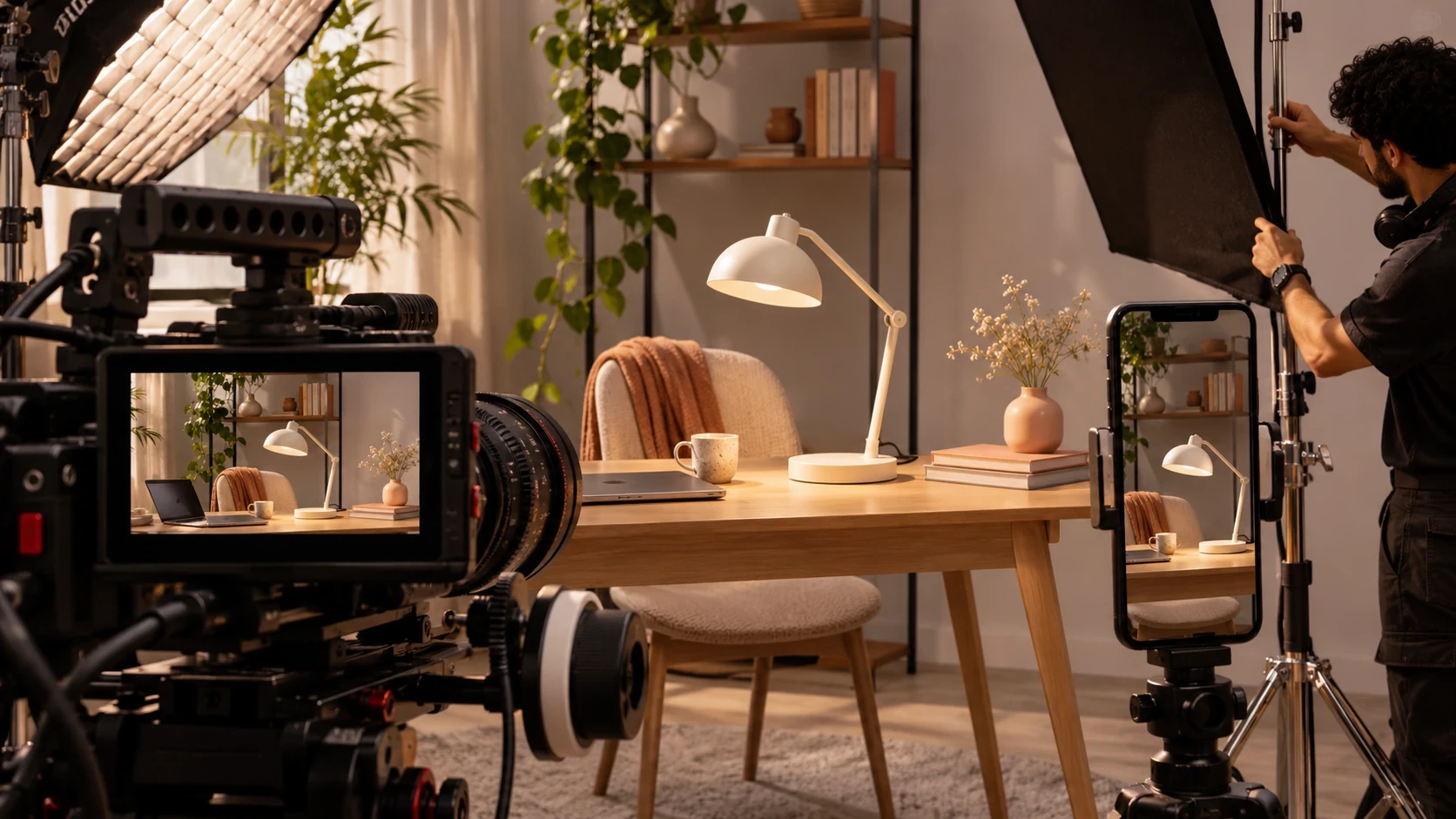
For the illustrative lamp campaign, the demonstration requires the user's hand to remain readable as the lamp head changes position. The product specialist can check the movement during rehearsal. After the action has been agreed, the camera operator can test whether the joint remains visible throughout the take. Decorative cutaways offer limited help if the main demonstration omits the relevant movement.
Vertical and wide compositions need their own planning when the product's use involves substantial space around it, such as a lamp illuminating a desk. Test both arrangements during preparation. The vertical edit may need a closer action that retains the working surface. Agree the framing with the director so the crop preserves the scene's intended meaning and the actual product relationship.
Crew time for supporting footage belongs within the commissioned scope, particularly when later edits require demonstrations absent from the announcement film. Identify the deliverable that needs each setup. Extra close-ups deserve a specific editorial use, with sufficient time for the product specialist to approve their accuracy. The production proposal can then price the required work against a concrete shot requirement.
Allow Time for Approval and Distribution
The final delivery date needs to precede the public launch by enough time for the responsible teams to review the actual files. Work backward from the distribution deadline when agreeing the production schedule. Translation review requires its own interval if the campaign includes Arabic dialogue or captions. Product terminology should reach the translator while the script remains open for revision.
Google's ad review guidance says most reviews finish within one business day, with more complex cases taking longer to resolve. For a fixed start date, Google recommends submitting ads several days in advance. Changes to an ad or its assets restart the review process. Plan the client's final creative decision ahead of that submission, with time available for corrections if the platform requests them.
Commissioned films and newly built product pages need a joint release discussion when the advertisement sends viewers to that page. Google requires the destination page to be complete for its review. The website team and media specialist should agree how to handle prelaunch access within the campaign's confidentiality requirements. Treat technical access decisions as a separate responsibility from approving the film's final frame.
Review the Campaign as Buyers Will Encounter It
Final review should follow the path between the finished film and the actual product destination so the client can compare their promises. Watch the export through its ending and follow the stated next action. If the film invites a purchase, the destination needs to present the corresponding offer. Availability changes deserve a release decision even when the creative work has already received approval.
Editors need the client's requested changes in one agreed record, with product corrections distinguished from a newly proposed creative treatment. Reference the relevant timecode and describe the visible issue. When a correction affects several versions, identify their filenames in the response. Check the revised exports individually so the approved wording remains consistent throughout the release set.
The campaign's first public response can inform later production when the client records the actual questions buyers ask after watching. Repeated requests for an assembly explanation may justify another edit using approved footage. Assess that request against the existing material and the agreed usage rights. Additional filming remains a separate production decision when the required action falls outside the original coverage.
Someone's Studio accepts Dubai production inquiries through its project contact page, where a brand can begin the discussion with its intended launch date and proposed message. Share the current product evidence alongside the required campaign destinations. The creative conversation can then settle which film introduces the offer and which supporting material helps a buyer assess it.