Premium advertising becomes a production decision when a team reviews an attractive shot and asks which visible detail actually helps a customer judge the product. When a prop leaves the set, the viewer loses whatever information that object supplied. For a brand director commissioning a commercial, the useful question concerns what deserves the viewer’s time and what competes with it.
Your advertisement needs enough evidence for its intended promise, even when the proposed treatment uses a sparse set or a short script. If the product’s appeal rests on an unusual mechanism, its operation deserves screen time. Elaborate decoration deserves a separate assessment against that purpose. In its description of brand-centered creative work, Someone’s Studio connects production choices to the client’s identity.
Identify What the Customer Needs to See
For a fictional refillable fragrance campaign, the production brief asks viewers to recognize the bottle and understand how its refill attachment works. Once the director reviews the proposed opening, the refill demonstration has a specific purpose within the film. Record the attachment’s complete removal so the editor has enough footage to show how it separates.
Suppose the proposed opening places that bottle among several polished objects, followed by a close view showing the refill attachment being removed. The first shot establishes an elaborate setting, but the second supplies the product information requested in the brief. Begin the review by comparing how quickly each opening lets a new viewer identify the bottle. If the setting communicates a relevant purchasing context, preserve it; otherwise, assign the available seconds to the product action.
Approval becomes more specific when the client names the detail that deserves protection during revision, such as the point where the attachment separates from the bottle. Ask the editor to preserve that complete action when revising the film. Within the same running time, a repeated decorative shot then becomes a candidate for removal.
Separate Visual Density from Creative Detail
Research into advertising offers a useful caution against treating an empty image as the automatic answer whenever a proposed commercial feels excessively elaborate or difficult to follow. In research published in September 2010, investigators distinguished dense perceptual detail from complexity in the creative design. For the study, eye tracking supplied observations from 249 advertisements. Dense detail harmed attention to the brand, whereas elaborate creative design supported attention and comprehension in that research.
For a moving-image production, the findings suggest a useful question to test: which details contribute to the idea and which compete with the product? Preserve an engraved bottle’s decorative pattern when planning its close view. If the surrounding fabric has a dense pattern too, replace the fabric during a camera test and assess whether the engraving becomes easier to inspect. The research concerns advertisements in its study; the proposed film still needs its own evaluation.
If an engraving distinguishes the advertised version from another bottle, its appearance belongs in the close view that customers will use to assess the product. Keep the actual product’s appearance accurate. Background simplification belongs to art direction; altering a product feature changes what the advertisement depicts.
Use Light to Explain the Object
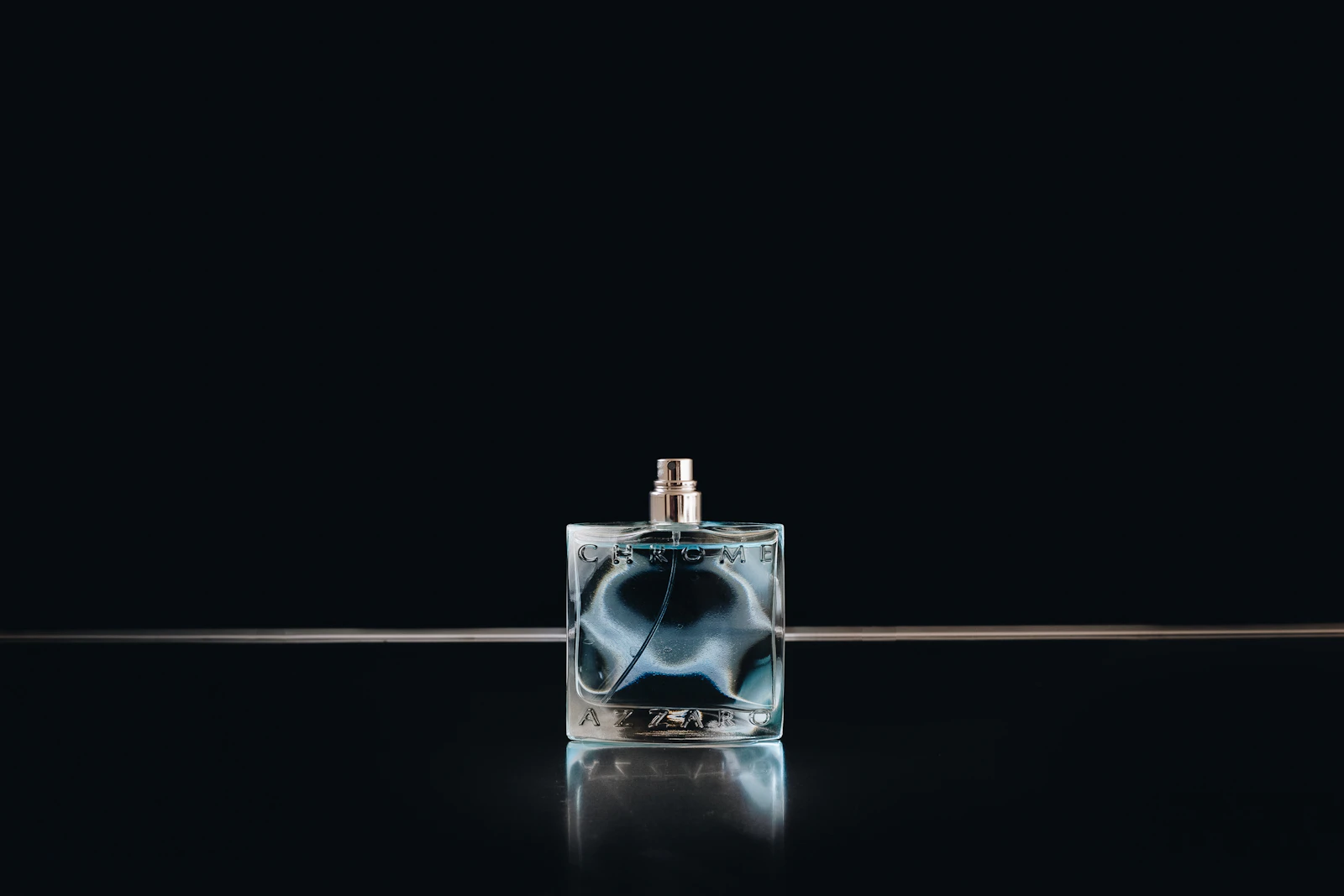
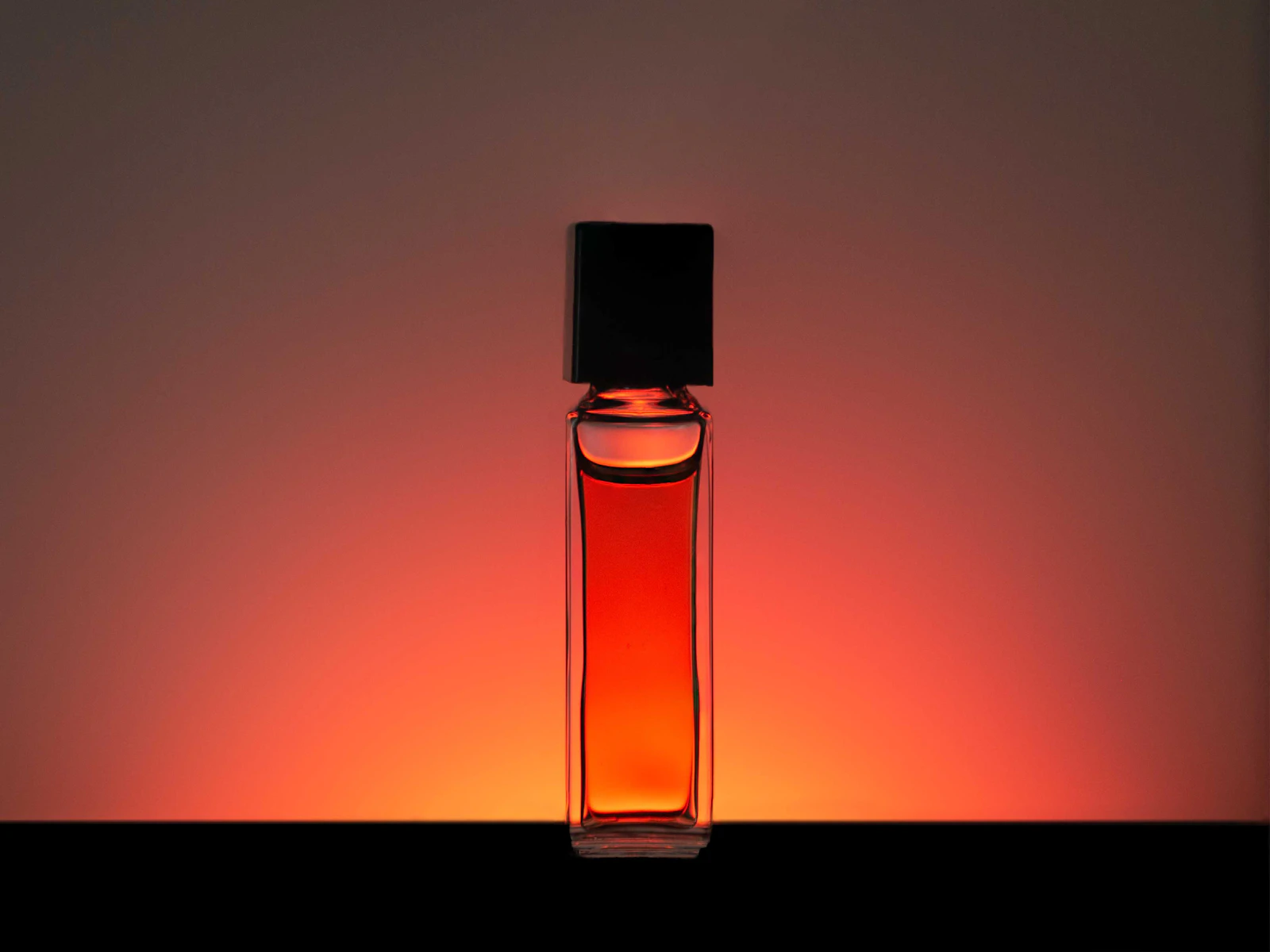
Glass creates a specific production problem when the bright patch intended to describe a bottle instead conceals its label or merges its edge with the surrounding surface. Use the actual sample to assess those relationships during the camera test. The camera team can change the light’s position and examine the resulting surface brightness while the set proposal remains open to revision.
ARRI’s lighting handbook explains how light and shadows describe an object’s form, with separate guidance on light spilling into the background. For the fragrance example, test a light position that leaves the bottle’s curve visible beside the label. Inspect the resulting image for both features while the camera team adjusts the light.
If the label disappears after an overall darkening adjustment, return to the local relationship between the bottle and its surroundings during the image review. Global darkening changes the entire picture. Target the distracting bright patch during setup so the label retains the visibility needed for identification. The approved test frame then records the intended relationship for the final shoot.
Let an Action Earn Its Running Time
Camera movement belongs in the review when the proposed move repeatedly displays the same product information while consuming time needed to explain a useful action. For the refillable bottle, compare the circular motion with a stationary view showing the attachment being removed. Select the version that lets the viewer follow the operation. If its changing position exposes a detail concealed in the static view, retain the camera move in the edit.
The editor needs the action’s beginning and completion to decide how much time it requires, especially when the middle contains the feature the client wants customers to understand. Record a complete take during filming. Once the product action is legible, trim the waiting time around it and review the cut at ordinary playback speed. Slow motion deserves a specific reason tied to the movement being examined.
Production effort may increase even when the final advertisement contains fewer shots, since the surviving close-up carries more responsibility for the product’s appearance. In the fragrance example, a label wrinkle becomes conspicuous when the bottle fills the frame. Allocate preparation time to the approved sample and allow a playback check while the setup remains available.
Retain the Words That Explain the Product
Copy reduction works best when the team distinguishes decorative praise from information that a customer needs to interpret the action shown in the advertisement. Replace a general premium adjective with the product’s verified name if identification remains uncertain. Where the refill procedure requires a short explanation, reserve enough time for that wording alongside the corresponding action.
YouTube’s creative recommendations favor a direct message and encourage audio or text that supports the story, with the brand or product identified near the opening. For a restrained advertisement, those recommendations support retaining useful identification during the reduction review. They describe platform guidance; the campaign’s results determine how the chosen execution performs with its intended audience.
Captions carrying essential speech deserve a planned place in the image, even when the visual treatment uses generous empty space around the advertised product. W3C’s caption guidance describes captions as a means to convey speech and meaningful non-speech audio. Reserve an appropriate area during composition and check the final wording for accuracy. Accessibility remains part of the production brief, with requirements assessed for the actual content and destination.
Compare a Specific Revision
Your team needs a question that distinguishes the revised advertisement from its earlier version, especially when approval comments describe both films with broad aesthetic adjectives. For the fragrance example, ask whether viewers understand the refill action after the decorative opening has been removed. After viewers explain the action in their own words, ask which image they prefer. Record that aesthetic preference separately from their product explanation.
For eligible paid video campaigns, Google’s experiment guidance recommends a hypothesis tied to the campaign objective and consistent settings when testing a creative difference. Choose the success measure in advance and confirm the available experiment method for the campaign type. Initial audience feedback can inform the proposed revision; performance claims need evidence from the relevant campaign test.
Keep the revised cut beside the original during the final production review so the client can examine what the removed material contributed to the product explanation. If the shorter edit obscures a necessary transition, restore the missing action. Related campaign versions may require a different cut to communicate the same operation within their allotted duration.

Prepare the Next Production Conversation
Brands commissioning premium advertising in Dubai can arrive with an existing film and identify the passage that feels visually crowded or unnecessarily extended during playback. Include the product detail that must remain legible after revision. Someone’s Studio’s campaign production services address related media outputs, so discuss the intended placements when agreeing on the material the shoot needs to produce.
For an initial discussion through the Studio inquiry page, share the proposed advertisement’s purpose and the current product reference that the director will use during preparation. Ask for a treatment showing which action earns the available screen time.