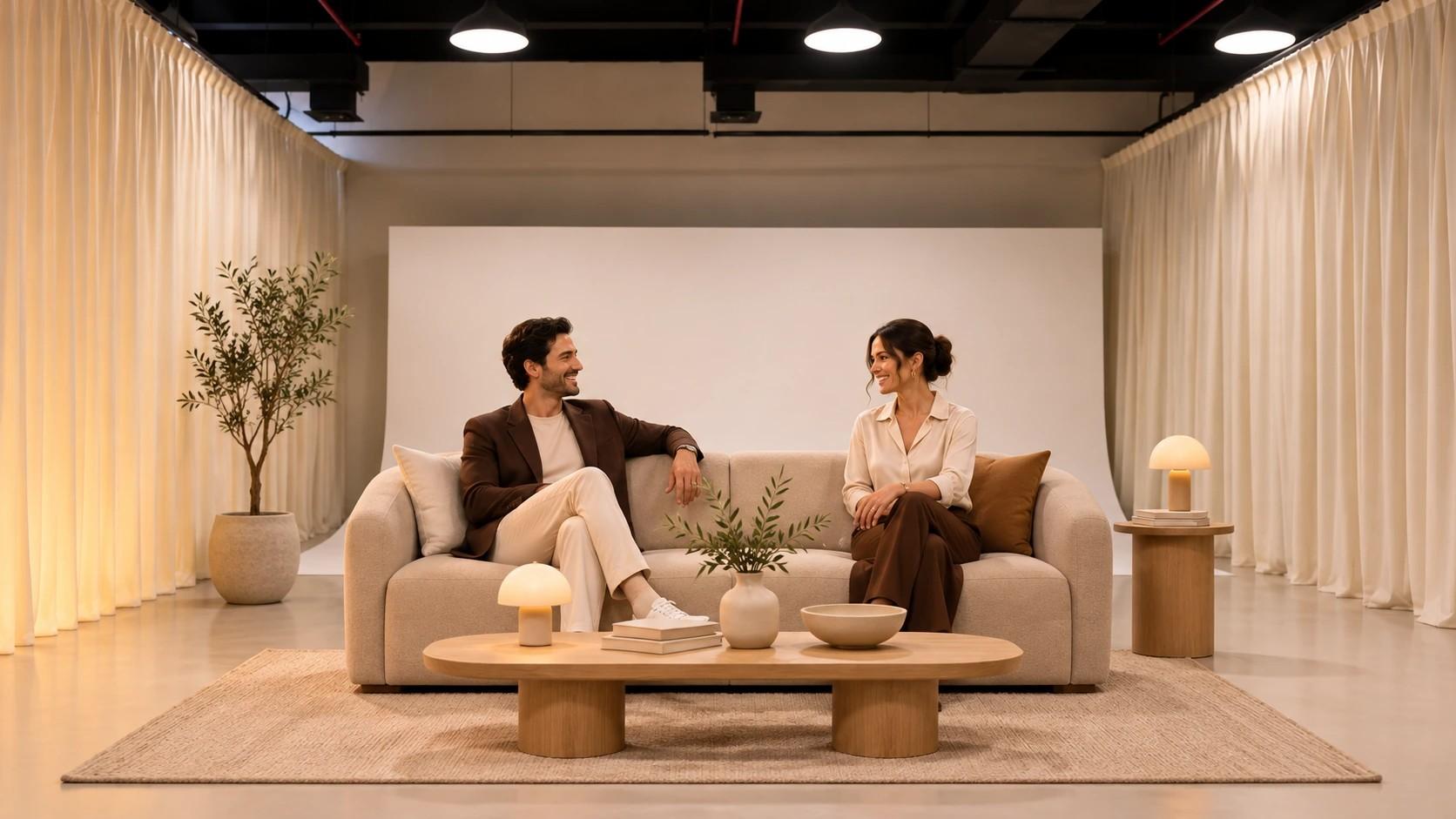
The coffee table can feel the right height on a showroom floor and still hide the guest’s hands once the camera drops to a seated presenter’s eye level. See the same table in a wide shot and another problem may appear: the co-host is half a cushion too far away, so the director keeps cutting to close-ups during a conversation meant to feel shared. Both problems are cheap to change at a rehearsal. They cost real money when the furniture has arrived, and the first episode is an hour away.
Design the opening shot around what the two hosts actually do together when they say hello and turn to the first subject. Set the seats where a greeting reads well on camera, then choose furniture to fit the shot. For a crew producing a morning show in Dubai, the next booking is the second test. The producer needs a floor plan and a reference still to see if someone else can rebuild the frame in the time available.
Choose the Presenters’ Opening Positions
Start with the seat the audience will see first; the producer’s sketch can hold the other set pieces until the opening shot works. Hosts who read a brief opener to the lens can share a shallow sofa with fixed cushions, then shift their shoulders toward each other as the conversation starts. Two chairs suit a show where a guest regularly joins, since an extra chair can be added to the arrangement at a measured distance. Long sofas make their own demands: corners change a host’s posture, and the person at the far end can fall outside a comfortable close-up.
Try the handover at a regular speaking pace and let both presenters handle the objects they will touch on the day. Somebody will put a cup down mid-sentence. Both hosts may lean forward when they laugh. Both moments work when the main camera can hold the exchange, and the table stays out of the conversation.
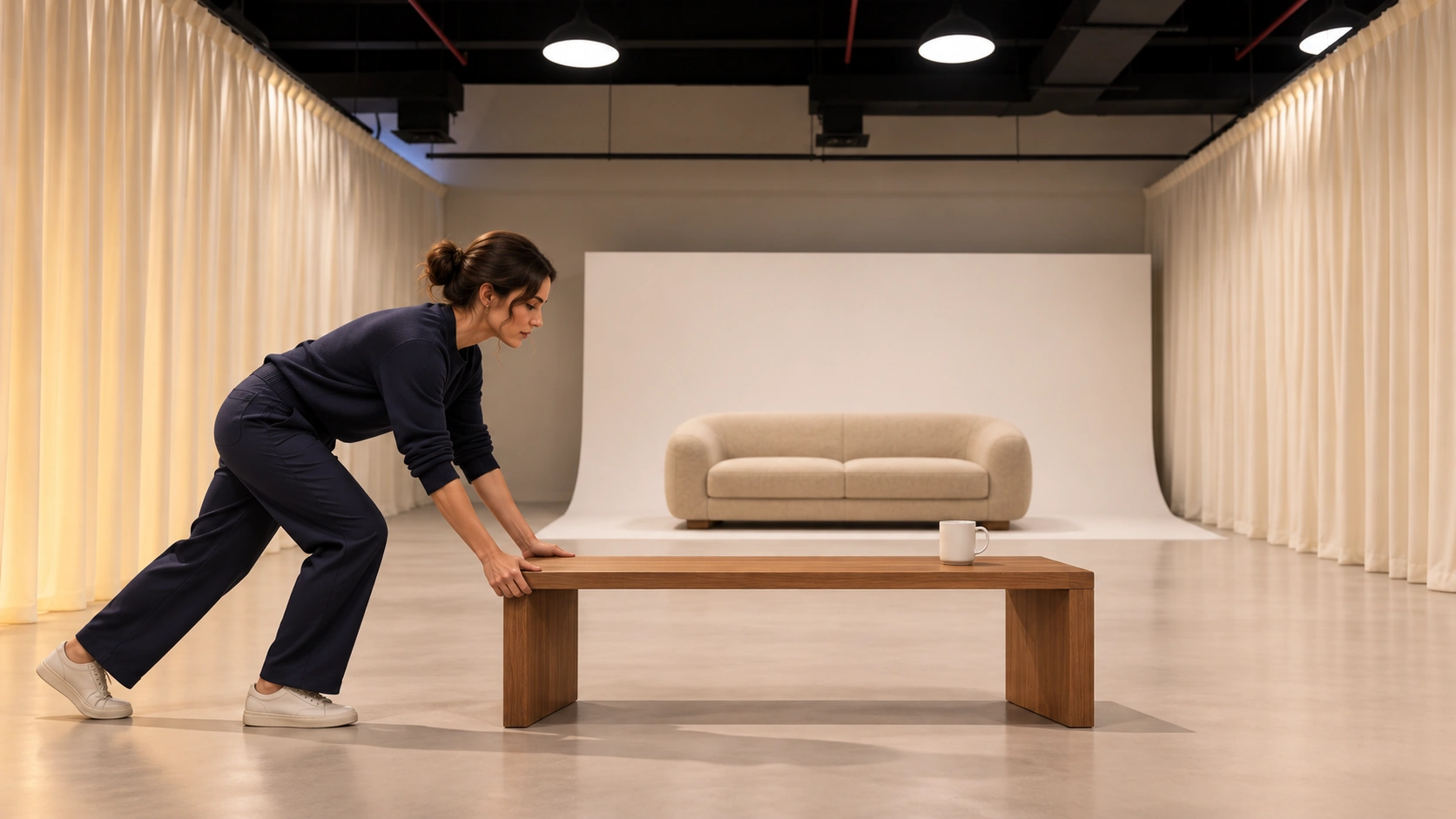
Plot the Wide Shot and the Close-Ups
Plot the likely camera positions on a drawing at the same scale as the furniture so the producer can see where two usable frames will compete for floor space. Set the wide shot first and look at what the closer angles pick up on either edge. Chairs that look nicely spread in a floor plan can look far apart on screen. Tall objects may cut into a second camera’s view even when the main frame looks clean.
Ask the hosts in rehearsal to look at each other and then address the lens they will use for the opener. Compare the two close-ups while they speak; eye direction should make sense when the editor cuts between them. Set a camera height and a point on the floor for its position once the shot works. Separate photographs show the viewfinder frame and the camera's physical position, so another crew member can reset the shot on the next date.
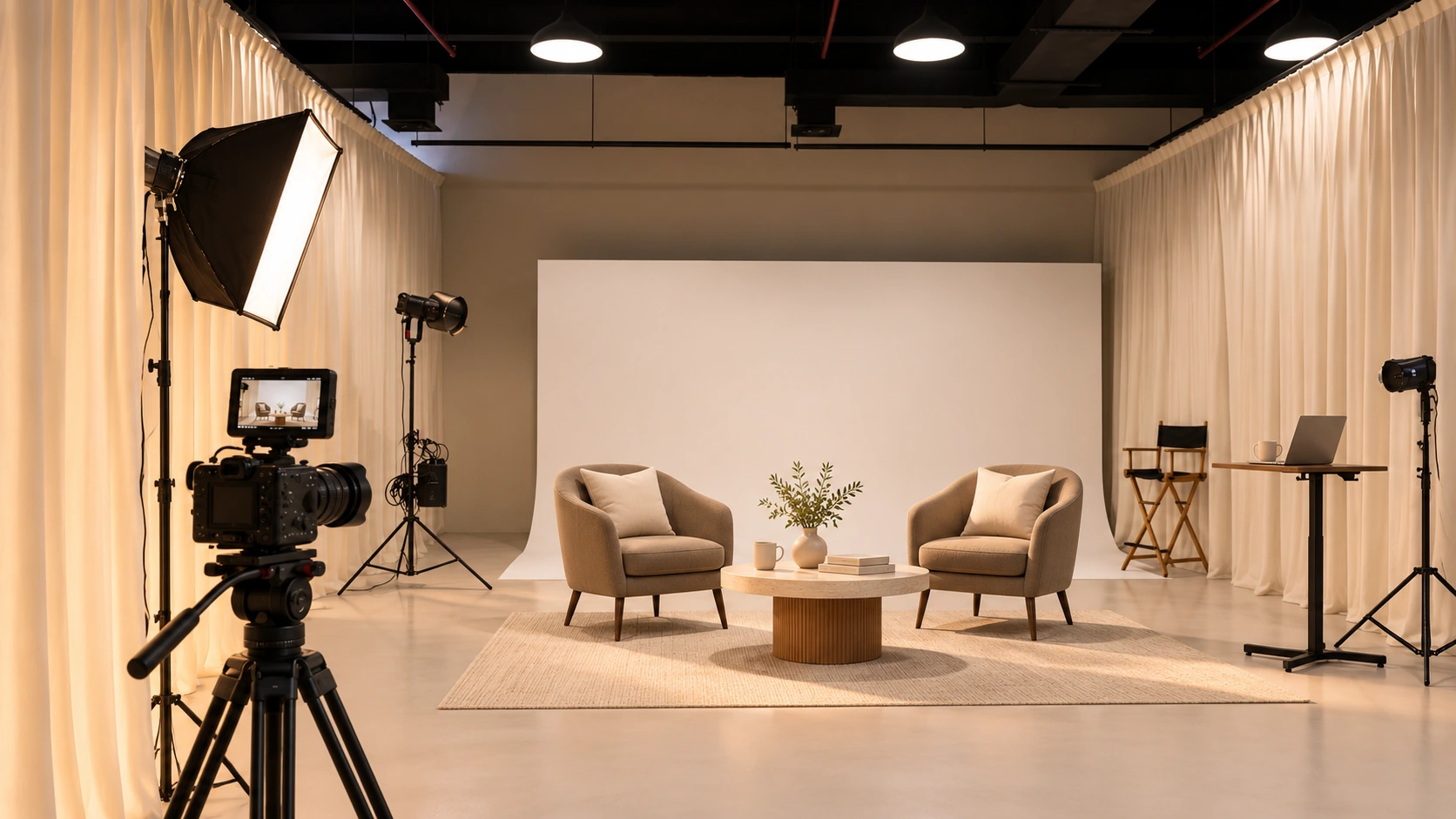
Plan the Demonstration as Part of the Same Show
Reserve a second area for a demonstration when the segment requires a view the conversation set that leaves outside the frame. For a food or design insert, the main question may be whether viewers need to see the presenter’s face and the object in the same frame. Tape an outline for a shallow worktable and try a short demonstration. Frame the hands in the light set for the demonstration.
Leave enough time in rehearsal for a host to finish the sentence at the sofa and get to the other position at a normal pace. Decide where the cut happens. Some programs cover the change with an insert or a title card; others retain the walk as part of the show. Count the move as part of the running order either way. Place the next segment’s tray where the camera misses it, and a crew member can reach it.
Light the Face and Check What the Camera Sees
Viewers can read a set as morning when indoor light supplies the same gentle direction and color across a run of episodes. Begin with soft light on each face and use a separate source for the background if the design needs depth. Rehearse in typical wardrobe: a pale jacket can lift a frame and a dark one can leave the camera operator chasing exposure between people. Check at least one repeated move, such as the presenter leaning forward to pick up a card.
Editors looking at adjacent shots can compare brightness and color using the waveform and vectorscope in Adobe Premiere’s guide to video scopes. Save a view of the approved close-up with the camera settings and the light position. Test any display graphics in the real frame at their intended brightness so you can judge what the audience will see on a phone. YouTube describes 16:9 as its standard desktop ratio in its aspect ratio guide. If the show needs vertical extracts, rehearse a separate mobile composition around the presenter’s face and hands.
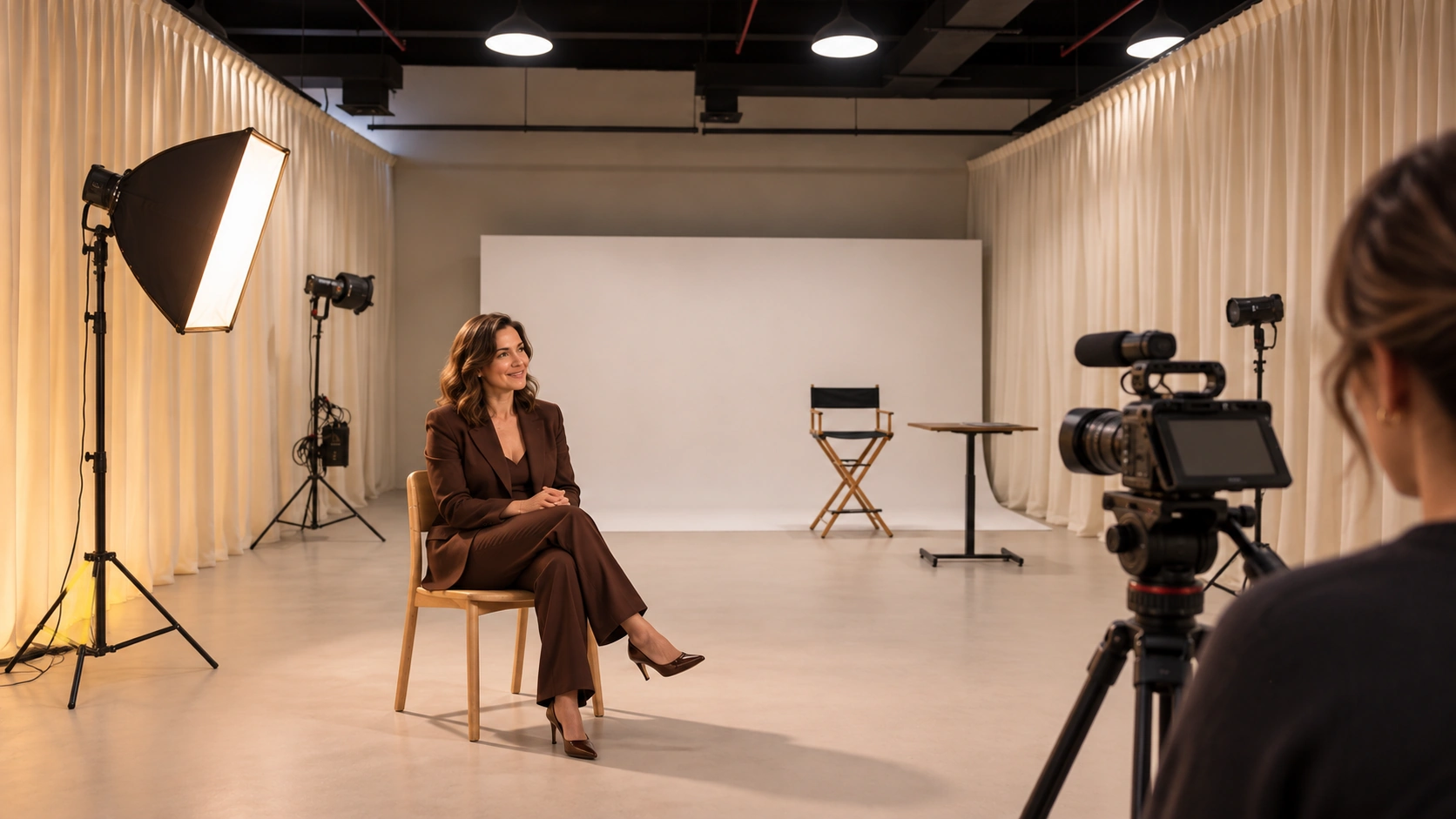
Keep the Spoken Segment Audible
Good seating on camera can place a host near a hard surface or a prop liable to make noise on contact. Rehearse one complete sofa exchange at the volume the hosts will use on the day. Record the walk to the other area too. Listen back to the move alongside the sofa recording and compare the voice level at both positions. Check for a microphone rubbing on clothing or shoes squeaking across the floor. Decide where an audio operator can hear those changes as the recording runs.
If a segment uses cups or utensils, record somebody handling the actual objects at the same pace the presenters will use in the show. Soft pads beneath the cups can cut down table noise, and a quieter resting place for utensils can fix a repeated clink. Let both hosts pause in their seats so the editor has a recording of the space at rest.
Write Down the Reset Your Crew Can Repeat
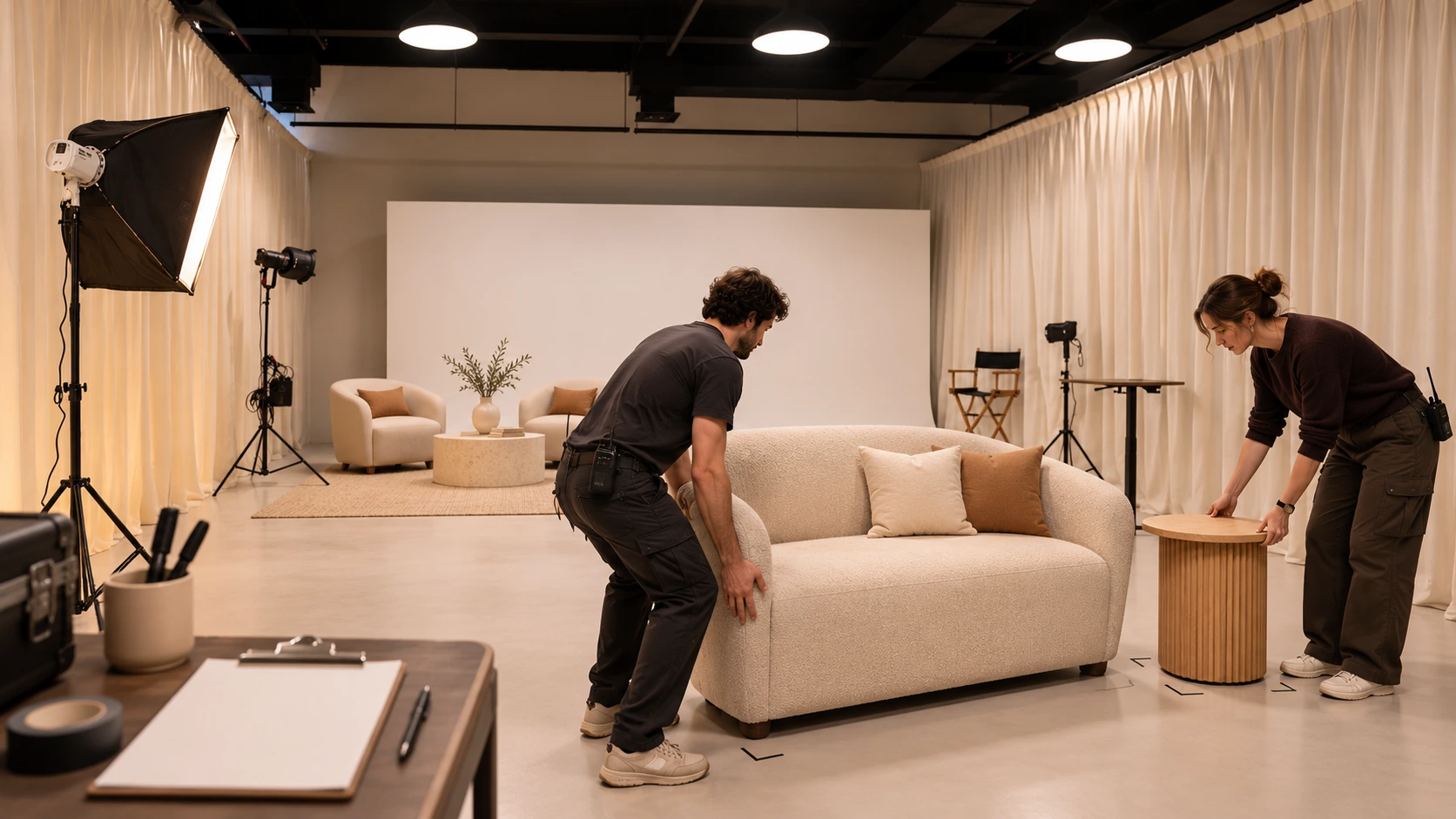
Set continuity starts with a short physical record so a crew member can locate the same positions on a later booking. Save a wide frame and take one floor-level photo that shows how the seats line up with the camera reference points. Add furniture offsets and lamp positions on a compact plan. Keep the references in the production folder so another crew member can retrieve them when the pilot’s producer spends the next shoot elsewhere.
Time one reset with the actual crew and list the pieces that need separate storage or transport as part of the production estimate. Budget for crew time on later dates. Modular furniture saves time if someone can move it along the planned access route and reset it at the same height. Confirm the storage arrangement and dates with the studio team as part of the brief.
Discuss the Pilot Set at Booking
Producers comparing video production options in Dubai can share a sample running order and two reference frames with the studio team. Describe how the program begins and where the presenters move during a typical episode. Include the expected recording dates. Separate the pilot’s design work from the routine reset you hope to pay for on later episodes. Ask which features in the proposed layout require a site visit and how the crew would handle set changes. Confirm what equipment is available for the dates you need.
Discuss the first episode with the booking team at Someone’s Studio and share the recording schedule you want to keep. Put two recurring frames in the brief and ask how the crew can recreate them at the next session.