When a chef tips a pan to show the crust on a piece of fish, the audience needs to see its color and hear the cue for when to take it off the heat. Ask the presenter to repeat the explanation and the fish keeps cooking. Film the shot again next week and the crew needs to know where the pan was in relation to the lens. Small details like these determine how much of a recipe an audience can follow and how much of the setup a producer has to rebuild for the next episode.
Start With the Recipe You Want to Film
Your pilot recipe should contain the trickiest movement you expect the host to explain on a regular basis, especially if that movement happens fast. For a weekly baking series, test the moment someone checks the texture of dough with two fingers. Family-dinner producers can choose a dish where the host has to talk over a pan while handling an ingredient. Check the picture and the sound with the equipment running. Watch the test on the smallest screen your audience is likely to use.
Decide which parts people need to see in real time and where an edit can take them ahead. Viewers may want to watch a sauce change consistency over several seconds. You can jump ahead from an oven timer to a second batch your food team prepared for the shot. Ask the editor what they need in the handoff so the two batches look like the same recipe at different points in time.
Lay Out the Kitchen Around the Host
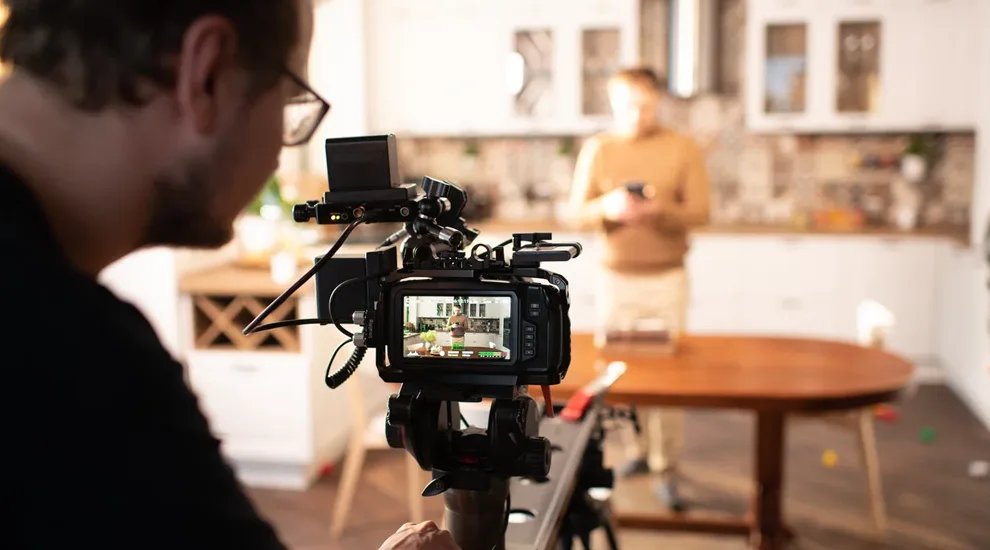
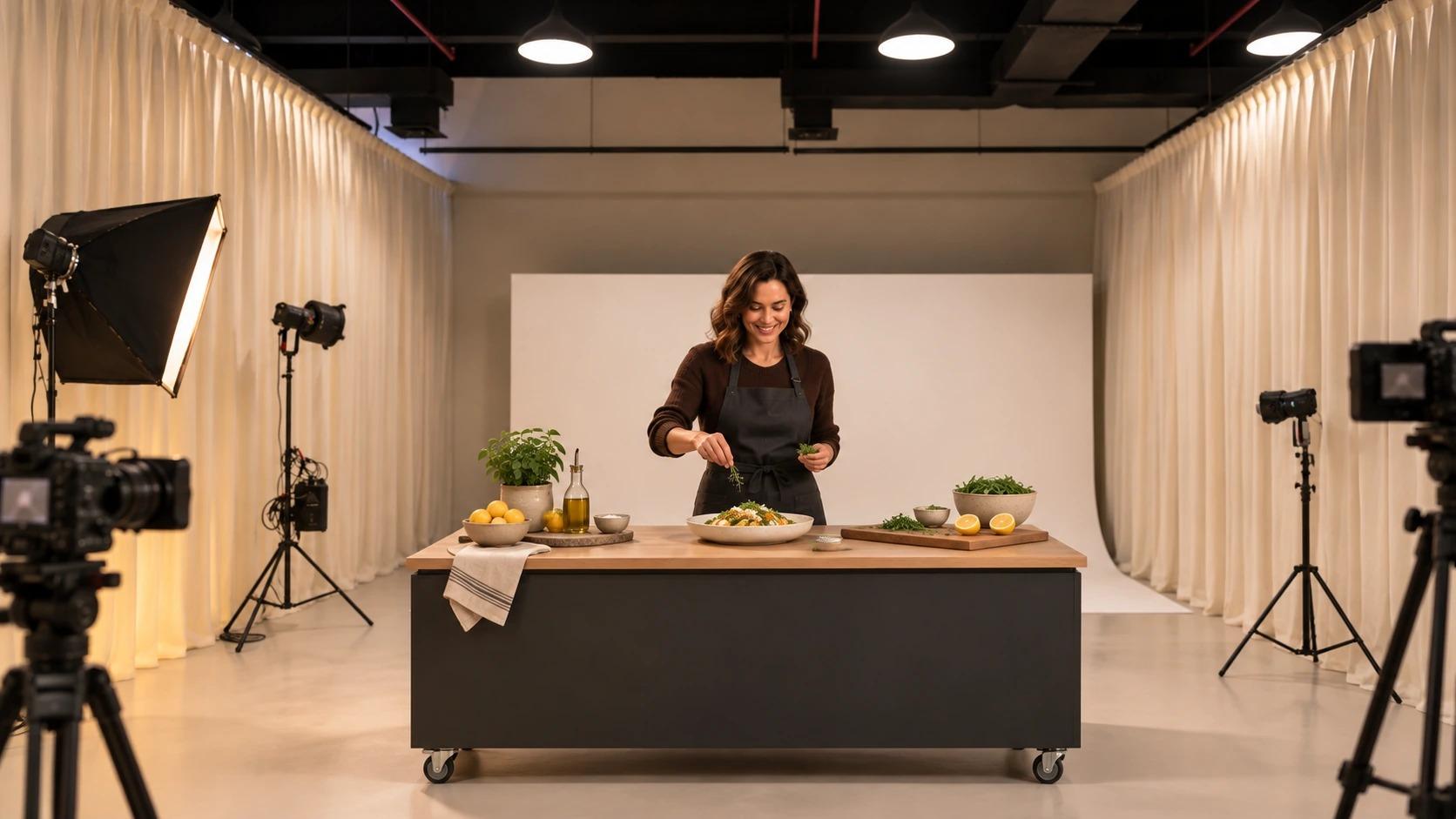
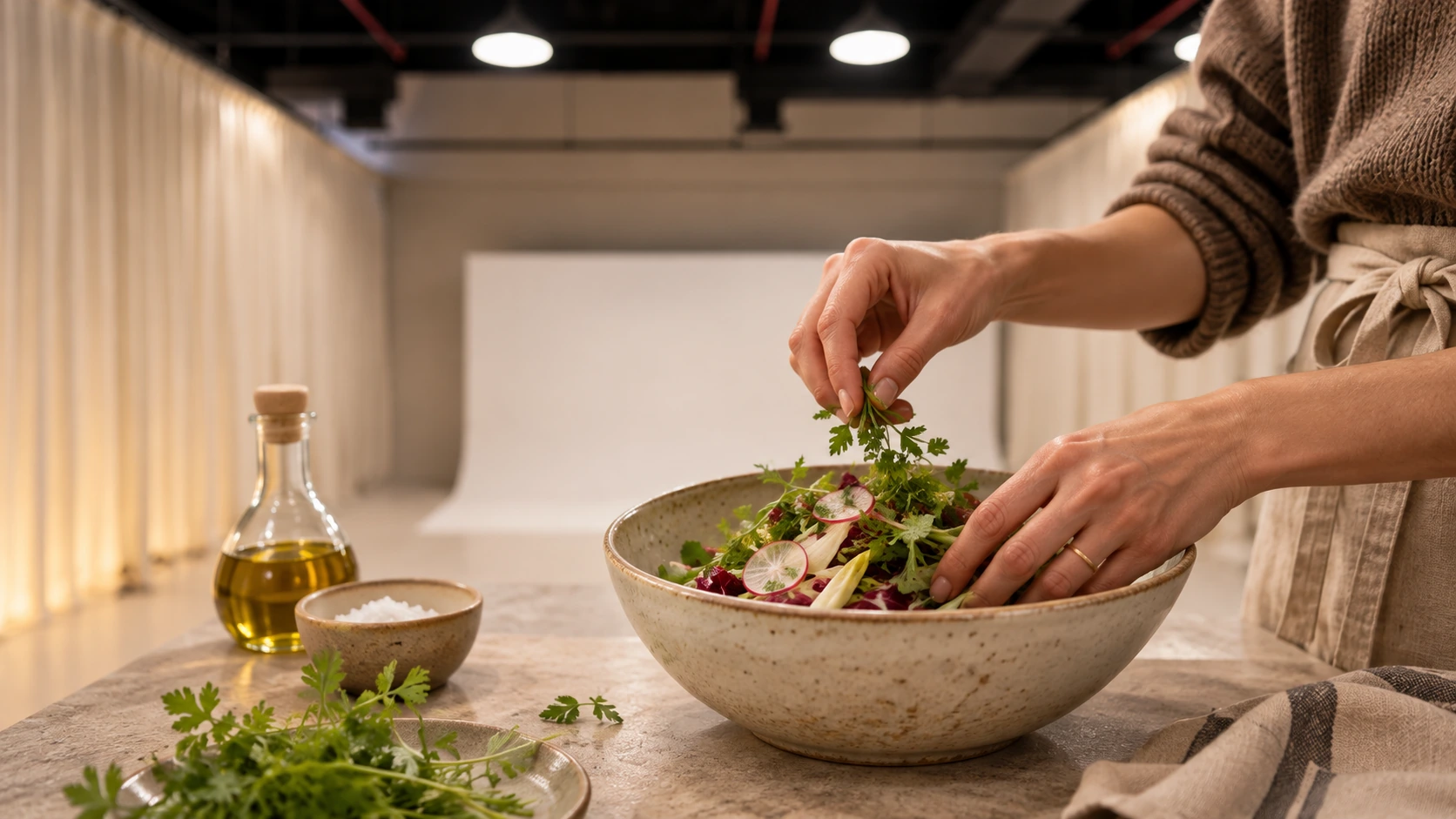
When you visit a prospective cooking show studio in Dubai, spend a few minutes at the proposed counter with the same pan and cutting board you’ll use on camera. Try the host’s usual movements and ask a camera operator to walk the intended route. Leave space for the kitchen assistant to exchange a bowl from the side while the presenter stays in position. Put spare ingredients on a separate cart so the host’s work surface remains familiar to viewers across episodes.
Ask What the Studio Can Accommodate
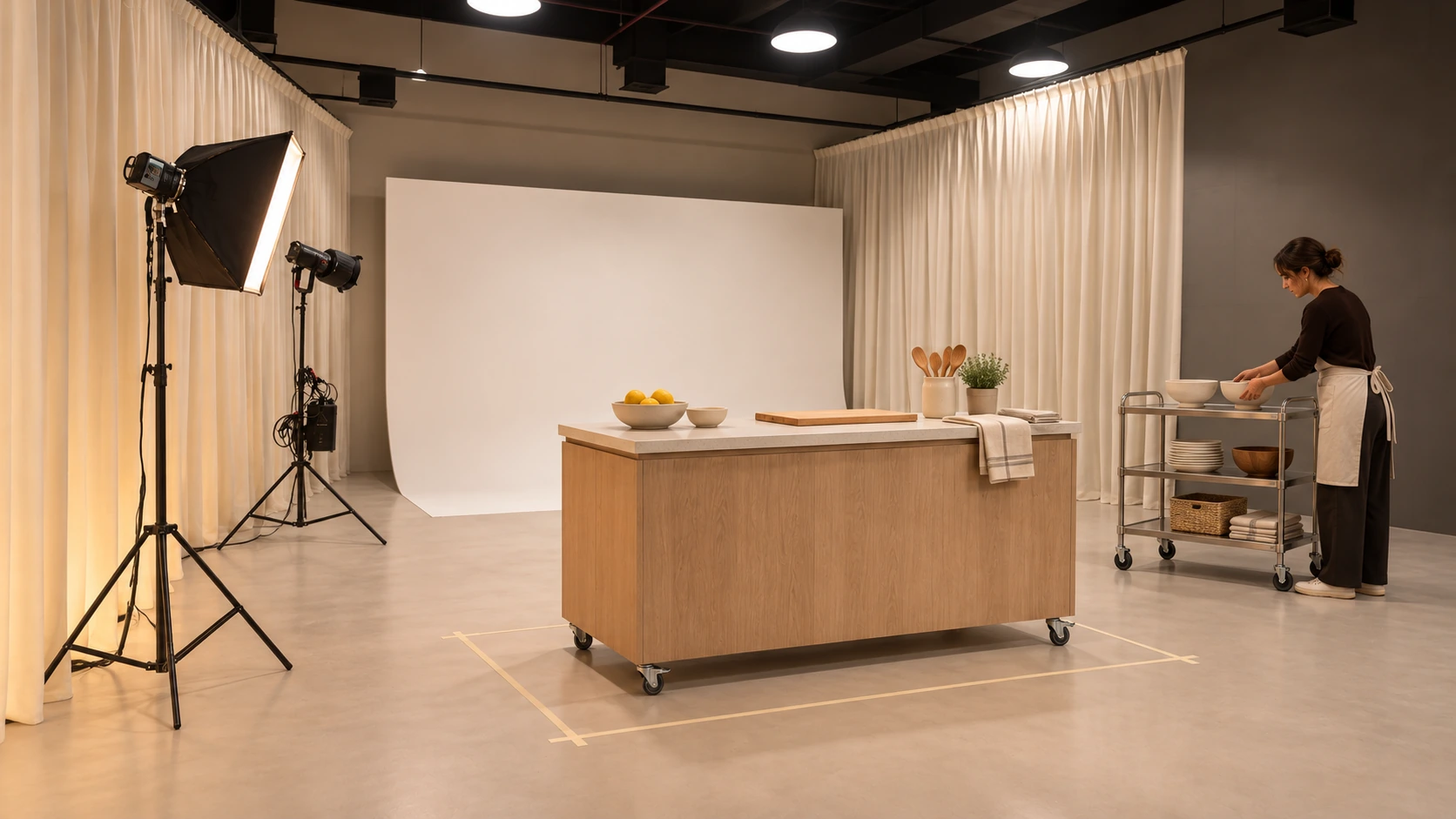
The scoping conversation should separate a temporary set in which the host assembles food from a shoot that requires active cooking over several takes. Ask the venue to approve the specific cooking equipment and confirm the power and ventilation requirements for your menu. Confirm who is responsible for food storage and cleaning. Put those answers in writing with the rental dates so the producer can budget for any equipment or prep area supplied separately.
The producer should ask which set pieces can remain between bookings and which the crew will reconstruct upon return. Your counter might go back into storage after the session and still look the same next Thursday. Save a photo from the principal camera and record the counter’s position relative to a fixed point. Ask the venue which storage arrangements it can offer and about transport costs if the set comes out after each booking.
Assign a Job to Each Camera
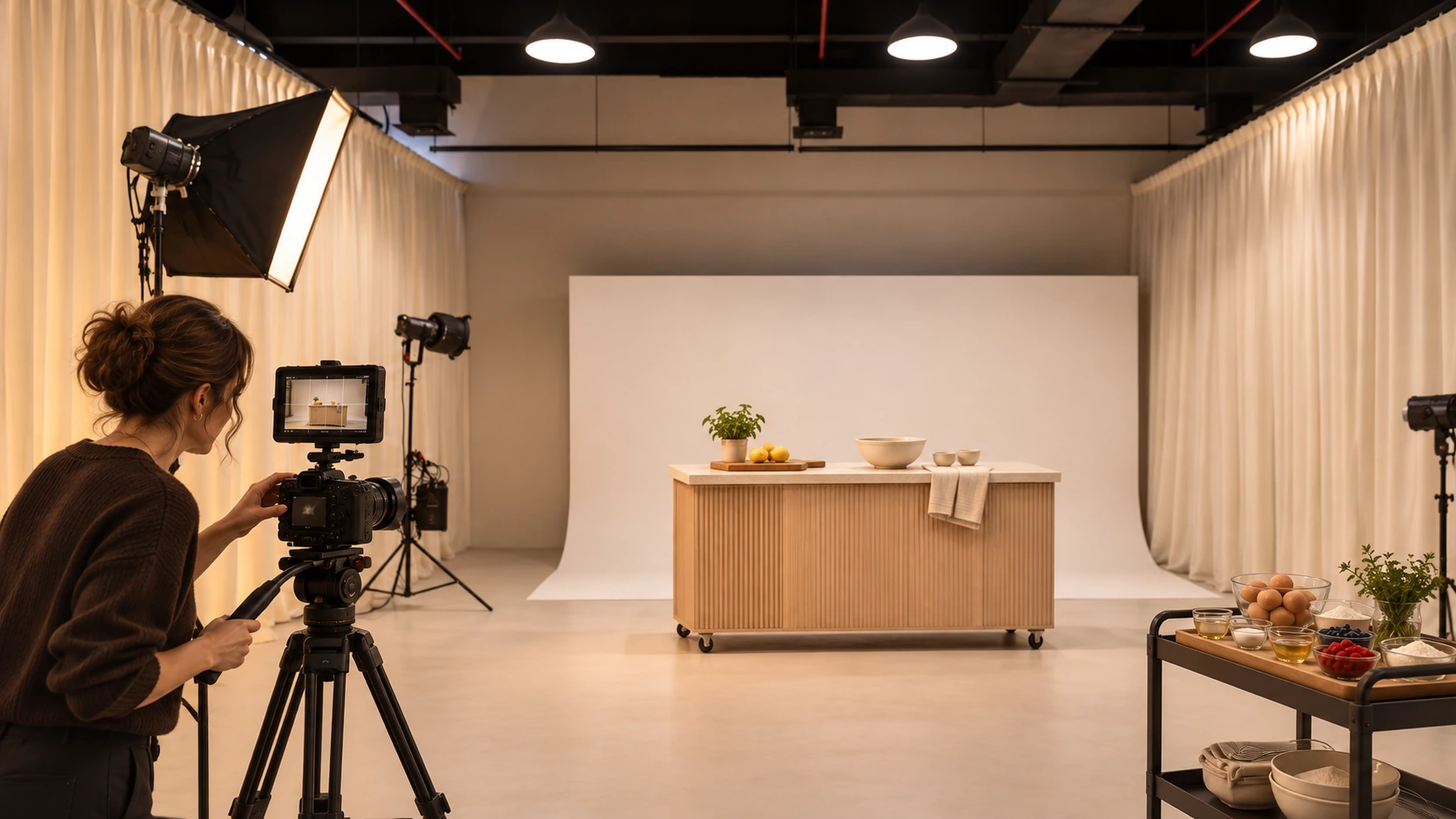
The main shot should show the host’s expression and enough of the counter for viewers to understand where the action takes place. Use a second angle when a guest demonstrates something with both hands or an ingredient changes texture at a critical moment. Overhead footage can show viewers exactly how the host folds a pastry. Try a lower angle to show the height when the host lifts that pastry apart.
Send the Editor a Usable Test
For the rehearsal, record the same short action on both cameras with a common sound reference, then have your editor try joining the clips. Adobe Premiere’s multicamera setup instructions describe audio and timecode as two synchronization options. Pick the method your crew can repeat at the start of a take. Set aside a separate vocabulary for recipe stages in the file names so the editor can find the dough test from the right episode.
Test Voice and Kitchen Sound Together
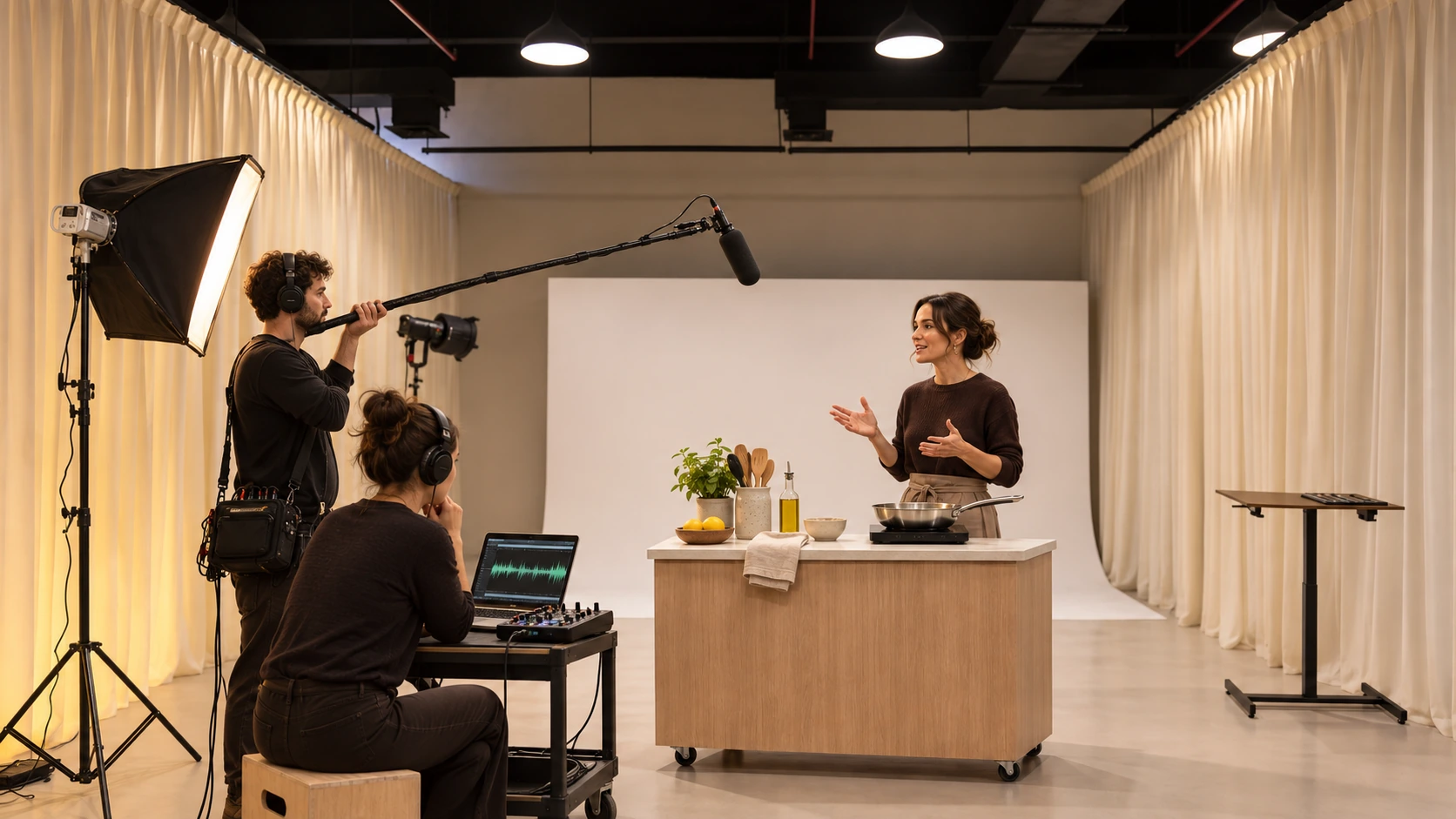
Good dialogue on an empty set tells you less than a recording made while the host follows the recipe with the equipment in use. Listen back to the sentence where they explain why the pan is ready, especially if it lands at the same moment as a fan cycles on. The sound operator can try a different mic position. Your director might let viewers hear the pan for a moment and ask the host to explain what they heard on the next beat.
Keep a little time for sounds you can record on their own after the explanation. Record the spoon against the mixing bowl so the editor has matching sound when the picture cuts away from the presenter’s face. Play a sample on a phone speaker at a volume someone might use at lunch break. The words should hold up as speech; the food sound should still feel tied to the motion in the picture.
Budget the Reset Between Episodes
When a recipe needs a clean pan or a second batch at a different temperature, reset time should be included in the booking, alongside the minutes spent recording. Ask the kitchen producer to time the pilot reset from the moment the host leaves the counter until the next ingredients are in place. Include the time required to rebuild any shot where the counter has moved. Use that result to decide which recipes fit together on a shared recording date.
Look at the end of the recipe when you group episodes for a session. Two chilled dishes can share a counter layout but need refrigeration space for separate finished plates. Recipes with a sauce reduction hold the cook at the stove longer than dishes the host can finish at the counter. Confirm the order with the person handling ingredients so the presenter can rehearse while the next counter is being set up.
Check the Quote Against a Real Shoot Day
Two proposals can list the same recording hours and leave the producer with very different bills when the crew arrives to build the set. Ask for the setup and strike windows in the quote. If a kitchen assistant needs access earlier than the camera crew, check which booking covers that time. Verify which changes incur an extra charge when you move a recipe to a different date.
Plan the Weekly Episode and Its Short Clip
Your main episode can spend time explaining what to look for between the start and finish of a method, especially when the audience might try it for the first time. Pick one moment to film again for a vertical edit viewers can understand on its own. YouTube’s Shorts eligibility rules allow qualifying square or vertical uploads of up to 3 minutes. Film the hands and the bowl inside the vertical frame during the test so the editor has a usable shot.
Choose one detail viewers can recognize when they return to the series next month. The host’s greeting and the view across the counter may be enough to tell them they’re in the right place. Change the utensils and ingredients to fit the recipe. Keep the opening composition familiar so a returning viewer knows where to look as soon as the first action begins.
Book a Pilot Around One Demanding Recipe
Share one sample recipe and your planned recording frequency with Someone’s Studio when you’re ready to discuss a kitchen set in Dubai. Let the team know how the host works and where the cooking equipment fits into the plan. Ask which parts of the set can be recreated across bookings and what needs separate arrangements. Use the pilot to see how the picture reads, then decide how many episodes to schedule for your first block.