On Tuesday afternoon, your host has agreed to record an interview with a guest whose answer may lead to a story worth following past the last planned question. Thursday’s episode still needs an edit and a final review. If everyone treats the recording slot as the deadline, the producer has to choose between ending a good conversation and leaving the editor short on time. Set a point at which the producer can request extra shooting time, and decide how much breathing room the release schedule permits.
Weekly interview production in Dubai starts with a promise viewers can recognize even when the person in the guest chair changes. The producer has to keep enough of the program familiar for viewers to know what they came for, while leaving the guest space to tell their own story. Write the format on one page so a replacement producer can refer to it during handover.
Decide What the Audience Is Coming Back For
For a weekly interview show with people who run small businesses, viewers might come back to hear how an owner made a decision their own team faces. “How a restaurant owner decides when to open a second location” yields questions the host can pursue with the owner. The guest’s whole career would make a different episode.
One sentence in the brief should state what the guest needs to explain for the episode to earn its place in the series. When an answer begins with good advice that could apply to any business, the host can ask for the moment somebody had to make the call. Ask who was involved and what they knew at the time. Someone who recalls a manager’s objection can usually go farther than someone asked to relay the company’s talking points.

Move the Release Date Backward to the Guest Call
YouTube’s advice on release schedules asks creators to weigh the time a format takes to produce against a schedule they can maintain. Work back from a Thursday release and book the editor’s handoff and final approval ahead of the guest invitation. If the guest needs to review an extract, agree on the cut and the review deadline when you book them. The producer needs enough time to respond to a correction after the review.
Keep one finished interview in reserve if its subject will still be useful several weeks later and the guest has agreed to that release window. For an episode tied to a product announcement, record the time the embargo lifts and name the person who confirms it. If the announcement moves, publish the reserve interview in its place. Save its promotional copy and thumbnail with the approved cut so the producer can make the switch in time.
Use the Pre-Interview to Find the First Useful Question
On a short call with the guest, the producer can ask them to recall a particular event and listen for the details the host will want to follow. One story might start with a customer’s complaint and lead to a change the owner made the same afternoon. Put the event and the disputed decision on the host’s card in plain terms. The Oral History Association’s interview guidance recommends an open-ended outline and a pre-interview discussion; both are useful here even when the show has a different purpose.
Agree on what the production team may publish and tell the guest where the episode and its excerpts will appear ahead of the recording. When an employer’s communications team is involved, ask who has approval authority and agree on the scope of that review. Get a guest’s preferred name and title in writing. If someone mentions a confidential figure during preparation, the host can build a question around the decision instead of asking the guest to repeat a private number on camera.

Leave Space for a Follow-Up in the Running Order
Some interviews need an extra minute at the start as the guest and host find a pace that suits them. The run sheet can separate the planned cut length from the actual recording time and leave a little margin for the first section. On a 24-minute cut, reserve two minutes for the closing answer. If a story runs past its slot, the producer and host need an agreed signal for which question to drop.
When a guest delivers the answer the whole episode is built around, let the host stay with it for a moment. The sponsor read can wait for the follow-up. For the editor, note when the guest made the claim and attach any supporting source. If the guest mentions a figure they need to look up, record the explanation and check the number in post. Leave enough time for the guest to answer follow-ups on set.
Rehearse the Host’s Cues in the Studio
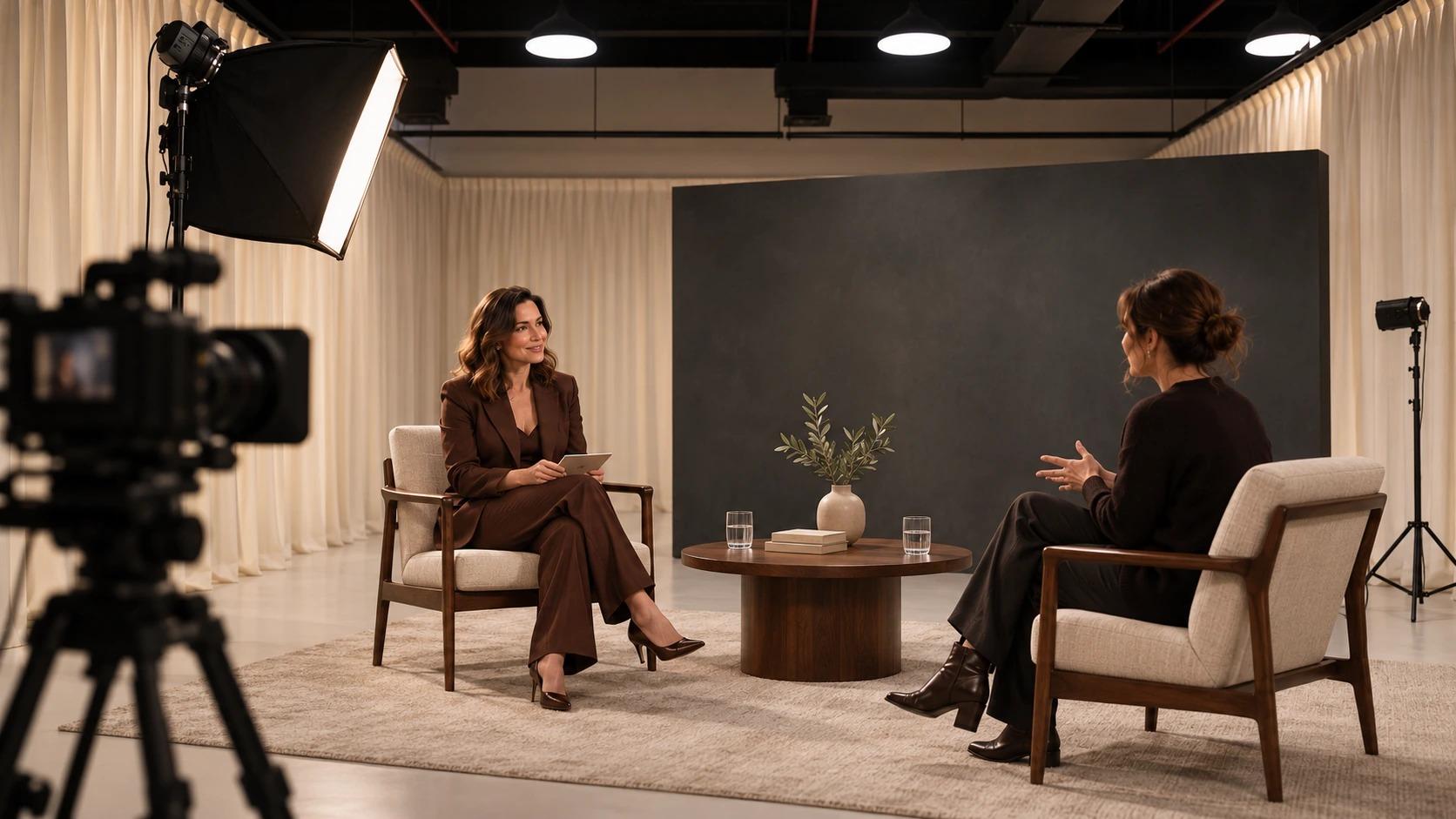
The first recorded rehearsal can show how an off-camera cue changes the host’s eye line and where the producer can cue them out of shot. Run the opening from the host’s first look into the lens to the point when both people turn toward each other. Play it back with sound. Someone’s Studio’s Leadership Interview Suite is one place to discuss how those cues will work with your crew and a set for regular recordings.
Try the two-shot with a substitute guest so the crew can distinguish a repeatable setup from one that only works for the pilot guest’s height or posture. The director can save a reference still for the host’s angle and indicate which chair positions the operator is free to adjust. If the guests handle documents or show objects as part of the interview, test the framing while the host looks at the object and asks a question. Keep the guests’ eye contact available in the wide shot.
Check What the Edit Is Allowed to Change
The editor needs to know which pauses may be shortened and which questions must stay in the episode to preserve the guest’s meaning. Look at the surrounding answer when a short excerpt contains a figure or a claim. Lose the first half of a qualified statement and the excerpt may sound absolute. The person approving the excerpt needs access to the surrounding passage alongside the selected excerpt.
For a show with a recurring sponsor, keep the approved disclosure text in the episode brief and send any revised read to the editor with its timecode. The producer can ask the host to record a fresh read while the sound setup is still in place. Hold the full release until the authorized reviewer has approved the version the audience will see. If a later correction changes a headline claim, revise the short excerpts and the main episode copy together.
Review the Pilot With the Next Four Guests in Mind
Once the pilot is ready, time the pre-interview call and the edit review against the release calendar you expect to run next month. If the first cut arrived with a day to spare, record how the team spent that margin on checks and guest corrections. Compare how long the crew needed between arrival and the first usable take. Decide whether the editor can work on the previous episode while the crew records the next one.
For a recurring production at Someone’s Studio, send proposed recording dates through the studio booking page and include a draft running order for a representative episode. Share the guest format and the point when the episode needs to reach your editor. Ask the studio to confirm the crew and facilities available for the proposed dates. The estimate should cover the rehearsal you need to time your pilot, since that rehearsal will tell you how much studio time to book for the following episodes.