
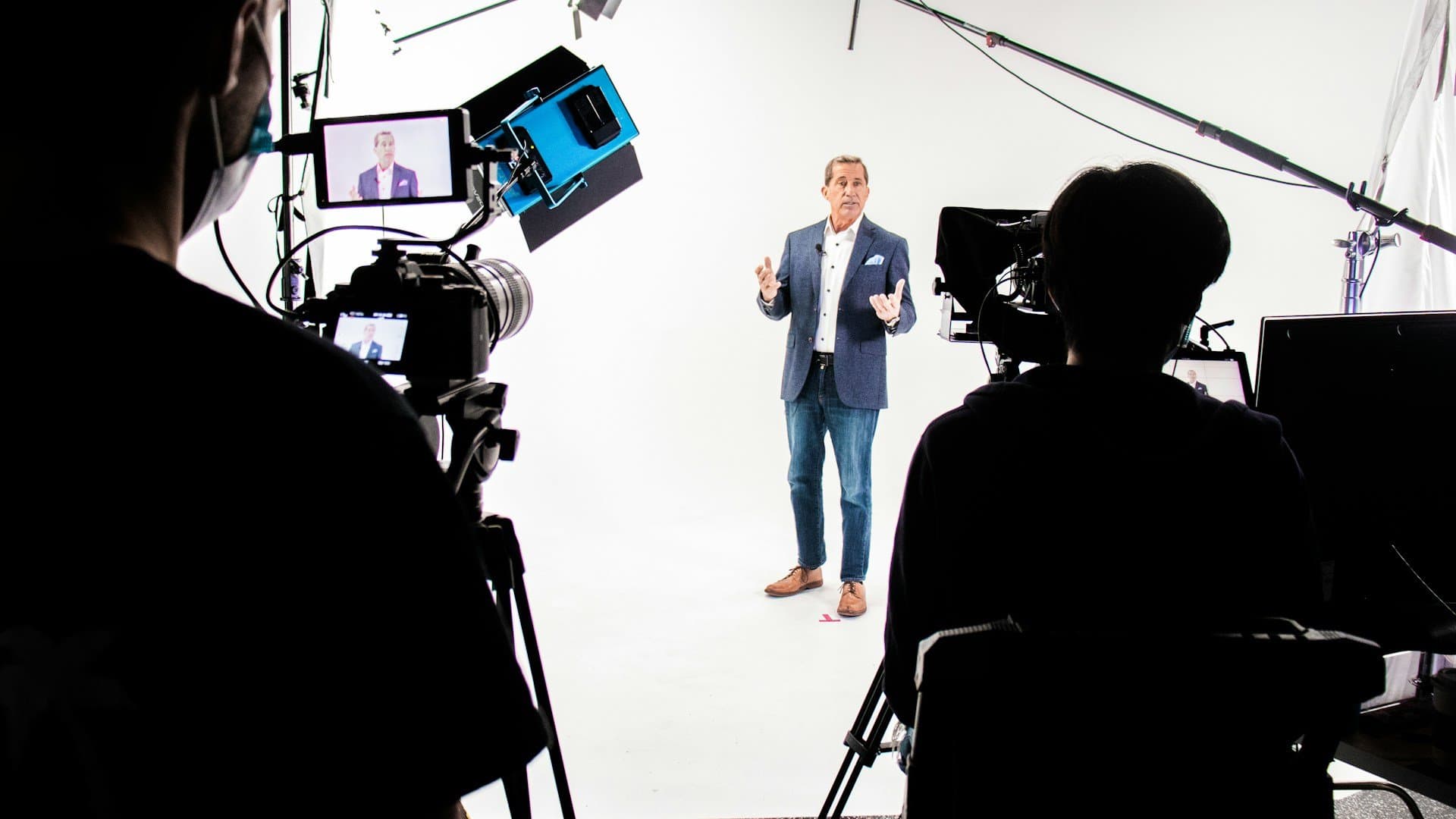
Corporate testimonial videos become useful to a prospective buyer when a customer explains a recognizable business problem and describes what happened during the work. Praise has a place in the conversation, alongside the details a viewer needs to assess the account. Who used the product? How did the customer assess the result? The film needs enough substance for someone facing a similar purchase decision to follow the answer.
Someone's Studio treats a customer film as a brand communication assignment, with the customer's account guiding the proposed interview and the supporting images. The studio's article on corporate video and trust introduces the relationship between real voices and business credibility. For a testimonial production, the work becomes specific: select a suitable customer, then establish which parts within their story are ready for public discussion.
Choose a Customer with Direct Knowledge
The most useful participant has firsthand knowledge relevant to the buyer's question and enough involvement in the work to explain particular decisions. If the film concerns a software rollout, the person who supervised its use has a different account from the executive who authorized the purchase. Identify the speaker's role on screen so viewers know which part they supervised.
In a preliminary conversation, ask the customer to describe a specific task they performed and what changed after the product entered their work. If the customer describes fewer repeated requests for information, ask which requests changed and where the team recorded them. Colleagues who maintained the records may need time to retrieve the relevant material for the producer.
Companies evaluating a complex product need to hear how much implementation work accompanied the result, particularly when the interview concerns a large deployment. Ask the customer which internal resources were required during installation. If a specialist team supported the work, include its contribution within the account.

Verify the Result the Customer Describes
The producer needs to connect a proposed factual claim with supporting material while the customer still has time to find the relevant records. For a claim concerning faster approvals, the comparison needs a stated period and a consistent method for measuring elapsed time. If the underlying records count completed requests, the film's wording needs to describe completed requests.
Read the Claim in Context
When several changes occurred during the same period, ask the customer how they assessed the product's contribution to the reported result. New staffing arrangements may have affected the work. Where additional staff helped process requests, the account needs to acknowledge their contribution. Personal satisfaction is a valid interview subject, expressed as the customer's assessment. For a numerical result, obtain the records supporting its calculation.
The United States Federal Trade Commission's endorsement guidance explains why an advertiser needs evidence for claims communicated through testimonials, alongside an honest account from the participant. Its discussion addresses exceptional results and what buyers generally expect. Treat the guidance as a United States reference when assessing an international campaign. The campaign's legal reviewer needs to assess the applicable requirements for its intended destinations.
Agree on the Customer's Public Contribution
Permission planning needs to address the proposed film's actual distribution, especially when a customer agrees to appear in a website interview intended for later advertising use. Explain the proposed placements during the initial discussion and obtain the appropriate written approvals. The customer company may have a separate approval process for its logo. Arrange permission for any documents the production proposes to display.
If the participant receives payment or another benefit for the endorsement, discuss the relationship with the campaign's legal reviewer during preparation. The FTC guidance addresses disclosure when an unexpected connection would affect a viewer's assessment. Plan the approved disclosure within the relevant version. For a short excerpt, the relationship still needs to be apparent wherever the applicable rules require it.
Ask for the Detail Behind the Recommendation
The customer can explain an actual buying decision in detail when the interviewer knows which part they handled and which evidence informed their assessment. If repeated delivery delays prompted the original search for a provider, the conversation has a specific starting point. Ask how the delays affected the customer's daily work, then pursue the detail the speaker introduces in the response.
Use the preliminary research to develop questions concerning subjects the customer knows well enough to discuss using their own vocabulary and judgment. “Which part required the most work during implementation?” invites an account the viewer can evaluate. If the reply concerns staff training, a follow-up question can examine the help the provider supplied. The viewer needs enough detail to assess how much work the customer's team contributed to the eventual benefit.
For a customer discussing a software rollout, useful supplementary questions address the actual task and the point at which the team assessed progress. The customer's explanation might describe how colleagues learned a revised process, followed by a specific incident which prompted their favorable assessment. When a factual detail needs verification, the producer can flag it for a later check and continue the conversation around the customer's account.

Film the Work Behind the Words
Additional footage helps a viewer follow the customer's explanation when it shows a relevant task, such as a permitted demonstration explaining how an approval reaches the correct person. If filming requires sample data, identify the scene as a demonstration wherever viewers might mistake it for the original event. Visible screens need approved information corresponding to the task the customer describes.
The customer's workplace may contain useful evidence alongside confidential material, so the producer needs a location review connected to the proposed shots. For a film discussing document handling, the proposed work area needs an inspection for visible information on desks and screens. Once the customer approves the area, the camera crew needs time to test whether the relevant detail is readable in the proposed frame.
Discuss the proposed visual treatment with the production team in relation to the customer's story and the destination planned for the film. Someone's Studio's brand-centered creative work connects visual decisions with the client's identity. Company identification needs a layout the customer and commissioning brand can approve. For result graphics, the designer needs the same evidence approved for the spoken account.

Keep the Customer's Meaning in the Edit
Editors need the full recorded answer when choosing a shorter passage, particularly when a customer describes a result achieved within a limited trial. Retain the trial period whenever it changes the claim's meaning. If the answer describes one department, the accompanying graphic needs the same scope. The result's displayed wording deserves review alongside the speech it accompanies.
In customer review, use a version with timecodes so the participant can identify a factual correction and explain the intended meaning. Invite the person responsible for the supporting records to check numerical statements. If a correction requires a new explanation, arrange a further recording with the customer. Publish the approved account using the participant's own assessment and the verified factual context.
Music needs a listening review against the spoken account, especially when a customer explains a complex result containing a condition the viewer must hear. For a listening test, play the proposed mix on an ordinary device and ask a reviewer to repeat the relevant claim after watching. Any missed condition deserves a check against the dialogue level and the available reading time.

Prepare Versions a Buyer Can Follow
Short testimonial excerpts need to identify the customer and explain enough context for viewers who encounter the clip separately from the longer film. Select a passage answering a particular buyer question. For a numerical claim, retain the comparison period within the excerpt. The opening image should correspond to the account the viewer is hearing.
Check the Caption Copy
W3C's caption guidance describes captions as synchronized text covering speech and meaningful audio, which requires an accuracy check against the finished film. Review names and numerical claims against the approved wording. For translated subtitles, ask a qualified reviewer to check the customer's meaning in the target language. Keep the subtitle layout legible alongside company identification and result graphics.
Discuss Your Customer Film with Someone's Studio
Someone's Studio's campaign production service connects a brand's campaign idea with films and shorter versions prepared for their planned destinations. For a customer testimonial, discuss the buyer question the film needs to answer and the customer available to discuss it. Specify the desired filming support within the production inquiry.
You can contact Someone's Studio with the proposed customer's role and the date when the completed film needs approval for release. Include the available supporting material in the production discussion. The proposal can then address the commissioned work and the versions required for your campaign.