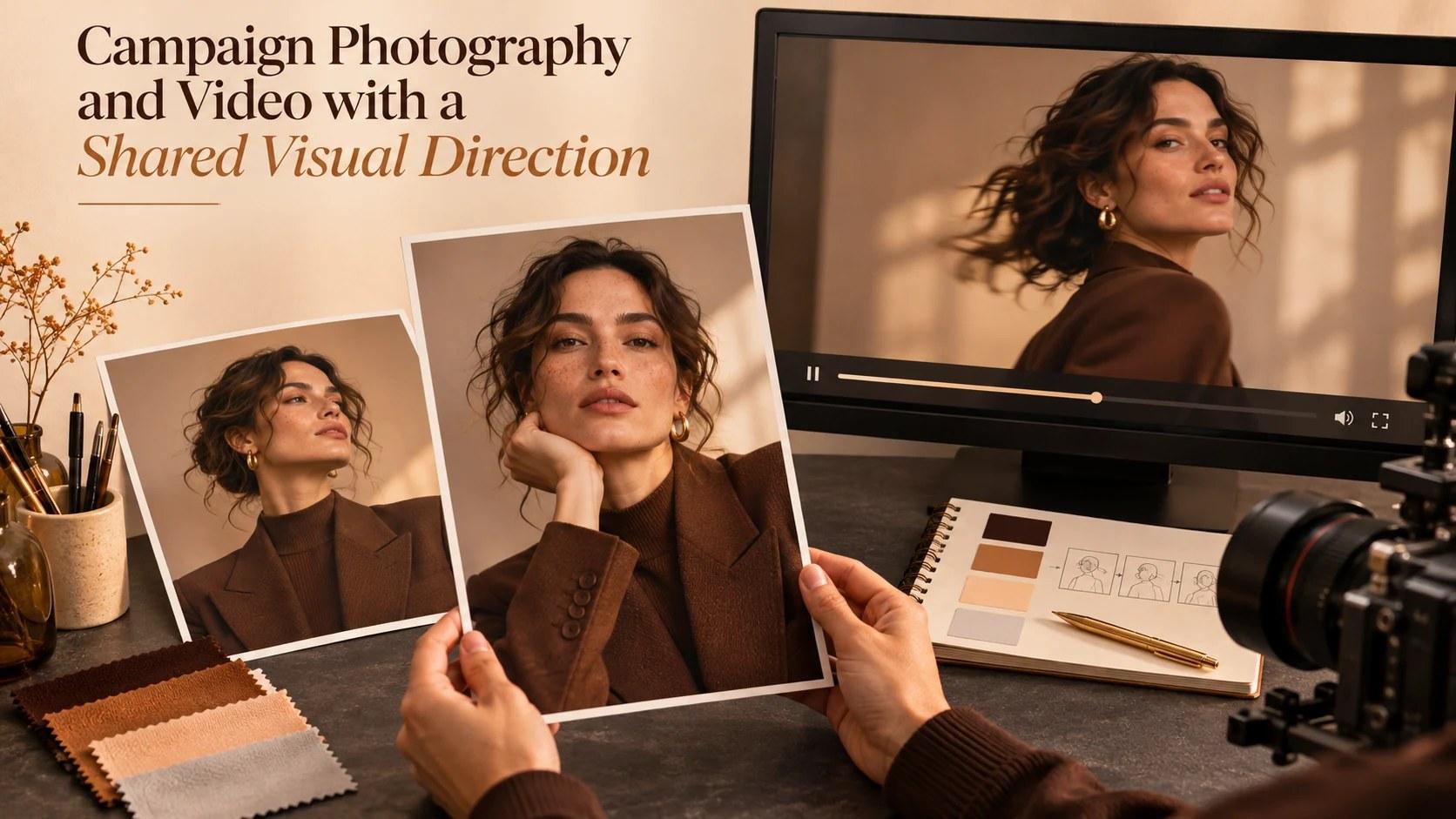
Campaign photography and video need a shared visual direction that accounts for the different ways a photograph and a film communicate a brand's character. Photography asks the viewer to read a chosen moment. Film develops a visual idea through movement and duration. Creative direction determines which qualities remain recognizable as the campaign moves between those media, then assigns the appropriate treatment to the material being produced.
The central production decision concerns what the audience should recognize when a photograph appears beside the campaign film on a website. Wardrobe agreement establishes a useful reference for the remaining creative choices. The apparent distance between subject and viewer affects the tone. Light falling across a face establishes a relationship with the camera. Agreement on those choices provides the photographer and director with a common basis for their separate work.
Define the Relationship between the Images
The campaign brief should describe the impression that the subject needs to communicate; references should demonstrate how that impression appears in both media. Executive portraiture may require direct eye contact and a composed posture. The accompanying film may show the executive speaking to an interviewer. Both can express authority through similar camera height and an equally restrained setting, even as the person's relationship with the lens changes.
Someone's Studio's campaign production service considers photography alongside film, which places their creative relationship within the initial campaign discussion. The client can specify where the images will appear together. Campaign landing pages create a different relationship between still and motion than a print advertisement encountered separately. Placement informs the visual decisions, particularly when the photograph will remain visible as the film starts.
Select a reference photograph and a short motion reference that demonstrate the intended treatment on comparable subjects. The still frame extracted from a film conveys composition but offers limited evidence concerning its pace. Directors need to see how the subject enters the shot. The photographer needs a reference with enough detail to discuss expression and the final image's intended scale.
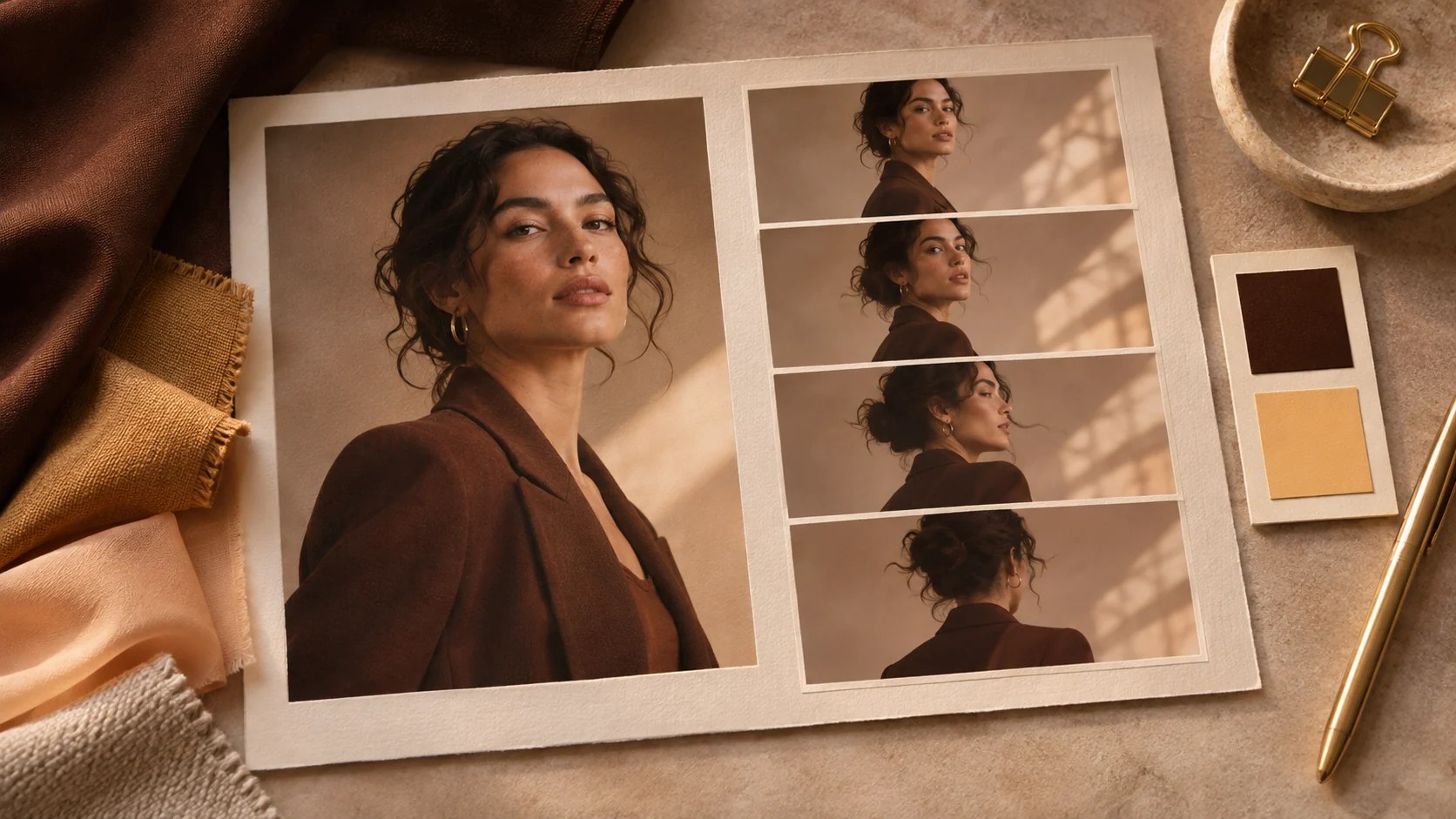
Decide What the Still Photograph Must Say
Campaign photographs need an intelligible relationship between their subjects and the campaign message when viewers encounter it independently from the accompanying film. The gesture that develops naturally during a scene may appear ambiguous in a frozen image. Someone reaching toward an object can suggest anticipation, yet the selected instant must retain a readable hand position. Photographers can direct the gesture around the moment the photograph needs.
Portrait direction deserves particular discussion when the film contains dialogue and the campaign photograph requires a sustained expression toward the lens. Speech changes the face throughout a take. The portrait session allows time for the sitter to settle into the approved posture. Production planning should explicitly allocate that opportunity, with the photographer involved in the decision about the portrait's relationship to the filmed performance.
Still-image requirements deserve their own place in the production brief when the final use demands substantial detail or a particular composition. The suitability of a frame extracted from footage depends on the recorded resolution and the intended reproduction. Motion blur can affect hand appearance. The producer can confirm whether a proposed frame meets the requirements of the actual placement, and then schedule a separate photograph when the brief requires it.
Translate the Direction into Movement
Directors develop the campaign's visual character through the subject's actions and the camera's relationship with those actions over time. Deliberate head movement can retain the composure established in a portrait. Rapid camera movement may communicate a different degree of energy. The treatment should explain the movement's purpose in the scene so that the filmed action remains connected to the intended brand impression.
Motion tests should include the full action the final edit requires, with sufficient duration to assess how the subject enters and leaves the chosen composition. Its opening frame can change substantially as the person turns. Shadows move across the face. The director can review the entire action with the photographer and agree on which instant best reflects the campaign photograph.
Creative leads can permit differences between the finished assets when those differences support the communication assigned to either medium. Portraiture may hold a person's direct gaze. The film may show that person occupied with a task. Visual relationships can remain apparent through shared wardrobe and a similar treatment of facial detail, with the performance suited to the image's purpose.
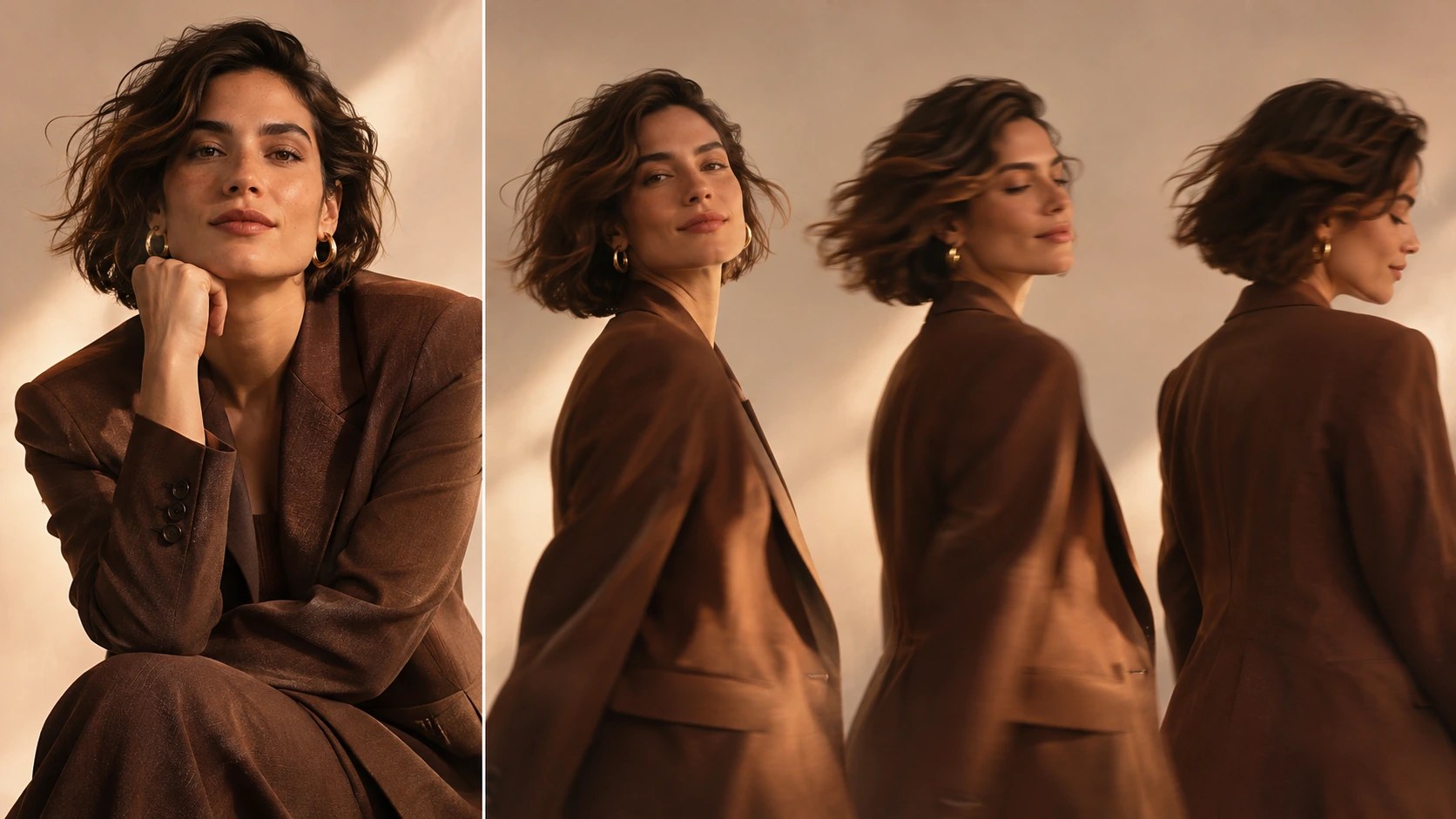
Agree the Light for Both Media
The lighting discussion needs to consider the full filmed action, as well as the photographic treatment the client has approved for the campaign. Illumination arranged for a stationary portrait may produce a different facial shadow as the subject moves. The team can test the intended turn at the actual camera position. Photographers can then assess the held portrait within that arrangement.
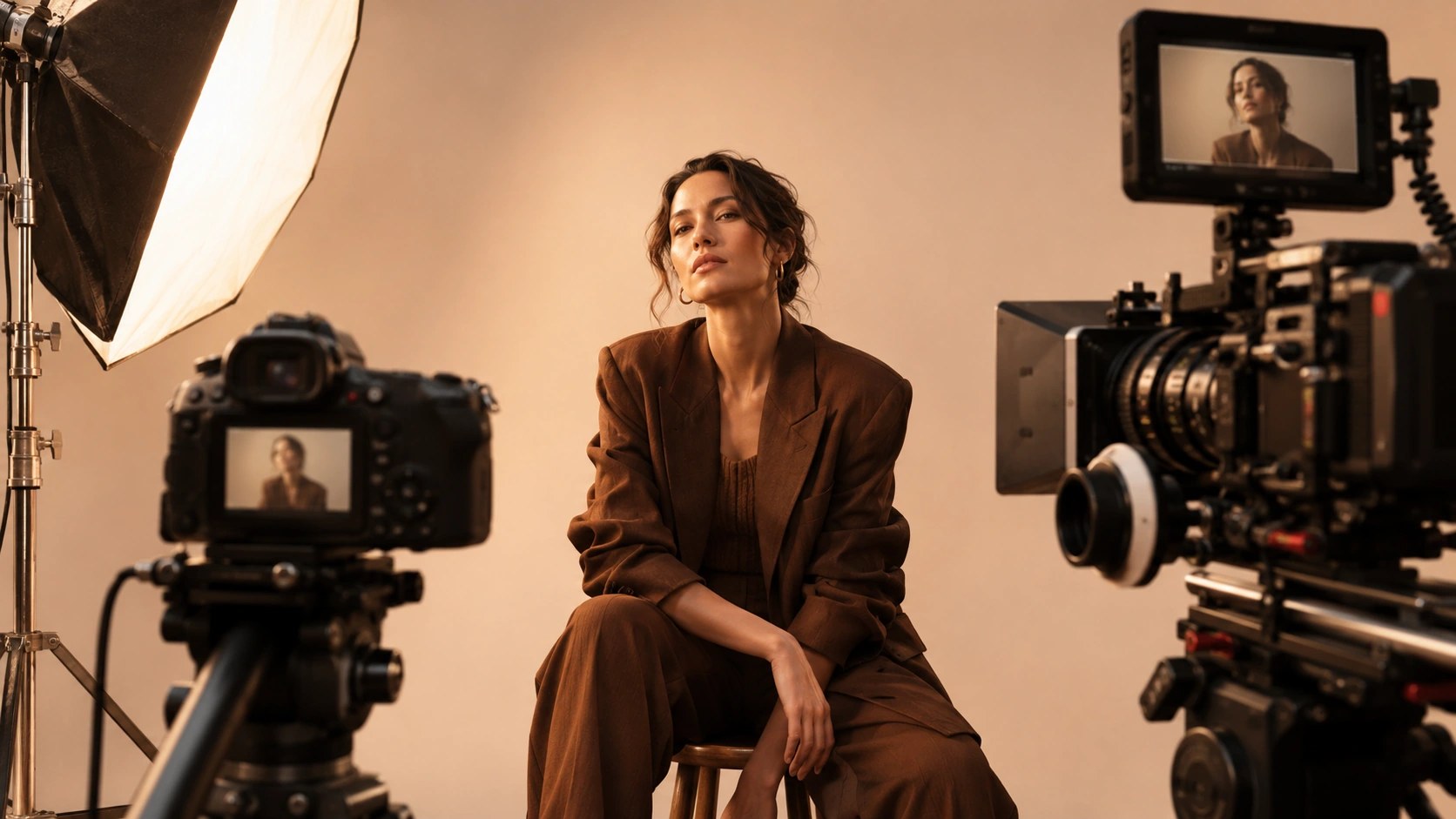
Photographic and motion crews should agree how their proposed light sources will operate during the session, especially where still photography uses flash. Motion recording requires illumination appropriate to the action being recorded. The crew can test continuous light for both media or plan separate setups with a documented visual relationship. Selected equipment and recording settings require confirmation by the responsible technicians during preparation.
Surface appearance warrants a joint test when fabric or reflective accessories occupy a prominent role in the composition throughout the campaign. Jacket fabric can appear darker as its angle to the light changes. Reflective accessories may show bright reflections during movement. Review the actual wardrobe in the planned action, then agree whether the observed variation suits the treatment.
Establish a Color Reference through Delivery
The approved comparison should include a finished photographic test and a short graded motion test so that the client can assess the intended relationship between them. Camera previews provide a useful production view, yet the delivered files pass through separate processing decisions. The retoucher and colorist need access to the same approved reference and a description of the appearance it demonstrates.
Color management accounts for the relationship between encoded image values and the devices used to display them. The International Color Consortium explains how profiles describe that relationship, with reproduction subject to device capabilities. Agreement on the review display provides a consistent basis for comparison. Technical approval should record the intended output treatment for photography separately from the film's delivery specification.
Adobe's Lightroom Classic guidance describes monitor profiles and output color spaces as parts of photographic color management. The retoucher can confirm the profile required for the campaign's actual destination. Video specialists should confirm the corresponding motion delivery requirements. Client approval can then compare the finished exports in the agreed review conditions, with any visible variation assessed against the campaign reference.
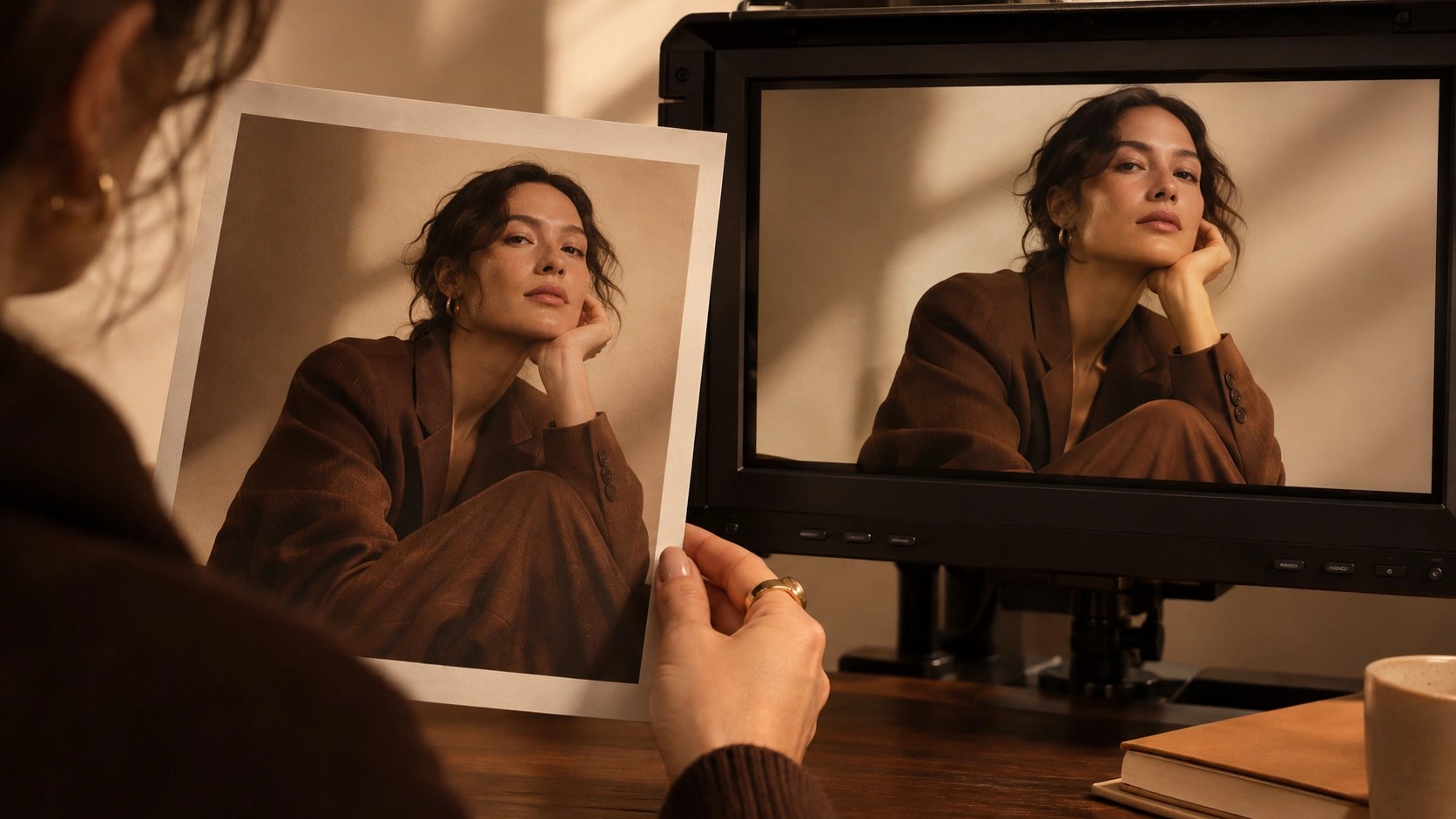
Review the Campaign as a Pair
The final creative review should place the approved photograph beside a representative film section so reviewers can assess their relationship at the intended viewing scale. Compare the person's appearance across the two assets. Watch the complete motion section after that comparison. The first pass examines their visual relationship; the next examines whether the movement supports the intended impression throughout the shot.
Feedback should identify an observable issue and the asset that requires attention, with the approved reference available during the discussion. Reviewers can point to a jacket that appears noticeably warmer in the photograph. The retoucher and colorist can investigate the difference using the agreed delivery settings. Any creative change should receive approval across the pair when it affects the shared direction.
Campaign planning can begin with the images a client already uses and the message the next production needs to communicate through stills and film. Someone's Studio's brand-led creative work provides a relevant starting point for that discussion in Dubai. Share the intended placements through the Studio contact page so that the production brief can specify the photographic moments and filmed actions required for the campaign.